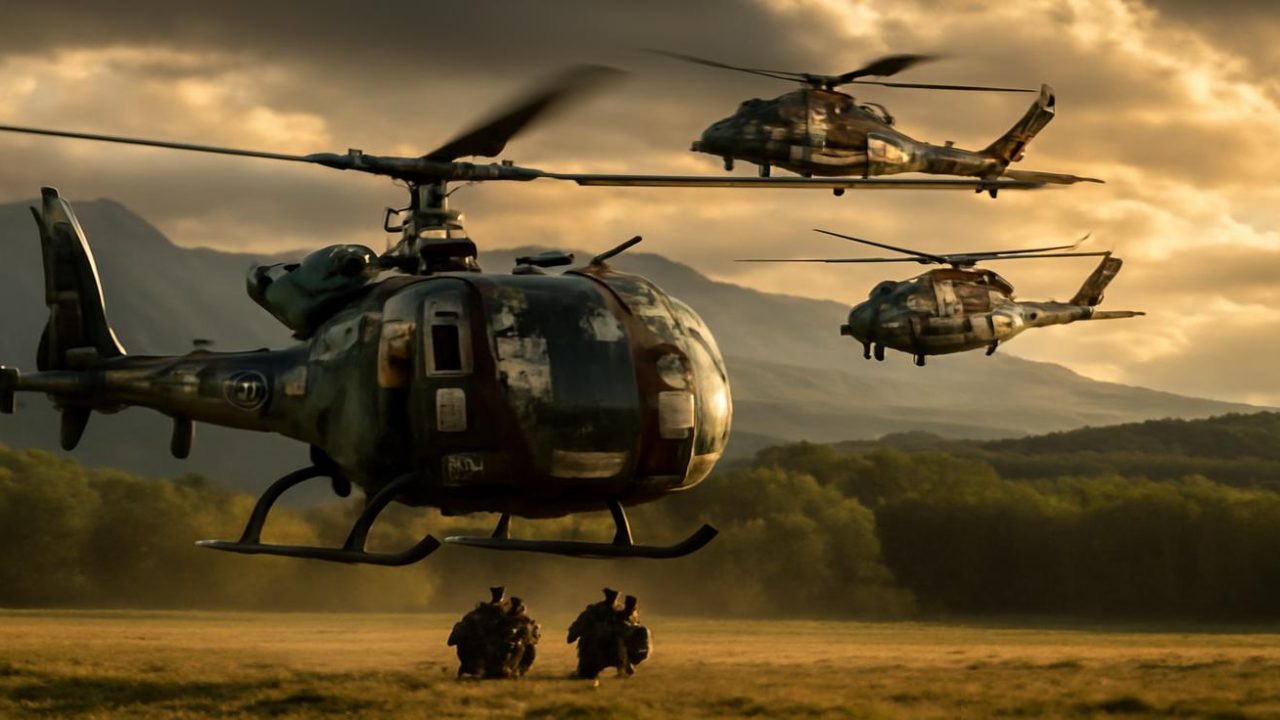
The distinctive chop-chop-chop of helicopter rotors echoing across French countryside signals the presence of one of Europe’s most specialized military aviation units. The Aviation Légère de l’Armée de Terre (ALAT) operates in the dangerous space between ground forces and high-altitude air power, where helicopters must navigate dust, smoke, and enemy fire while supporting soldiers below.
Created officially in 1954, ALAT emerged from hard-learned lessons in Indochina and Algeria, where French forces discovered that armies unable to see, move, and react faster than their enemies lose battles before understanding why. What began with fragile spotter planes calling in artillery fire has evolved into a sophisticated aerial ecosystem designed specifically to serve ground operations.
Unlike the French Air and Space Force, which dominates strategic altitudes, ALAT owns what military aviators call “the sky that smells of dust, smoke, and pine needles” — the low-altitude domain where helicopters work intimately with terrain and weather.

How ALAT Operates in Modern Combat
ALAT functions as a living battlefield organism, threading through complex military operations often invisible to those whose lives it changes. The unit specializes in multiple critical missions that can shift rapidly based on ground conditions.
Combat operations represent ALAT’s most visible role. The Tigre attack helicopter serves as the primary combat platform, bristling with weaponry and sensors designed for close-quarters engagement. These aircraft can hover behind treelines, emerge to fire rockets or 30mm cannon rounds, then disappear back into natural cover.
From Afghanistan to the Sahel region of Africa, ALAT attack helicopters have shaped combat tempo through both direct action and deterrent presence. Their sudden appearance can collapse enemy plans before they solidify into effective attacks.

Reconnaissance and surveillance missions prove equally critical but far less dramatic. ALAT crews conduct target acquisition and battlefield intelligence gathering — capabilities that directly enable precision artillery strikes and coordinated ground operations.
Key Aircraft and Capabilities
ALAT’s aircraft fleet reflects its ground-support mission, with each platform designed for specific operational requirements:
- Tigre Attack Helicopters: Primary combat platform equipped with advanced weaponry and sensor systems
- Transport Helicopters: Move personnel, equipment, and supplies to forward positions
- Medical Evacuation Aircraft: Specialized for rapid casualty evacuation from combat zones
- Reconnaissance Platforms: Equipped with surveillance equipment for intelligence gathering
Pilots undergo specialized training to master low-altitude flight in challenging conditions. They learn to read terrain intimacy — understanding how Alpine valleys channel fog, how Sahel dust storms eliminate visibility instantly, and how urban environments create dangerous wind patterns between buildings.

This training emphasizes working in the narrow, dangerous layer where aircraft physics, terrain, and combat stress intersect. ALAT pilots must navigate not just geography but the complex airspace where friendly and enemy forces operate simultaneously.
Mission Types and Battlefield Roles
ALAT operations span multiple mission categories, each requiring different skills and equipment configurations:
| Mission Type | Primary Purpose | Key Challenges |
|---|---|---|
| Combat Support | Direct fire support for ground forces | Close coordination with friendly troops |
| Medical Evacuation | Rapid casualty extraction | Landing in contested or dangerous areas |
| Reconnaissance | Intelligence gathering and surveillance | Remaining undetected while collecting data |
| Transport | Moving personnel and supplies | Weather and terrain limitations |
Medical evacuation represents one of ALAT’s most time-sensitive missions. Helicopters must reach wounded soldiers, often in active combat zones, and transport them to medical facilities within the critical “golden hour” for trauma treatment.

Supply missions involve delivering food, ammunition, and water to forward positions, particularly for exhausted infantry units operating in remote areas. These flights often occur under challenging weather conditions or enemy threat.
Training and Terrain Mastery
ALAT pilots develop expertise in reading environmental conditions that affect low-altitude flight operations. This includes understanding how different landscapes interact with weather patterns and aircraft performance.
Training emphasizes terrain familiarity across diverse environments — from Alpine mountain valleys to desert conditions in Mali, where dust devils can eliminate visibility within seconds. Urban training zones present additional challenges, with concrete structures creating unpredictable wind patterns.

The unit operates as an integrated system of helicopters, crews, mechanics, and ground support personnel. While organizationally part of the French Army, ALAT frequently works alongside other military services and international allies.
Maintenance crews play crucial roles in keeping aircraft operational under field conditions. Desert sand, mountain weather, and combat damage all require immediate attention to maintain mission readiness.
Operational Impact and Future Role
ALAT’s effectiveness stems from its ability to provide immediate, flexible response to changing battlefield conditions. Unlike fixed-wing aircraft that must operate from established bases, helicopters can forward-deploy and adapt quickly to new mission requirements.

The unit’s presence alone can influence enemy behavior, discouraging ambushes and forcing opponents to modify their tactics. This psychological impact often proves as valuable as direct combat engagement.
Modern military operations increasingly require the type of intimate terrain knowledge and rapid response capability that ALAT provides. Urban warfare, counterinsurgency operations, and humanitarian missions all benefit from helicopters that can operate in confined spaces and challenging conditions.
International cooperation has become increasingly important, with ALAT units operating alongside allied forces in various global missions. This experience has refined techniques and highlighted the continuing relevance of specialized army aviation in contemporary conflicts.

Frequently Asked Questions
When was ALAT officially established?
ALAT was officially created in 1954, though its roots trace back to spotter plane operations in Indochina and Algeria.
What is ALAT’s primary aircraft for combat missions?
The Tigre attack helicopter serves as ALAT’s main combat platform, equipped with rockets, cannons, and advanced sensor systems.
How does ALAT differ from the French Air and Space Force?
ALAT operates at low altitudes in direct support of ground forces, while the Air and Space Force handles high-altitude strategic missions.
Where has ALAT conducted recent operations?
ALAT has operated in Afghanistan and the Sahel region of Africa, conducting combat support and reconnaissance missions.
What type of training do ALAT pilots receive?
Pilots train extensively in low-altitude flight across diverse terrain, learning to navigate challenging weather conditions and coordinate closely with ground forces.
What missions does ALAT perform besides combat?
ALAT conducts medical evacuation, reconnaissance, surveillance, and supply transport missions in support of ground operations.











Leave a Comment