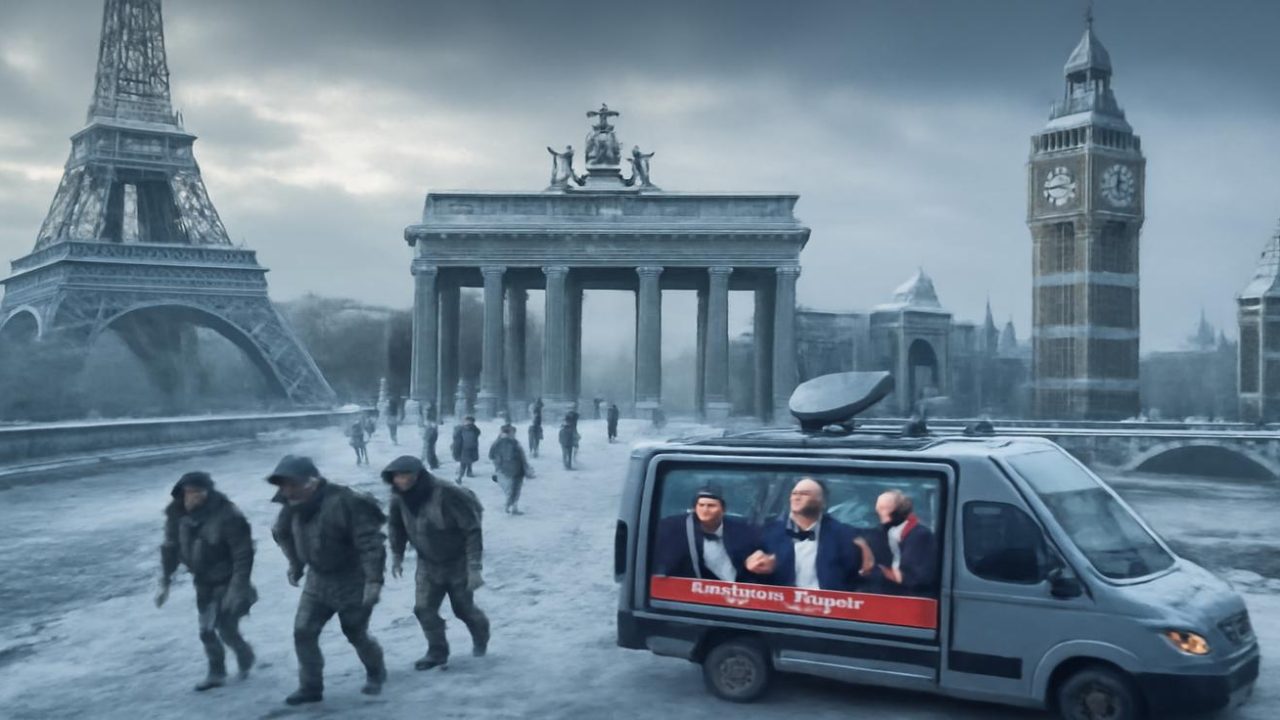
Europe is experiencing an unprecedented February freeze that has sparked fierce debates between climate scientists and skeptics, with politicians caught between defending green policies and addressing immediate economic survival concerns.
The cold arrived quietly at first—a sharper wind in Warsaw, ice forming on Amsterdam’s canals. Then, almost overnight, the continent plunged into temperatures that feel ripped from another century. Weather maps now glow in deep blues and violets, showing a freeze stretching from Lisbon to Berlin, from rural Romania to the Scottish Highlands.
The extreme weather has created an unexpected political battleground, with competing narratives emerging as quickly as the ice itself formed on European streets.
How Climate Change Creates Both Extreme Heat and Extreme Cold
While climate skeptics share videos from snow-choked towns with hashtags like #GlobalCooling and #GreenScam, climatologists are working overtime to explain what they consider both alarming and unsurprising.
The science behind the apparent contradiction is complex but crucial to understand. Climate scientists emphasize that a warming planet doesn’t mean an end to cold weather—it means an unmoored climate system capable of throwing extreme events in both directions.
The key lies in the jet stream, the high-altitude river of wind that once circled the pole in relatively neat patterns. As the Arctic warms faster than mid-latitude regions, this temperature difference weakens, causing the jet stream to wobble in great loops. These wobbles allow tongues of polar air to plunge southward—exactly what Europe is experiencing this February.

One scientist explained the phenomenon using a simple analogy: “Weather is your mood, but climate is your personality. One bad day doesn’t mean you’re a different person. But a pattern of increasingly wild moods? That means something has changed.”
The Political Firestorm Behind the Freeze
The historic cold snap has reignited political tensions across Europe, with different factions using the weather to support their existing positions on climate policy and economic priorities.
Social media algorithms are amplifying the divide. Climate skeptics point to frozen infrastructure and sub-zero temperatures as evidence against global warming theories. Meanwhile, environmental advocates argue that this extreme weather actually proves their point about climate instability.

The timing couldn’t be more politically charged. European leaders are already grappling with energy security concerns, economic pressures from green transition costs, and public frustration over rising utility bills. The February freeze has intensified all of these challenges simultaneously.
| Region | Reported Conditions | Infrastructure Impact |
|---|---|---|
| Madrid | Snow blocking office doors | Transportation delays |
| Slovakia | Power lines sagging under ice | Electrical grid stress |
| Berlin | Cars sealed in ice armor | Vehicle immobilization |
| Lyon outskirts | Temperatures dropping to -15°C | Delivery service disruptions |
Real People Facing the Climate Reality Gap
The disconnect between climate science and lived experience is playing out in personal stories across the continent. The freeze has created moments where scientific explanations feel distant from immediate reality.
In Lyon, delivery drivers watch their phone temperatures slide from -14°C to -15°C while their diesel vans struggle to start. These workers, looking at photos of their children in summer clothes from just months ago, find it hard to reconcile warnings about global warming with their frozen reality.

In Berlin, elderly residents who have experienced both the warmer patterns of recent decades and this sudden return to brutal cold are questioning what climate change actually means for their daily lives. They remember cherry trees blooming in March and Christmas markets in the rain, making this February’s ice-covered courtyards feel especially jarring.
This personal confusion is feeding into broader political narratives. When scientific explanations about jet streams and Arctic warming patterns compete with the immediate experience of scraping ice and canceled trains, the science often loses in the court of public opinion.
Economic Survival Versus Environmental Goals
The February freeze has exposed fundamental tensions in European climate policy. Politicians who have championed green transitions are now facing constituents dealing with heating bills, transportation failures, and economic disruption caused by extreme weather.

The infrastructure failures highlight how unprepared many European systems are for climate extremes in either direction. Power grids strain under ice loads, transportation networks shut down, and heating systems struggle with unprecedented demand.
These immediate crises force difficult political calculations. Leaders must balance long-term climate commitments with short-term economic survival needs. The freeze provides ammunition for those arguing that green policies are unrealistic luxuries when basic infrastructure fails under weather stress.
The debate extends beyond immediate weather response to fundamental questions about European energy independence, infrastructure investment priorities, and the pace of climate policy implementation.

What This Extreme Weather Pattern Means Going Forward
Climate scientists warn that this February’s extreme cold may be a preview of increasingly volatile weather patterns rather than evidence against climate change. The weakening jet stream that allowed polar air to reach southern Europe could become a more frequent occurrence.
This reality presents challenges for both climate advocates and skeptics. Environmental groups must explain how global warming creates local cooling, while critics must account for the broader pattern of extreme weather events across multiple seasons and years.
The political implications extend well beyond this single weather event. European leaders will need to develop policies that address both immediate infrastructure vulnerabilities and long-term climate trends. This means building systems resilient to both extreme heat and extreme cold.

The February freeze also highlights the importance of clear climate communication. When scientific explanations seem counterintuitive to lived experience, political movements can exploit the confusion for their own purposes.
Frequently Asked Questions
How can global warming cause extreme cold weather?
A warming Arctic weakens the jet stream, allowing it to wobble and send polar air southward into regions like Europe.
Is this February freeze unprecedented in Europe?
The source describes it as feeling “torn from another century” and “historic,” but specific temperature records are not provided.

What infrastructure has been most affected by the cold?
Power lines, transportation networks, and vehicle systems have experienced significant disruptions across multiple European countries.
Are politicians changing their climate policies because of this weather?
The freeze has intensified existing debates about green policies versus economic survival, but specific policy changes are not detailed in the source material.
How long is this extreme cold expected to last?
The duration of the current weather pattern has not been specified in available reports.
What regions of Europe are most severely affected?
The freeze extends from Lisbon to Berlin and from rural Romania to the Scottish Highlands, affecting most of the continent.









Leave a Comment