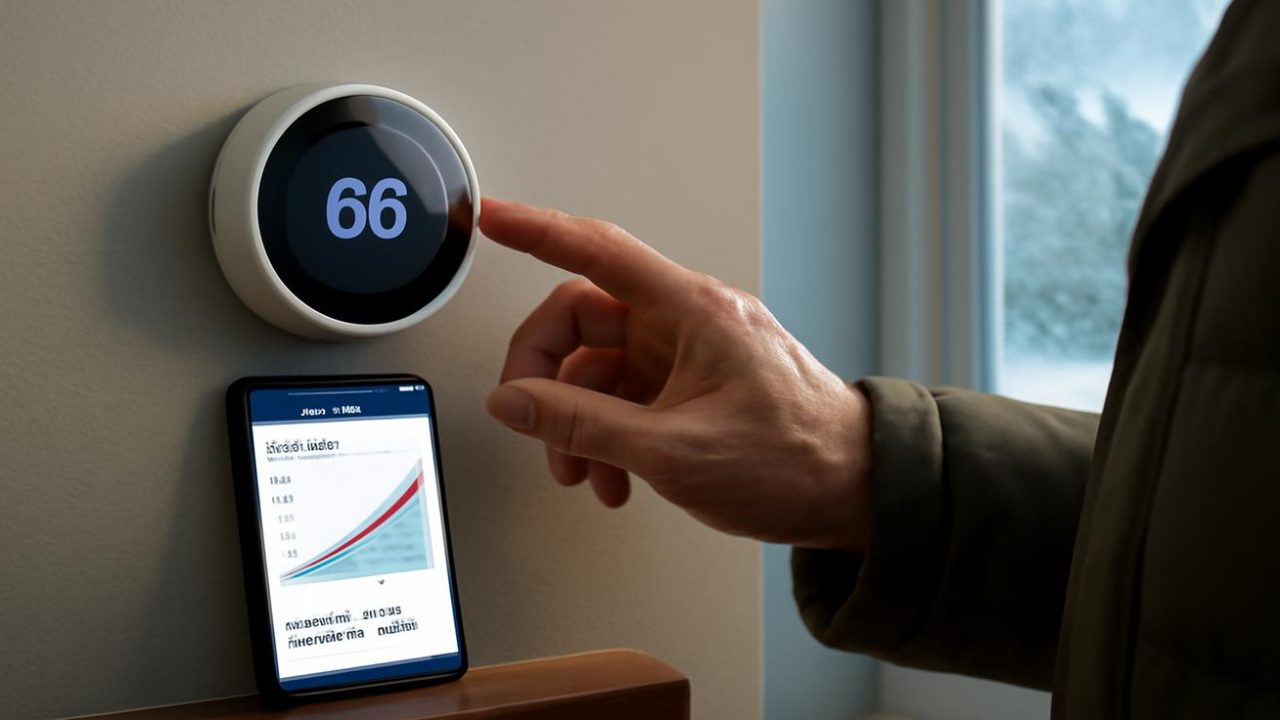
That moment when you turn down the thermostat before leaving home feels like a smart financial move. You’re being responsible, saving energy, doing the right thing. But heating engineers and energy efficiency experts are challenging this conventional wisdom with a surprising claim: your well-intentioned habit might actually be driving up your energy bills.
The problem lies in how homes actually lose and regain heat. When you return to a cold house, your heating system doesn’t just warm the air—it has to reheat everything that cooled down while you were gone, from walls and floors to furniture and fixtures. This intensive reheating process can consume more energy than maintaining a steady temperature would have required.
Why Your Home Isn’t Like a Light Switch
Most people think about heating the same way they think about lighting: turn it off when you’re not using it, turn it back on when you return. This mental model makes intuitive sense but misses the complex thermal dynamics happening inside your walls.

Your home functions more like a thermal balloon, constantly losing heat through walls, windows, roof, and foundation. When you maintain a steady temperature, your heating system works at a gentle, consistent pace to replace this gradual heat loss. When you let the temperature drop significantly, everything in your home—masonry, flooring, furniture, even the air itself—gives up its stored heat to the cold outside.
The real energy cost comes when you return home and ask your heating system to rapidly restore warmth. Air heats quickly, but thermal mass heats slowly. Your boiler or heat pump has to work much harder and at higher outputs to bring cold walls, floors, and furnishings back up to comfortable temperatures.
When Turning Down Heating Saves Money—And When It Doesn’t
The effectiveness of turning down your heating depends on several critical factors that vary dramatically between homes:

- Insulation quality: Well-insulated homes lose heat slowly and can benefit from temperature setbacks. Poorly insulated homes lose heat so rapidly that maintaining steady temperatures often proves more efficient.
- Time away: Short trips of 2-4 hours rarely justify the energy cost of reheating. Longer absences of 8+ hours are more likely to produce genuine savings.
- Heating system type: Heat pumps and modern condensing boilers operate most efficiently at consistent, moderate outputs rather than the high-intensity bursts required for rapid reheating.
- Home construction: Older homes with solid masonry walls store more thermal mass, making them expensive to reheat after cooling down.
The thermal rhythm of your specific home determines whether temperature setbacks save or waste energy. Homes with good insulation and efficient heating systems can handle temperature swings more economically. Older, poorly insulated properties often perform better with minimal temperature variation.
The Hidden Costs of Temperature Cycling
Beyond raw energy consumption, frequent temperature cycling creates additional costs that don’t show up immediately on your heating bill:
| Impact | Short-term Effect | Long-term Cost |
|---|---|---|
| System wear | More frequent boiler cycling | Earlier equipment replacement |
| Comfort lag | Cold surfaces despite warm air | Tendency to overheat for comfort |
| Humidity swings | Condensation and dryness cycles | Potential structural issues |
When you return to a house that’s been cooling for hours, the air temperature might reach your thermostat setting relatively quickly, but walls, floors, and furniture remain cold. This creates an uncomfortable environment that often leads people to set the thermostat higher than usual to compensate—a behavior that can eliminate any potential savings from the initial setback.

Smart Strategies for Real Energy Savings
Rather than relying on dramatic temperature swings, energy efficiency experts recommend more nuanced approaches based on your home’s specific characteristics:
For well-insulated modern homes, modest setbacks of 2-3 degrees can provide savings without triggering energy-intensive reheating cycles. The key is avoiding the dramatic temperature drops that require high-output recovery heating.
Older homes with poor insulation often benefit from maintaining steady temperatures during typical daily absence periods. The energy required to reheat thermal mass frequently exceeds the savings from reduced heat loss.

Smart thermostats can help optimize this balance by learning your home’s thermal characteristics and adjusting setback strategies accordingly. However, the default programming on many smart thermostats assumes all homes behave similarly, which isn’t accurate.
Testing What Works for Your Home
The most reliable way to determine whether temperature setbacks save money in your specific situation is controlled testing during similar weather periods.
Try maintaining steady temperatures for one week, then implement your usual setback routine the following week. Compare energy usage during periods with similar outdoor temperatures and occupancy patterns. Many people discover their intuitive energy-saving habits actually increase consumption.

Pay attention to comfort patterns as well. If you consistently feel cold when returning home and compensate by setting higher temperatures, factor this behavior into your energy calculations. Real-world energy savings must account for actual human responses, not theoretical temperature schedules.
Frequently Asked Questions
How long do I need to be away for temperature setbacks to save money?
This varies by home, but generally 8+ hours provides better savings potential than shorter periods of 2-4 hours.
Do smart thermostats automatically optimize temperature setbacks?
Many smart thermostats use generic programming that may not suit your specific home’s thermal characteristics and may need manual adjustment.

Why does my home feel cold even after the thermostat reaches the set temperature?
Air heats faster than walls, floors, and furniture, so surfaces remain cold even when air temperature recovers, creating discomfort.
Are there homes where steady temperatures are always more efficient?
Yes, particularly older homes with poor insulation and high thermal mass, where reheating costs often exceed setback savings.
How much should I turn down the thermostat if setbacks work for my home?
Modest reductions of 2-3 degrees often provide savings without triggering energy-intensive reheating cycles.

Does the type of heating system affect whether setbacks save energy?
Yes, heat pumps and modern condensing boilers operate most efficiently at steady, moderate outputs rather than high-intensity reheating bursts.









Leave a Comment