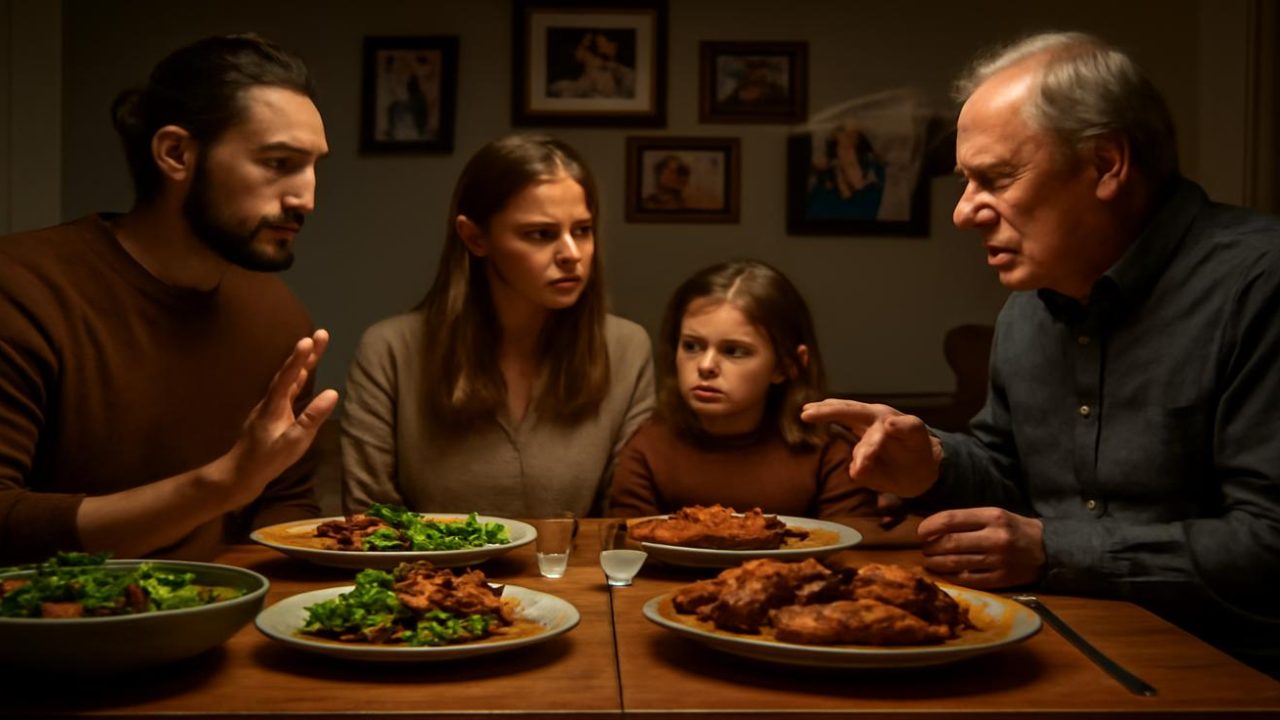
A family text message featuring a toddler eating chicken nuggets has sparked a heated confrontation that highlights one of modern parenting’s most divisive issues: how far dietary choices should extend to children, and who gets to make those decisions.
The incident began when grandparents fed their vegan daughter-in-law’s child meat without permission, then proudly shared a photo of the moment. What followed was a family rupture that threatens to permanently separate grandparents from their grandchild.
This clash between traditional family dynamics and contemporary lifestyle choices reflects a growing tension in households across the country, where generational differences over child-rearing practices are creating unprecedented family divisions.

When Family Values Collide Over Vegan Parenting
Emma and Daniel had spent three years building their vegan lifestyle after what they describe as a transformative experience during a mountain hike and documentary viewing. Their commitment extended beyond personal dietary choices to encompass clothing, household products, and eventually, their parenting philosophy.
When their son Leo was born, the couple made a carefully researched decision to raise him vegan until he could make his own informed choice. They consulted pediatricians and dietitians, studying medical literature extensively to ensure their approach would be nutritionally sound.
Their doctor, described as “cautious but open-minded,” agreed the diet could be implemented safely with proper attention to nutrients like B12, iron, and omega-3s. The couple felt confident in their approach, viewing it as an extension of their moral compass rather than a restrictive limitation.
However, the grandparents remained skeptical from the beginning. Daniel’s father had expressed concerns over family dinners, observing Leo’s plant-based meals with what the couple perceived as “pity and suspicion.”
The Breaking Point: A Sunday Afternoon Text
The family conflict reached its climax when Emma received a text message from her mother-in-law while preparing lentil stew on a Sunday afternoon. The message contained a photo of Leo eating what was clearly identified as chicken nuggets, accompanied by the caption: “He loved his first taste of real food – just like his dad! Little chicken nugget monster!”
The image represented a direct violation of the boundaries Emma and Daniel had established for their child’s diet. For the parents, this wasn’t simply about food preferences – it represented a fundamental breach of trust regarding their parenting decisions.

When Daniel confronted his parents by phone, the conversation quickly escalated. The grandparents dismissed the couple’s concerns, with his father laughing off their objections and his mother characterizing the chicken as “just chicken, not poison.”
The grandparents went further, suggesting that the vegan diet was making Leo “weird” and that family traditions should take precedence over what they termed “restrictive ideology.”
The Aftermath: Trust Broken, Relationships Severed
The confrontation led to an ultimatum that neither side seemed prepared to navigate. Daniel informed his parents that if they couldn’t respect the family’s dietary choices for Leo, they wouldn’t be able to leave him in their care again.

The grandparents’ response escalated the conflict further. When Daniel’s mother began crying and his father declared, “If you don’t trust us, maybe you shouldn’t visit at all,” the family rift became complete.
This exchange highlights the deeper issues at play beyond dietary preferences. The conflict encompasses questions of parental authority, generational respect, family tradition, and the right to make autonomous choices about child-rearing.
| Perspective | Core Concern | Underlying Value |
|---|---|---|
| Vegan Parents | Respect for parenting decisions | Moral consistency and child autonomy |
| Grandparents | Family tradition and “normal” childhood | Generational wisdom and established practices |
The Broader Implications for Modern Families
This family’s experience reflects broader societal tensions around parenting philosophies that differ significantly from previous generations. As lifestyle choices become more diverse and specialized, families are grappling with how to maintain relationships while respecting fundamental disagreements.

The conflict also raises questions about the boundaries of grandparent involvement in child-rearing decisions. Traditional expectations that grandparents can share their own values and practices with grandchildren are colliding with contemporary parents’ desire for consistent implementation of their chosen lifestyle.
For families navigating vegan child-rearing, the challenges extend beyond nutrition to encompass social dynamics, family relationships, and community acceptance. The medical community’s cautious but supportive stance on well-planned vegan diets for children doesn’t necessarily translate to family harmony.
The emotional weight of these decisions becomes apparent in the parents’ extensive research efforts – consulting multiple medical professionals and studying nutritional requirements extensively before committing to their approach.

What This Means for Other Families Facing Similar Conflicts
The severity of this family rupture demonstrates how quickly disagreements over child-rearing practices can escalate into permanent relationship damage. The grandparents’ decision to feed Leo meat despite knowing his parents’ position, followed by their dismissive response to the parents’ concerns, created a trust breach that may prove irreparable.
The incident also illustrates how different generations define “what’s best for the child.” The grandparents viewed their actions as providing Leo with “real food” and normal childhood experiences, while the parents saw it as undermining their carefully considered parenting philosophy.
For other families, this conflict serves as a cautionary tale about the importance of establishing clear boundaries and consequences before situations escalate. The couple’s three-year commitment to veganism and extensive medical consultation demonstrate this wasn’t a casual lifestyle experiment, yet the grandparents failed to recognize the depth of their conviction.

The story also highlights how modern parenting often requires navigating between personal values and family harmony – a balance that becomes increasingly difficult when core beliefs are involved.
Frequently Asked Questions
Did the parents consult medical professionals about raising their child vegan?
Yes, they consulted pediatricians and dietitians extensively, with their doctor agreeing it could be done safely with proper attention to nutrients like B12, iron, and omega-3s.
How long had the parents been vegan before having their child?
Emma and Daniel had committed to a vegan lifestyle for three years before this incident, following a mountain hike and documentary experience.

What was the grandparents’ main objection to the vegan diet?
The grandfather stated “Kids need meat” and expressed concern that the diet was making Leo “weird,” while they viewed family traditions as more important than the parents’ “restrictive ideology.”
What consequence did the parents establish after the incident?
Daniel told his parents they wouldn’t be able to leave Leo in their care again if they couldn’t respect the family’s dietary choices.
How did the grandparents respond to the parents’ concerns?
They dismissed the concerns, with the father laughing and the mother saying it was “just chicken, not poison,” ultimately suggesting the parents shouldn’t visit if they couldn’t trust them.
Was this the first time tensions arose over the child’s diet?
No, the grandparents had previously expressed skepticism, with the grandfather commenting over Christmas dinner that “kids need meat” while observing Leo’s plant-based meals with apparent disapproval.









Leave a Comment