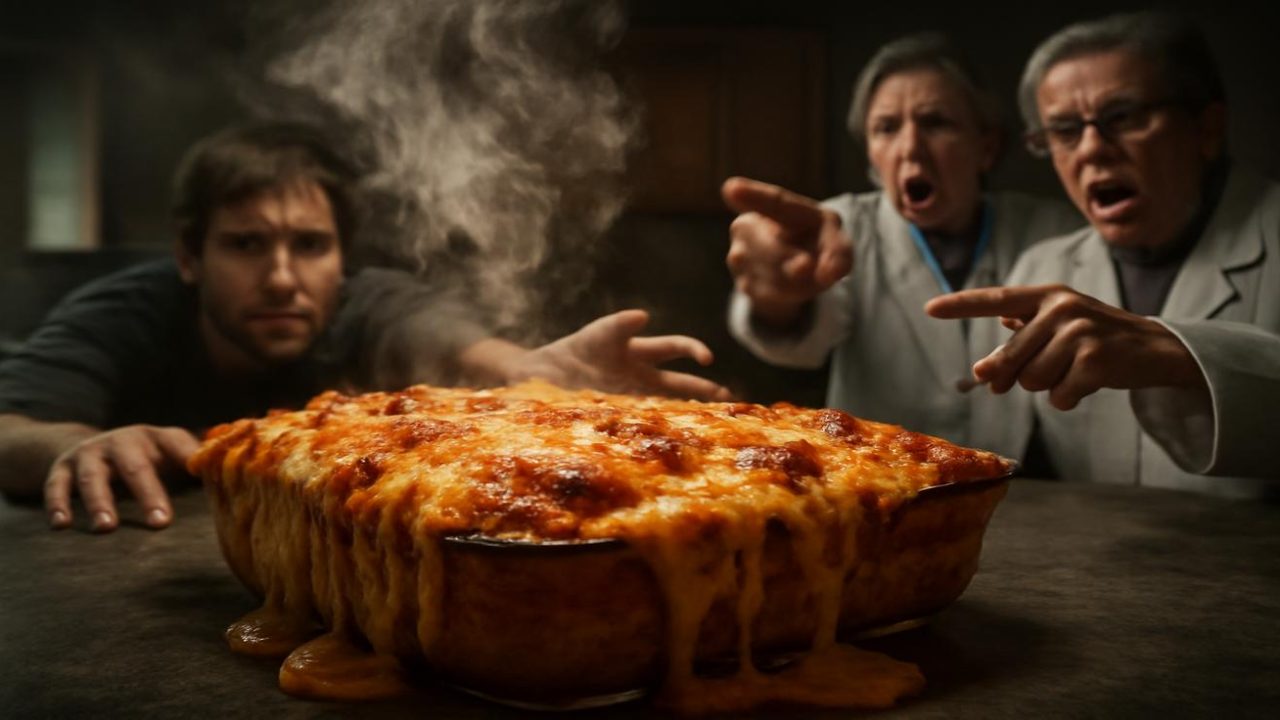
The Tuesday night kitchen confession happens in millions of homes across America, where exhausted adults stand barefoot before glowing ovens, waiting for bubbling cheese to deliver what nothing else has managed all week: the illusion of comfort. It’s a ritual that unfolds with mechanical precision—pasta, sauce, protein, and enough melted cheese to obscure any pretense of nutrition.
This is the story of the cheesebomb casserole, a dish that seduces the lonely, enrages health professionals, and exposes our collective willingness to purchase emotional relief one Tuesday evening at a time.
The phenomenon strikes with predictable timing. Monday demands grit. Wednesday offers the dignity of reaching the week’s midpoint. Friday holds the promise of well-deserved indulgence. But Tuesday drags with particular cruelty—the day coffee tastes weaker, inboxes grow meaner, and the sky takes on a tired, grayish posture regardless of season.

The Anatomy of Tuesday Night Surrender
By 6:17 p.m. on any given Tuesday, the grown-up brain that once vowed to “cook more whole foods” has clocked out entirely. What remains is a different voice, one that whispers about kindness and suggests that tonight, kindness might look like a casserole.
Not the delicate, farmer’s-market variety requiring spiralized vegetables and an understanding of nutritional yeast. This is the other kind—assembled from boxes, cans, and good intentions gone sideways. The kind that calls itself “homemade” simply because someone had to twist the oven knob and stand there in socks.
The pantry becomes a museum of decisions both good and bad. Half-squashed pasta boxes emerge alongside family-sized bricks of pre-shredded cheese purchased “for taco night.” Canned soup that survived three apartment moves joins forces with lonely vegetables whose best days have passed.

The assembly follows a choreography learned from recipe blogs, maternal handwriting, and the backs of soup cans. Pasta boils until just shy of done—sturdy enough to survive the coming lava bath. Something creamy and suspiciously uniform gets stirred in: condensed soup, jarred sauce, perhaps processed cheese wrapped in foil armor.
The Science of Melted Comfort
Behind the oven glass, transformation begins with methodical precision. Cheese liquefies first, seeping into pasta crevices and pooling along casserole dish edges. Bubbles appear and multiply, jittering like restless thoughts. The surface starts to blister, forming bronze patches that crackle and harden.
The aroma pushes down hallways and seeps under bedroom doors—fatty, salty, nostalgic. It smells like every childhood potluck, every sleepover, every snow day when an adult had dinner handled. Except now, that adult is you, squinting into the oven as personal choices solidify before your eyes.

| Casserole Component | Emotional Function | Nutritional Reality |
|---|---|---|
| Melted cheese layer | Visual comfort blanket | High saturated fat content |
| Pasta base | Familiar carbohydrate foundation | Refined carbohydrates |
| Creamy sauce | Childhood nostalgia trigger | Processed ingredients, high sodium |
| Protein additions | Justification for “balanced meal” | Often processed meats |
Somewhere in the distance, a smoke alarm considers activation. Elsewhere, a nutritionist bolts upright in bed, sensing a disturbance in the food pyramid. The tiny voice murmuring about saturated fat and sodium content gets drowned out by the louder one celebrating that cheese pull.
The Psychology Behind the Bubbling Dish
The cheesebomb casserole represents more than questionable nutrition choices—it’s a coping mechanism disguised as dinner. The ritual provides structure when everything else feels chaotic. The melting cheese offers visual proof that something warm and comforting exists in an otherwise cold world.
This isn’t about hunger in the traditional sense. It’s about the human need for nurturing, even when that nurturing comes from a casserole dish filled with processed ingredients. The act of cooking, however simple, creates a moment of agency in lives that often feel out of control.

The cheese doesn’t just melt—it oozes, slumps, and sighs into itself like it’s exhausted from pretending everything is fine. The edges turn the color of toasted caramel while the surface blisters in spots, creating a landscape of comfort that bears no resemblance to actual nutrition.
What Nutritionists Really Think
Health professionals understand the emotional appeal but worry about the nutritional consequences. The typical cheesebomb casserole delivers massive amounts of saturated fat, refined carbohydrates, and sodium while providing minimal vitamins, minerals, or fiber.
The processed cheese alone can contain enough sodium for an entire day. Add canned soup, jarred sauce, and processed meats, and the dish becomes a sodium bomb that makes Tuesday night comfort feel like Wednesday morning regret.

Yet even nutrition experts acknowledge the psychological component. Food serves functions beyond fuel—it provides comfort, creates rituals, and offers emotional support during difficult times. The challenge lies in finding healthier ways to meet those same emotional needs.
The Real Cost of Comfort Food
The cheesebomb casserole phenomenon reveals something deeper about modern life—our willingness to trade long-term health for immediate emotional relief. Each bubbling dish represents a small surrender to the overwhelming nature of daily existence.
The ingredients cost relatively little money but potentially significant health consequences over time. Regular consumption of high-sodium, high-saturated-fat meals contributes to cardiovascular disease, high blood pressure, and weight gain.

More concerning is what the ritual represents: the normalization of using food as primary emotional support. When Tuesday night consistently requires cheesy comfort, it might indicate larger issues with stress management, social support, or life satisfaction.
The casserole dish goes into the oven with a heavy thunk, like a final decision. Behind the glass, choices solidify alongside melted cheese. The question isn’t whether comfort food serves a purpose—it clearly does. The question is whether we can find ways to comfort ourselves that don’t require choosing between emotional well-being and physical health.
Frequently Asked Questions
Why do comfort food cravings peak on Tuesday nights?
Tuesday represents the emotional low point of the week—past Monday’s optimism but far from Friday’s relief, creating maximum stress with minimum hope for immediate respite.

Are there healthier alternatives to cheesebomb casseroles?
Yes, using whole grain pasta, reduced-fat cheese, vegetables, and homemade sauces can provide similar comfort with better nutrition, though the convenience factor decreases.
What makes melted cheese so psychologically appealing?
Melted cheese triggers nostalgia for childhood comfort foods while providing visual and textural satisfaction that signals warmth and nurturing.
How much sodium is typically in these casseroles?
A single serving can contain 1,500-2,500mg of sodium, approaching or exceeding the recommended daily limit of 2,300mg.

Is occasional comfort food consumption harmful?
Occasional indulgence poses minimal health risks, but regular reliance on high-sodium, high-fat comfort foods can contribute to cardiovascular problems over time.
What do nutritionists recommend for Tuesday night stress eating?
Focus on foods that provide genuine nourishment alongside comfort—think hearty soups with vegetables, whole grain dishes with moderate cheese, or homemade versions with healthier ingredients.










Leave a Comment