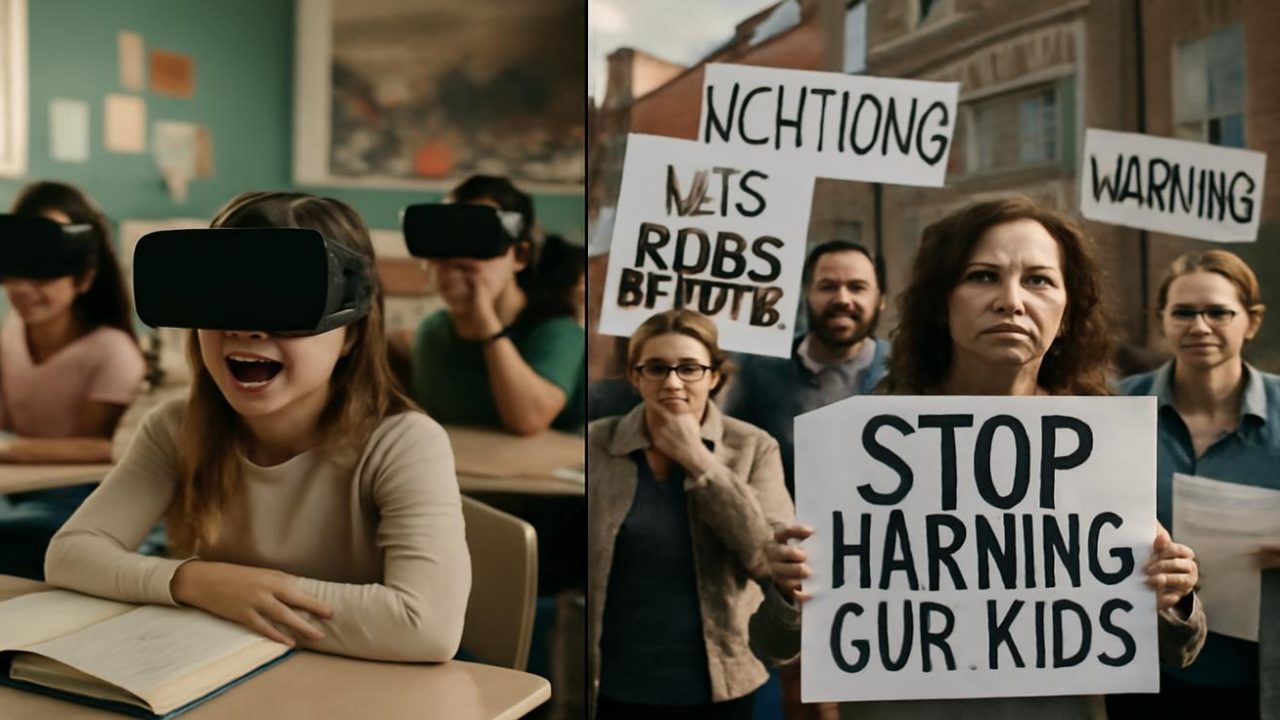
Twenty fourth-graders stood in a classroom circle wearing virtual reality headsets, experiencing simulated war scenes complete with explosions, burning buildings, and screaming voices as part of what their school called an “immersive history experience.” What happened next has ignited a fierce debate about the psychological impact of graphic educational content on young children.
The controversial program at Maple Ridge Elementary, branded “Empathy Through Immersion,” was designed to teach students about historical conflicts by placing them directly into virtual war zones. Students reported experiencing street explosions, dust-filled air, sirens, crying voices in foreign languages, and what one child described as “bodies in the street.”
The backlash was swift and intense. Parents flooded group chats with reports of children experiencing nightmares, refusing to sleep without lights on, and asking whether war was coming to their town. One student threw off his headset mid-lesson and hid under his desk, while another clung to the teacher while shaking.

How the Virtual Reality Program Started
The program emerged from what seemed like an educational breakthrough. Maple Ridge Elementary received a grant providing thirty VR headsets, tablets to control them, and a full-year subscription to the educational platform promising “unprecedented emotional impact.”
The sales pitch was compelling: instead of memorizing dates and studying black-and-white photos, students would “stand in the streets of history” and experience “the surround sound of human suffering and resilience.” The school board approved the program after a brief, lightly attended meeting, swayed by glossy brochures showing smiling children in headsets.
The principal, eager to position Maple Ridge as forward-thinking in a competitive district, embraced the technology enthusiastically. Teachers were curious about the possibilities. Most parents remained largely unaware of the program’s graphic content until their children came home describing smoke smells, bullet sounds, and ground that “shook” even though it didn’t.

The permission slips mentioned “immersive history experiences” and “simulations of historical events” but failed to explicitly describe graphic war scenes, blood, or the intense sensory details that would later traumatize some students.
The Parent Uprising That Changed Everything
The controversy began with a simple text message: “Did your kids do some kind of war VR thing today? Mine is freaking out.” Within minutes, the Maple Ridge parents’ group chat exploded with similar reports.
Parents described children experiencing various distressing reactions:

- Sudden nightmares and sleep disturbances
- Refusal to sleep without hallway lights on
- Repetitive questions about whether war was coming to America
- Detailed descriptions of virtual violence and destruction
- Physical reactions including shaking and hiding
One nurse reported her daughter describing “bodies in the street” and “a man screaming for his child.” Another parent said her son repeatedly asked whether their town could “blow up like that.” The word “trauma” appeared in the chat threads, followed quickly by “lawsuit.”
Parents began scrutinizing the original permission forms, discovering the vague language that failed to prepare them for their children’s exposure to graphic war simulations. By dawn, private outrage had spilled into public forums, with community page posts drawing dozens of comments within hours.
What Experts Say About Virtual Reality and Child Development
The Maple Ridge incident highlights broader questions about age-appropriate technology use in education. Virtual reality creates uniquely immersive experiences that can feel intensely real to young users, potentially triggering stronger emotional and physiological responses than traditional media.

Child development research suggests that elementary school students are still developing emotional regulation skills and may struggle to distinguish between virtual and real experiences, especially when content involves violence or trauma.
The controversy also raises questions about informed consent in educational settings. While schools routinely use various teaching materials, the immersive nature of VR technology may require more detailed disclosure about content and potential psychological impacts.
| Age Group | VR Readiness Concerns | Recommended Precautions |
|---|---|---|
| Elementary (6-11) | Difficulty distinguishing virtual from real | Careful content screening, parental involvement |
| Middle School (12-14) | Developing emotional regulation | Gradual exposure, discussion sessions |
| High School (15-18) | Better reality distinction | Content warnings, opt-out options |
The Broader Educational Technology Debate
The Maple Ridge situation reflects a larger tension in modern education between innovation and child welfare. Schools face pressure to adopt cutting-edge technology while ensuring student safety and psychological well-being.

Supporters of immersive educational technology argue that virtual reality can create powerful learning experiences impossible through traditional methods. They contend that experiencing historical events firsthand, even virtually, builds empathy and deeper understanding.
Critics worry about exposing children to traumatic content without adequate psychological preparation or support. They question whether the educational benefits justify potential psychological risks, particularly for younger students.
The incident also highlights communication gaps between schools and parents regarding new educational technologies. Many parents report feeling blindsided by their children’s exposure to graphic content they hadn’t expected in an elementary school setting.

What This Means for Schools and Parents
The Maple Ridge controversy is likely to influence how schools approach virtual reality and other immersive technologies. Educational institutions may need to develop more detailed consent processes and content disclosure requirements.
Parents are increasingly demanding transparency about educational technology use, particularly when it involves potentially disturbing content. The incident demonstrates how quickly school technology decisions can become community-wide controversies in the social media age.
The situation also raises questions about teacher training and preparation for implementing new technologies. Educators may need additional support to understand and manage the psychological impacts of immersive educational experiences.

Moving forward, schools may need to balance educational innovation with more robust safeguards for student mental health, including clearer communication with parents and age-appropriate content guidelines for emerging technologies.
Frequently Asked Questions
What exactly did the students experience in the VR program?
Students experienced simulated war scenes including explosions, burning buildings, dust-filled air, sirens, crying voices, and what some described as “bodies in the street.”
How did parents find out about the graphic content?
Parents learned about it when their children came home describing disturbing scenes and experiencing nightmares, sleep problems, and anxiety about war coming to their town.

What did the original permission slips say?
The permission forms mentioned “immersive history experiences” and “simulations of historical events” but did not explicitly describe graphic war scenes or intense sensory details.
How many students participated in the program?
Twenty fourth-graders participated in the specific lesson described, with the school having thirty VR headsets total for the program.
What was the educational goal of the program?
The program, called “Empathy Through Immersion,” aimed to teach students about historical conflicts by having them experience war scenes virtually rather than just reading about them.
What happened to students who couldn’t handle the experience?
Some students had strong reactions during the session, with one throwing off his headset and hiding under his desk, and another clinging to the teacher while shaking.










Leave a Comment