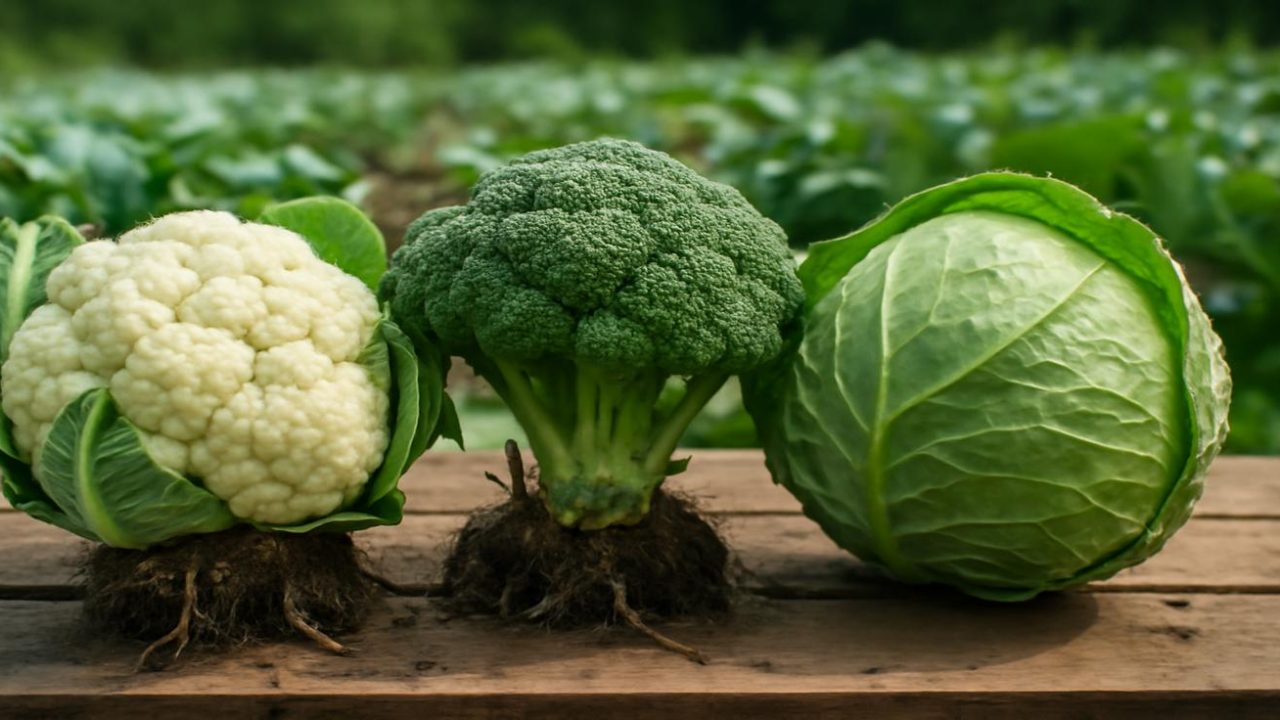
Seventeen-year-old Kai stared at the grocery display, phone in hand, texting his mom frantically. “You said cauliflower, but they’re out. Can I get broccoli instead?” His mom’s reply came back instantly: “Sure, honey. They’re basically the same thing anyway.”
Little did either of them know, his mom was more right than she probably realized. What sounds like a casual substitution actually touches on one of nature’s most fascinating examples of selective breeding and plant transformation.
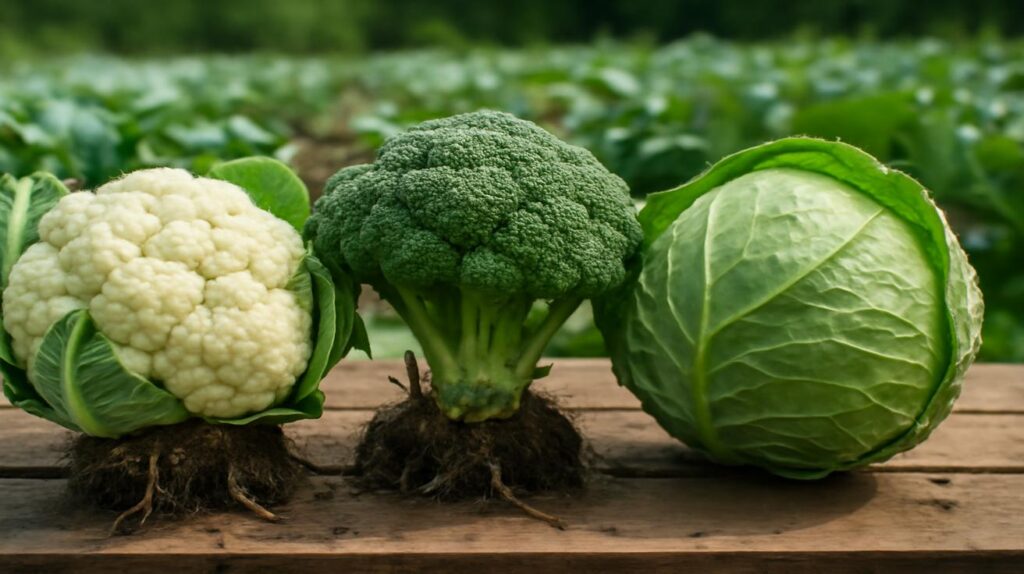
Here’s the mind-blowing truth that most people walk past in the produce aisle every single day: cauliflower, broccoli, cabbage, kale, Brussels sprouts, and even kohlrabi are all the exact same species of plant. They’re just different varieties of Brassica oleracea, transformed over thousands of years through careful human cultivation.

How One Wild Plant Became Six Different Vegetables
Think of it like this – imagine if dog breeders had focused on making different body parts huge instead of changing size and coat color. That’s essentially what ancient farmers did with a humble wild cabbage that grew along Mediterranean coastlines.
This original plant, still found growing wild today, looks nothing like the vegetables we know. It’s a scraggly, bitter plant with small leaves and tiny flower buds. But humans saw potential in different parts of this plant and spent generations selecting and breeding for specific traits.
The transformation of wild cabbage into so many distinct vegetables represents one of humanity’s greatest agricultural achievements. We essentially sculpted living organisms through selective pressure.
— Dr. Sarah Martinez, Agricultural Geneticist at UC Davis

When farmers wanted bigger leaves, they kept seeds from plants with the largest, most tender leaves. After hundreds of generations, they created what we now call cabbage and kale. When they focused on the flower buds, they eventually developed broccoli and cauliflower.
The process wasn’t quick. We’re talking about thousands of years of careful selection, with each generation of farmers choosing the best plants and saving their seeds for the next season.
The Incredible Variety Hidden in One Species
Here’s where it gets really wild. Each vegetable represents humans focusing on a different part of the same basic plant structure:

| Vegetable | Plant Part Enhanced | What We Eat |
|---|---|---|
| Cabbage | Leaves | Tightly packed leaf head |
| Kale | Leaves | Loose, curly leaves |
| Broccoli | Flower buds | Immature flower clusters |
| Cauliflower | Flower buds | Dense, white flower mass |
| Brussels Sprouts | Leaf buds | Mini cabbage-like buds on stem |
| Kohlrabi | Stem | Swollen stem bulb |
Each variety showcases human ingenuity in recognizing potential. Brussels sprouts farmers noticed that some plants formed little cabbage-like buds along their stems. Instead of ignoring this quirk, they bred specifically for it.
What’s remarkable is that these vegetables can still interbreed with each other. A broccoli plant can technically cross-pollinate with a cabbage plant because they’re genetically the same species.
— Professor Michael Chen, Plant Biology Institute
The genetic similarity is so close that these plants share the same chromosome count and can produce fertile offspring when cross-bred. Try explaining that to someone who thinks broccoli and cabbage have nothing in common!

Why This Matters More Than You Think
Understanding this connection changes how we think about food diversity and agricultural resilience. When we see six different vegetables, we might think we’re eating a varied diet. But genetically speaking, we’re relying heavily on just one species.
This has real implications for food security. If a disease or pest specifically targets Brassica oleracea, it could potentially affect all these vegetables simultaneously. It’s happened before – clubroot disease and flea beetles don’t discriminate between your fancy purple kale and your grandmother’s cabbage.
- Climate change affects all these vegetables similarly since they share genetic foundations
- Breeding improvements in one variety can often be transferred to others
- Understanding their shared genetics helps farmers develop more resilient crops
- It explains why these vegetables have similar nutritional profiles and health benefits
From a nutritional standpoint, the family resemblance is clear. All these vegetables are packed with vitamin C, fiber, and compounds called glucosinolates that give them their slightly bitter taste and many of their health benefits.

The sulfur compounds that make Brussels sprouts and cabbage smell when you cook them? That’s the family signature. All these vegetables contain similar beneficial compounds because they’re essentially genetic siblings.
— Dr. Lisa Thompson, Nutritional Biochemist
This also explains why people who hate one of these vegetables often dislike others in the group. If you’re sensitive to glucosinolates, you might find yourself avoiding the entire produce section without realizing why.
The Future of This Ancient Plant Family
Modern plant breeders are still working with this incredibly adaptable species. Purple cauliflower, rainbow chard, and dinosaur kale are all recent innovations built on the same genetic foundation that gave us regular cabbage thousands of years ago.

Scientists are now using advanced techniques to develop varieties that can handle extreme weather, resist diseases, and pack even more nutrition into familiar forms. Some researchers are even working backward, studying wild Brassica oleracea to find traits we might have accidentally bred out over the millennia.
We’re essentially continuing a conversation with this plant species that humans started thousands of years ago. Each new variety is another chapter in that ongoing relationship.
— Dr. James Rodriguez, Plant Breeding Specialist
The next time you’re in the grocery store, take a moment to appreciate this incredible example of human agricultural achievement. That ordinary produce section represents thousands of years of careful observation, selection, and cultivation – all starting with one unremarkable wild plant growing on a Mediterranean hillside.

Who knows? Maybe understanding this connection will make that Brussels sprouts dish a little more interesting, knowing you’re eating the result of one of humanity’s longest-running science experiments.
FAQs
Can you actually cross-breed broccoli and cauliflower?
Yes! Since they’re the same species, they can cross-pollinate and produce fertile offspring, though the results might look quite different from either parent.
Why do these vegetables taste so different if they’re the same plant?
Thousands of years of selective breeding has concentrated different compounds and changed textures, but you can still taste family similarities in their slightly bitter, sulfurous notes.

Are there other examples of one plant becoming many vegetables?
Yes! Beets and Swiss chard are the same species (Beta vulgaris), and different varieties of Cucurbita pepo give us zucchini, acorn squash, and pumpkins.
Do these vegetables have the same nutritional value?
They’re similar but not identical. Each variety has concentrated different nutrients based on which plant parts were enhanced through breeding.
How long did it take to develop these different varieties?
Most varieties developed over hundreds to thousands of years through traditional selective breeding, though modern techniques can create new varieties much faster.
Can I grow different varieties together in my garden?
You can grow them near each other, but if you’re saving seeds, they might cross-pollinate and give you unexpected combinations in the next generation.










Leave a Comment