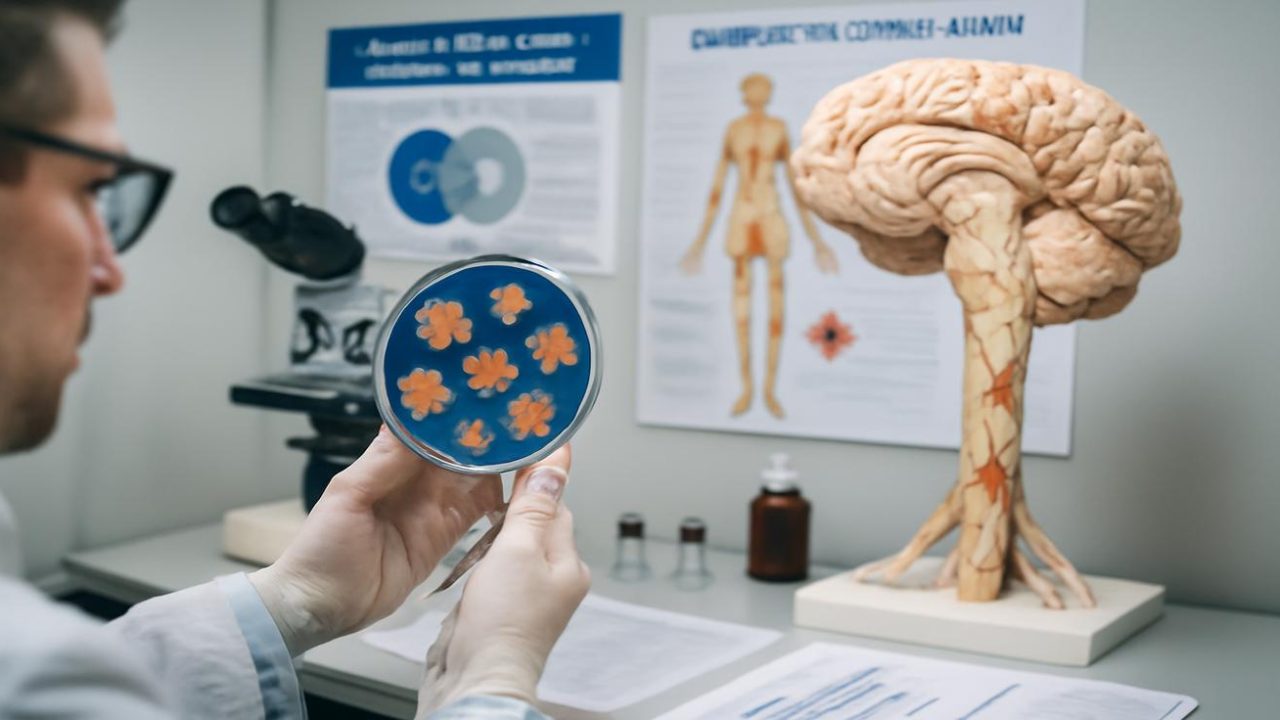
More than 90% of adults worldwide carry the Epstein-Barr virus in their bodies, yet most never realize this nearly universal passenger might hold the key to understanding multiple sclerosis. Recent medical research has established the strongest link yet between EBV and MS, transforming what was once medical suspicion into compelling scientific evidence.
The connection isn’t just statistical noise. Large-scale studies tracking thousands of people over decades have revealed that multiple sclerosis essentially doesn’t develop without EBV infection coming first. This discovery is reshaping how doctors think about one of neurology’s most puzzling diseases.
For the millions of people living with MS worldwide, this research represents more than academic curiosity. It opens new pathways for understanding why their immune systems turned against their own nervous systems, and potentially, how future cases might be prevented.

The Invisible Virus That Lives in Nearly Everyone
Epstein-Barr virus operates like a permanent houseguest that never quite leaves. Most people encounter it during childhood or young adulthood, sometimes experiencing it as infectious mononucleosis — the exhausting “mono” that sidelines college students for weeks. Others contract EBV with no recognizable symptoms at all.
Once EBV enters the body, it takes up residence in B cells, a type of white blood cell that’s part of the immune system. Unlike viruses that cause acute illness and disappear, EBV settles in for life. For most people, this coexistence remains peaceful, with the virus staying dormant while the immune system keeps it in check.
The sheer prevalence of EBV made it difficult for researchers to initially connect it to MS. When a virus infects virtually everyone, how do you prove it causes a disease that affects a much smaller population? The answer required following people over time and examining the precise timing of infection and disease onset.

Multiple sclerosis typically strikes young adults, particularly women, in their twenties, thirties, or forties. The disease occurs when the immune system mistakenly attacks myelin, the protective insulation around nerve fibers in the brain and spinal cord. As this insulation deteriorates, messages between brain and body become scrambled, affecting vision, movement, balance, and cognitive function.
The Military Study That Changed Everything
The breakthrough came from an unexpected source: military blood banks. For decades, young adults entering military service had blood samples taken and stored as part of routine medical processing. This created a frozen archive of immune histories spanning years and involving tens of thousands of people.
Researchers identified individuals who developed MS years after their initial blood draws, then compared their early samples with those from people who never developed the disease. The pattern that emerged was striking and consistent.

Almost every person who eventually developed MS showed evidence of EBV infection before their first neurological symptoms appeared. Among those who were initially EBV-negative, the risk of developing MS increased dramatically after they contracted the virus.
The statistical relationship wasn’t just strong — it was nearly absolute. MS cases without prior EBV infection were extremely rare, suggesting the virus plays an essential role in triggering the disease process.
| Population | EBV Status | MS Development Risk |
|---|---|---|
| General Population | EBV Negative | Extremely Low |
| General Population | EBV Positive | Baseline Risk |
| Recent EBV Infection | Newly Positive | Significantly Elevated |
Why Some People Develop MS While Others Don’t
The EBV connection doesn’t mean everyone with the virus will develop MS. Instead, researchers believe the virus acts as a necessary trigger in people who are already genetically susceptible to the disease.

The immune response to EBV in people who later develop MS appears different from the typical response. Rather than the controlled, measured reaction seen in most people, these individuals show signs of an overactive immune response to the virus. This heightened reaction may set off a cascade of immune confusion that eventually targets the nervous system.
Think of it as mistaken identity on a cellular level. The immune system, primed to fight EBV, begins attacking proteins in the nervous system that resemble parts of the virus. This molecular mimicry theory explains why the same virus that causes mild illness or no symptoms in most people could trigger a devastating autoimmune disease in others.
Genetic factors clearly play a role in determining who develops this problematic immune response. Certain gene variants that affect immune function are more common in people with MS, suggesting that genetics loads the gun while EBV pulls the trigger.

What This Means for MS Prevention and Treatment
Understanding EBV’s role in MS opens several potential avenues for preventing and treating the disease. If EBV infection is necessary for MS development, preventing the viral infection could theoretically prevent the disease.
Researchers are exploring whether EBV vaccines could reduce MS incidence. Several vaccine candidates are in development, though none have yet proven effective enough for widespread use. The challenge lies in creating a vaccine that prevents initial infection or controls the virus’s long-term presence in the body.
For people already living with MS, antiviral treatments targeting EBV represent another research frontier. Some studies are investigating whether medications that suppress EBV reactivation might slow MS progression or reduce symptom severity.

The research also validates the experiences of many people with MS who noticed their symptoms began after a bout of severe mononucleosis. What seemed like coincidence now appears to be a genuine biological connection.
The Broader Impact on Autoimmune Disease Research
The EBV-MS connection is influencing research into other autoimmune diseases. Scientists are investigating whether similar viral triggers might explain conditions like rheumatoid arthritis, lupus, and type 1 diabetes.
This research approach — using long-term biological archives to track disease development — is being applied to other medical mysteries. The military blood bank study model is inspiring similar investigations using stored samples from other large populations.

The findings also highlight the complex relationship between infectious diseases and autoimmune conditions. Rather than viewing these as separate categories of illness, researchers increasingly recognize that infections can trigger long-term immune dysfunction in susceptible individuals.
For families affected by MS, this research provides both hope and practical information. While it doesn’t change the current reality of living with MS, it offers the possibility that future generations might be protected through vaccination or early intervention strategies.
Frequently Asked Questions
Does having EBV mean I will develop multiple sclerosis?
No. More than 90% of adults have EBV, but MS affects far fewer people, suggesting additional factors beyond viral infection are required for disease development.

Can EBV testing predict MS risk?
Current EBV testing cannot reliably predict who will develop MS, since the vast majority of EBV-positive people never develop the disease.
Are there treatments targeting EBV for people with MS?
Antiviral treatments targeting EBV in MS patients are being researched but are not yet proven effective or widely available.
Could an EBV vaccine prevent MS?
Researchers are investigating this possibility, but effective EBV vaccines are still in development and have not yet been proven to prevent MS.
Why wasn’t this connection discovered sooner?
EBV’s near-universal presence made it difficult to establish causation until large-scale, long-term studies with stored blood samples became available for analysis.
What should people with family history of MS know about EBV?
While genetic susceptibility may increase risk, there are currently no specific recommendations for EBV prevention in families with MS history beyond standard hygiene practices.











Leave a Comment