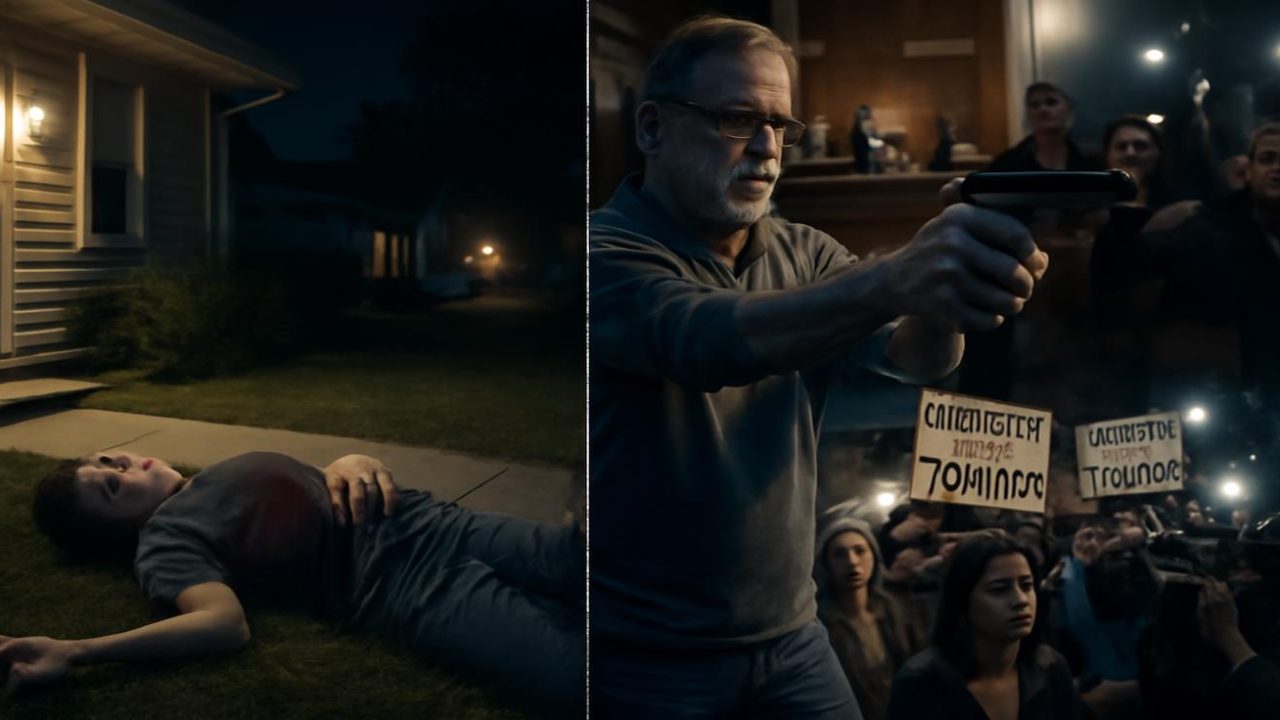
A teenager’s search for a Wi-Fi signal turned into a shooting that has divided a nation along familiar fault lines of race, fear, and the boundaries of self-defense. The case forces uncomfortable questions about who belongs in public spaces and when fear justifies deadly force.
The incident began with something mundane: a young person walking down a suburban street at night, phone in hand, looking for a stronger internet connection. It ended with gunshots, screaming, and a boy bleeding on someone’s front steps after being shot by a homeowner who claimed he felt threatened.
The shooting has become more than a single tragic event. It represents the collision between America’s expanding digital infrastructure—where Wi-Fi networks blur property lines—and older anxieties about territory, safety, and who has the right to exist in certain spaces after dark.

When Digital Life Meets Physical Boundaries
The teenager was reportedly “just checking the Wi-Fi” when he approached the house where he was shot. This detail has become central to understanding how a routine activity turned deadly.
Wi-Fi networks extend beyond the physical boundaries of homes, creating invisible zones where the internet is accessible from sidewalks, driveways, and neighboring properties. For many young people, especially those with limited data plans, finding open or familiar networks is a practical necessity for school assignments, social connections, and basic digital participation.
But while wireless signals cross property lines freely, legal and social boundaries remain rigid. The homeowner who fired the shot has argued he was defending his property from what appeared to be an intruder. The teenager’s family maintains he was simply trying to access the internet in a space he believed was public.

The case highlights how digital-age behaviors intersect with traditional concepts of trespassing and threat assessment. Security cameras captured the moments before the shooting, showing the teenager near the front of the house, phone glowing in his hand, shifting his weight as he apparently waited for a signal to strengthen.
The Night That Changed Everything
According to court records and witness testimony, the shooting occurred in a quiet suburban neighborhood where serious crime was rare. The homeowner, who kept a gun in his nightstand, heard sounds outside and went to investigate without calling police or attempting to communicate through the door.
The sequence of events lasted only minutes, but the aftermath has stretched across months of legal proceedings, community meetings, and national debate. The teenager survived but required extensive medical treatment. The homeowner was charged but maintains he acted in self-defense.

Neighborhood dynamics play a crucial role in the case. Community group chats had buzzed for months about “suspicious” activity and unfamiliar faces. This background of heightened vigilance influenced how residents interpreted normal activities, turning routine movements into perceived threats.
The shooting occurred at a time when many communities are grappling with increased anxiety about crime, often fueled by social media reports and neighborhood watch apps that can amplify isolated incidents into patterns of fear.
| Key Timeline Elements | Details |
|---|---|
| Initial Activity | Teenager searching for Wi-Fi signal on residential street |
| Homeowner Response | Heard noise, retrieved weapon, did not call police |
| Shooting | Occurred after door opened, captured on security camera |
| Aftermath | Emergency response, criminal charges filed, ongoing trial |
How Fear Shapes Split-Second Decisions
The case has become a mirror for broader American anxieties about safety, race, and the use of deadly force. Legal experts note that self-defense laws vary significantly by state, with some jurisdictions offering broader protections for homeowners who claim they felt threatened.

The teenager’s race has become an unavoidable factor in public discussions of the case. Critics argue that implicit bias influenced both the homeowner’s perception of threat and the initial law enforcement response. Supporters of the homeowner contend that anyone approaching a residence late at night might reasonably be viewed as suspicious.
The role of technology adds another layer of complexity. While older generations might view approaching someone’s house at night as inherently suspicious, younger people often see public Wi-Fi access as a normal part of navigating digital life.
Community response has been sharply divided. Some neighbors express sympathy for the homeowner, saying they understand the fear of potential break-ins. Others argue that the shooting represents a dangerous escalation of routine encounters and reflects deeper problems with racial profiling.

Legal and Social Implications
The trial has attracted national attention as communities wrestle with questions about proportional response and the limits of self-defense claims. Legal observers note that the case could influence how courts interpret threats in the digital age.
The presence of security camera footage has provided unusual clarity about the moments before the shooting, but interpretations of what the video shows vary dramatically. Defense attorneys argue it shows threatening behavior, while prosecutors contend it demonstrates a harmless activity that was misinterpreted.
The case has also sparked discussions about community policing and conflict resolution. Some advocates argue that the shooting could have been prevented if the homeowner had called police or attempted verbal communication before resorting to deadly force.

Mental health professionals have noted how social media and neighborhood watch apps can create feedback loops of anxiety that make residents more likely to interpret normal activities as threatening. The constant stream of crime alerts and suspicious activity reports can heighten baseline fear levels.
What Happens Next in a Divided Community
As the trial continues, the community remains split between those who see the homeowner as a victim of circumstances and those who view the teenager as the victim of excessive force and possible bias. The case has prompted local discussions about conflict de-escalation and community safety approaches.
Some neighborhoods are reconsidering how they discuss safety concerns, with community leaders encouraging residents to distinguish between actual threats and unfamiliar but harmless activities. Others are doubling down on vigilance, arguing that residents have both the right and responsibility to protect their property.

The outcome of the trial will likely influence how similar cases are prosecuted and how communities balance individual safety concerns with broader questions of justice and proportionality. Legal experts expect the case to be cited in future self-defense cases, particularly those involving young people and technology-related activities.
The broader implications extend beyond this single incident to questions about how American communities adapt to changing social norms while addressing legitimate safety concerns. The intersection of digital behavior and physical space will likely generate more conflicts as technology continues to reshape daily routines.
Frequently Asked Questions
What exactly was the teenager doing when he was shot?
According to court testimony, he was trying to access a Wi-Fi signal with his phone near the homeowner’s property.

Has the homeowner been charged with a crime?
Yes, criminal charges were filed, though the specific charges and trial outcome have not been detailed in available reports.
Did the teenager survive the shooting?
Yes, though he required extensive medical treatment for his injuries.
Was this incident captured on video?
Security camera footage captured the moments before the shooting and has been used as evidence in the trial.
How has the community responded to the shooting?
The community remains divided, with some supporting the homeowner’s self-defense claim and others viewing the shooting as an unjustified escalation.
Could this case influence future self-defense laws?
Legal experts believe the case could be cited in future trials involving perceived threats and the use of deadly force in residential settings.











Leave a Comment