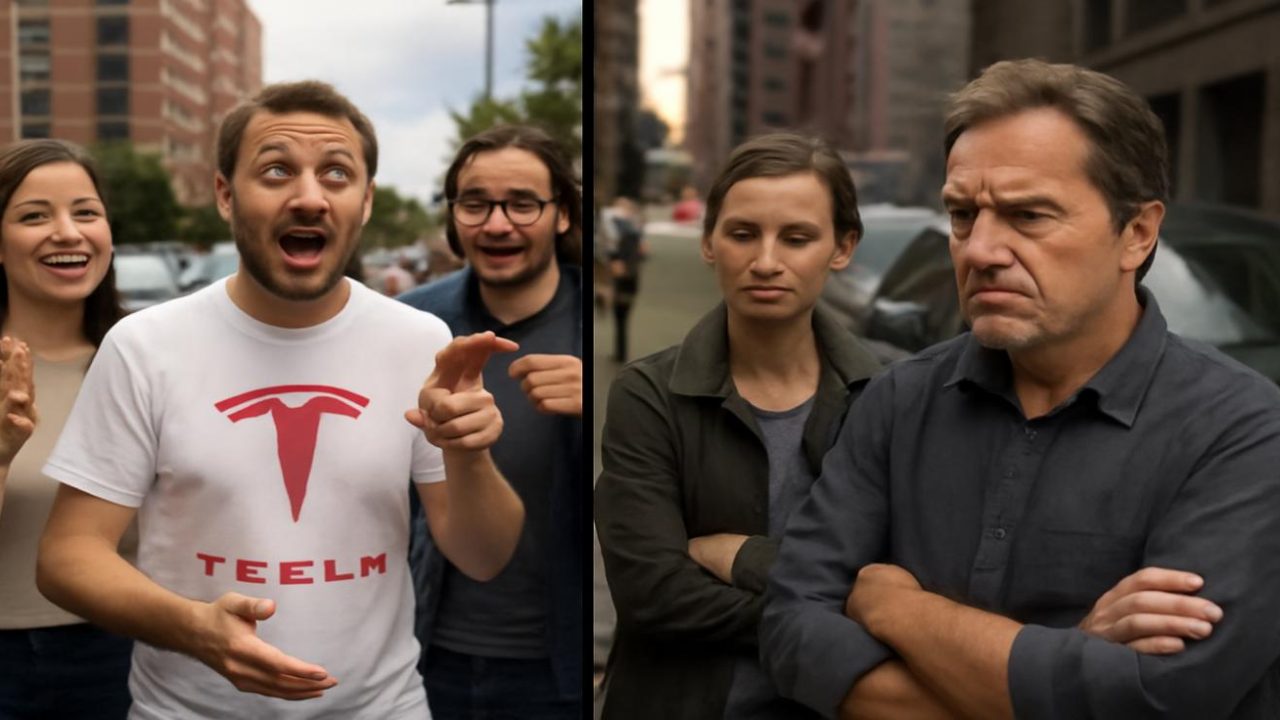
The uncomfortable truth about Tesla fans might be that their irritating certainty about electric vehicles exposes everyone else’s contradictions about environmental responsibility. While their evangelical enthusiasm at charging stations and grocery store parking lots can feel insufferable, the moral questions they raise about fossil fuel consumption and climate action are becoming harder to dismiss.
Tesla owners have developed a reputation for unsolicited lectures about “rolling climate crimes” and funding “oil wars.” Their conversations overflow with battery efficiency statistics and lifetime emissions data, delivered with the confidence of someone who believes they’ve discovered the only rational path forward.
Yet beneath the smugness lies a challenge that extends far beyond car choice preferences. These electric vehicle evangelists are forcing a broader conversation about the gap between environmental values and daily actions.

The Cult-Like Atmosphere at Charging Stations
Supercharger stations have become unofficial gathering places for Tesla enthusiasts, creating an atmosphere that blends technological optimism with moral superiority. The parking lots feel like “makeshift shrines to a future that’s supposedly already here,” filled with quietly humming white and silver vehicles and owners absorbed in their minimalist interiors.
The typical Tesla owner experience includes predictable encounters: the person who immediately mentions fuel savings, the driver who insists “one-pedal driving” makes traditional cars feel like “the Stone Age,” and couples who treat their vehicle like a beloved pet with its own name and personality.
This behavior pattern stems from Tesla ownership becoming an identity marker rather than simply a transportation choice. For many owners, their electric vehicle represents a statement about personal values, environmental commitment, and their position on “the right side of history.”

The moral dimension cuts deepest in these interactions. Tesla owners often view gas-powered vehicles not as different choices or budget constraints, but as active contradictions and “quiet hypocrisy” from people who claim environmental concern while continuing to burn fossil fuels.
The Psychology Behind Electric Vehicle Evangelism
Tesla fans operate with what appears to be “total, aggressively untroubled” certainty about their choices. Their enthusiasm doesn’t stop at appreciating technology—it extends into moral territory where they see themselves as early adopters of necessary change while others remain stuck in outdated thinking.
This creates a dynamic similar to early smartphone evangelists who made flip phone users feel archaic, except the stakes involve atmospheric carbon levels rather than communication convenience. The Tesla owner’s perspective treats continued gas car ownership as an intolerable tension for anyone claiming environmental consciousness.

The irritation factor comes from their tendency to treat complex environmental and economic decisions as simple moral choices with obvious answers. They present statistics and market trends as settled arguments while dismissing the practical constraints and trade-offs others face.
Uncomfortable Questions About Environmental Contradictions
Despite their annoying delivery method, Tesla enthusiasts raise legitimate questions about the consistency between stated environmental values and actual behavior patterns. The contradiction becomes stark when examining how people’s self-image conflicts with their daily choices.
| Self-Image | Daily Reality | Tesla Fan Response |
|---|---|---|
| Outdoor enthusiast who “loves nature” | Drives solo 40 miles daily in gas SUV | “If you love nature, why not go electric?” |
| Eco-conscious urbanite | Buys organic, recycles obsessively | Points out transportation emissions gap |
| Climate-aware consumer | Flies abroad twice yearly | Questions travel choices vs. stated concerns |
These observations force uncomfortable self-examination about the gap between environmental rhetoric and actual lifestyle choices. Tesla owners position themselves as having resolved this tension through their vehicle selection, while viewing others as living in denial about their impact.

Why Tesla Fan Criticism Hits So Hard
The reason Tesla evangelism generates such strong reactions goes beyond mere annoyance at pushy behavior. Their arguments target the psychological comfort zone most people maintain around environmental issues—acknowledging problems while continuing convenient but harmful practices.
Tesla owners represent a group that moved from awareness to action, at least in one significant area of their lives. This creates an implicit challenge to others who remain in the awareness-without-action phase, particularly those who publicly express environmental concern through social media posts about nature while maintaining carbon-intensive transportation habits.
The “moral keto” approach Tesla fans take—treating their choice as obviously superior and wondering why others haven’t made the same transition—mirrors other lifestyle evangelism but carries higher stakes given climate change urgency.

Their certainty becomes particularly grating because it dismisses legitimate barriers like charging infrastructure gaps, upfront costs, apartment living without garage access, and rural area limitations that affect electric vehicle adoption for many potential buyers.
The Possibility They Might Be Right
Stripping away the smugness and social media flame wars reveals the core question Tesla enthusiasts pose: whether their annoying certainty about electric vehicles reflects accurate assessment of environmental necessity rather than mere technological preference.
Their argument essentially claims that continued gas vehicle purchases represent a form of climate denial dressed up as practical constraint. From their perspective, the transition to electric transportation is inevitable and morally required, making current resistance a temporary delay rather than a legitimate alternative viewpoint.

The uncomfortable possibility is that Tesla fan irritation stems not from being wrong, but from being right in a way that exposes everyone else’s rationalizations about maintaining convenient but environmentally harmful choices.
This creates a psychological dynamic where the messenger’s annoying delivery doesn’t invalidate the underlying message about transportation emissions and personal responsibility for climate action.
Frequently Asked Questions
Why do Tesla owners seem so evangelical about their cars?
Tesla ownership often becomes part of personal identity and values rather than just transportation, leading owners to view their choice as morally superior and wonder why others haven’t made the same transition.

What makes Tesla fan behavior particularly irritating to others?
Their “total, aggressively untroubled certainty” combined with moral judgments about gas car owners creates a dynamic where they dismiss practical constraints and treat complex decisions as simple moral choices.
Are Tesla fans actually right about environmental impact?
While their delivery is often annoying, they raise legitimate questions about the gap between stated environmental values and continued fossil fuel vehicle purchases.
Why do Tesla owners focus so much on other people’s car choices?
They view gas vehicles as contradictions to environmental concern rather than different preferences, making continued fossil fuel use appear as “quiet hypocrisy” that needs addressing.

What drives the strong reactions to Tesla evangelism?
Tesla fans target the psychological comfort zone around environmental issues, challenging people who maintain awareness without taking action in their own transportation choices.
Do Tesla owners have valid points about transportation emissions?
Despite their smugness, they highlight real contradictions between environmental rhetoric and actual lifestyle choices, particularly around daily transportation decisions.











Leave a Comment