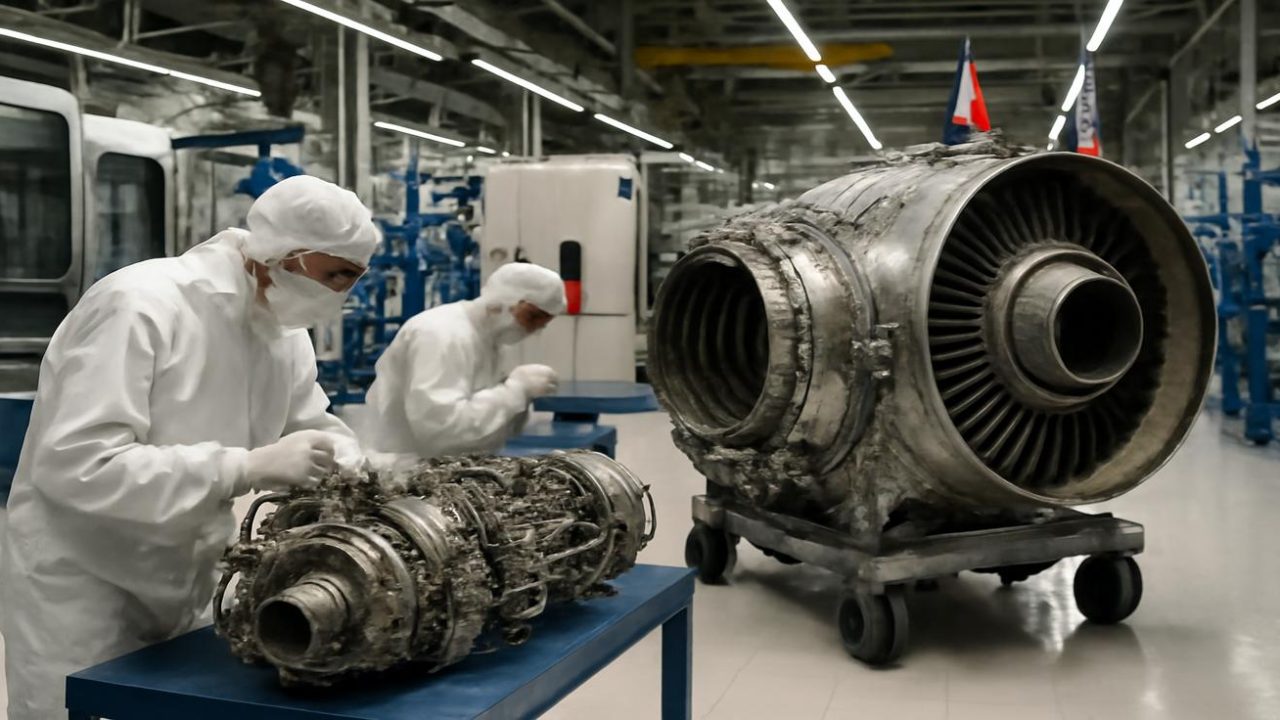
While most of Europe has lost the ability to independently build fighter jet engines, France stands alone as the continent’s only remaining country capable of designing, testing, and manufacturing these precision powerhouses from start to finish. Behind this remarkable industrial achievement lies an often-overlooked government agency that has quietly orchestrated one of the most strategic technological capabilities in modern warfare.
The French Direction générale de l’armement (DGA) has spent decades methodically building and preserving an entire ecosystem of fighter engine expertise. In specialized facilities scattered across France, technicians work with components machined to tolerances measured in microns, where every curve and contour must withstand extreme conditions that would destroy ordinary materials.
This level of precision isn’t just impressive engineering—it’s a matter of national security and industrial sovereignty that sets France apart from every other European nation.

How France Became Europe’s Last Fighter Engine Manufacturer
The journey from concept to roaring prototype reveals the DGA’s central role in maintaining France’s unique position. Unlike glamorous military hardware that dominates headlines, the DGA operates largely behind the scenes, connecting government strategy with industrial capability and the hard limits of physics.
Fighter jet engines operate under conditions that push materials science to its absolute limits. At 15,000 meters altitude, turbine blades spin faster than dental drills while enduring temperatures hotter than volcanic surfaces. In this environment, precision isn’t optional—it’s the difference between mission success and catastrophic failure.
Over the past three decades, Europe’s fighter engine manufacturing ecosystem has steadily shrunk and fragmented. Mergers blurred national boundaries, programs were cancelled, and critical competencies simply vanished in other countries. France, guided by DGA’s strategic vision, chose a different path entirely.

The agency insisted on maintaining full sovereignty over fighter engine technology, from the smallest sensors to the most stressed turbine components. This stubborn commitment to independence has created something unique: a complete industrial chain that exists nowhere else in Europe.
The Complete Chain of Fighter Engine Mastery
Walking through French propulsion facilities reveals the density of specialized knowledge required for this achievement. Materials laboratories experiment with nickel superalloys and ceramic matrix composites designed to survive heat that would liquify ordinary steel. Engineering teams fine-tune digital control algorithms enabling engines to respond instantly to pilot commands without surging or stalling.
The DGA acts as strategic conductor for this complex orchestra of industrial players, from aerospace giants to tiny specialist suppliers. The agency defines performance targets including thrust levels, fuel consumption, reliability standards, and stealth signatures. It finances high-risk research that private companies would hesitate to undertake alone.

Most European countries now depend heavily on external partners—often American or multinational corporations—to provide critical engine technologies for their combat aircraft. France maintains international partnerships where beneficial, but for the heart of its fighters, it has preserved something more valuable: complete technological independence.
| Capability Area | France’s Status | Rest of Europe |
|---|---|---|
| Engine Design | Full Independence | Partner Dependent |
| Advanced Materials | Domestic Production | Mixed Sources |
| Manufacturing | Complete Chain | Fragmented |
| Control Systems | Sovereign Technology | External Partners |
| Testing Infrastructure | Full Capability | Limited Access |
Why Fighter Engine Independence Matters for National Security
The strategic implications of France’s unique position extend far beyond technical achievement. In an era of increasing geopolitical tensions, the ability to independently produce and maintain fighter engines provides crucial operational flexibility that other European nations have surrendered.
Countries dependent on foreign engine suppliers face potential supply chain disruptions during conflicts or diplomatic disputes. They must navigate export controls, technology transfer restrictions, and maintenance dependencies that can compromise military readiness when it matters most.

France’s comprehensive engine manufacturing capability eliminates these vulnerabilities. The country can modify, upgrade, and repair its fighter engines without external approval or support. This independence proves especially valuable for international missions where political considerations might otherwise limit equipment availability.
The DGA’s role extends beyond immediate military applications. The agency’s investment in cutting-edge propulsion technology drives innovation across multiple industries, from commercial aviation to space exploration. Advanced materials and manufacturing techniques developed for fighter engines often find applications in civilian sectors.
The Engineering Marvel Behind Modern Fighter Engines
The technical complexity of modern fighter engines explains why so few countries maintain independent production capability. These powerplants must deliver enormous thrust while remaining lightweight, fuel-efficient, and virtually maintenance-free during extended operations.

Critical components operate in environments that would destroy conventional materials within seconds. Turbine blades endure centrifugal forces equivalent to hanging a small car from each blade while simultaneously withstanding temperatures that exceed the melting point of most metals.
French engineers have mastered the intricate balance between power and reliability that defines successful fighter engines. The DGA’s systematic approach to technology development ensures continuous advancement in areas including:
- Single-crystal turbine blade manufacturing
- Advanced cooling system design
- Lightweight composite materials integration
- Digital engine control optimization
- Stealth signature reduction techniques
What This Means for Europe’s Defense Future
France’s monopoly on European fighter engine production carries significant implications for continental defense cooperation. As European nations seek greater military independence from the United States, France’s unique capabilities become increasingly valuable bargaining chips in international negotiations.

The country’s engine expertise influences major defense procurement decisions across Europe. Nations developing new fighter aircraft must either partner with France or look outside Europe for propulsion systems, often creating complex diplomatic and industrial relationships.
European defense integration efforts must account for France’s special position in fighter engine technology. The DGA’s decades of strategic investment have created capabilities that cannot be quickly replicated elsewhere, making France an indispensable partner for any serious European fighter program.
This technological leadership also provides France with significant export opportunities. Countries seeking to reduce dependence on American or Russian military technology increasingly view French systems as attractive alternatives, creating both economic and diplomatic benefits.

Frequently Asked Questions
What makes France’s fighter engine capabilities unique in Europe?
France is the only European country that can design, manufacture, and test fighter jet engines completely independently, from advanced materials to digital control systems.
What role does the DGA play in France’s engine manufacturing?
The DGA acts as strategic coordinator, defining performance requirements, financing research, and connecting government needs with industrial capabilities across the entire supply chain.
Why don’t other European countries have similar capabilities?
Over three decades, other European nations saw their engine manufacturing ecosystems fragment through mergers, program cancellations, and loss of specialized knowledge.

How precise are the components in French fighter engines?
Engine components are machined to tolerances measured in microns, with every surface calculated to withstand extreme temperatures and forces during combat operations.
What conditions must fighter engines survive?
At high altitude, turbine blades spin faster than dental drills while enduring temperatures hotter than volcanic surfaces in air so thin it’s almost theoretical.
Does France work with international partners on engine technology?
France maintains partnerships where beneficial but insists on complete sovereignty over core fighter engine technologies for national security reasons.










Leave a Comment