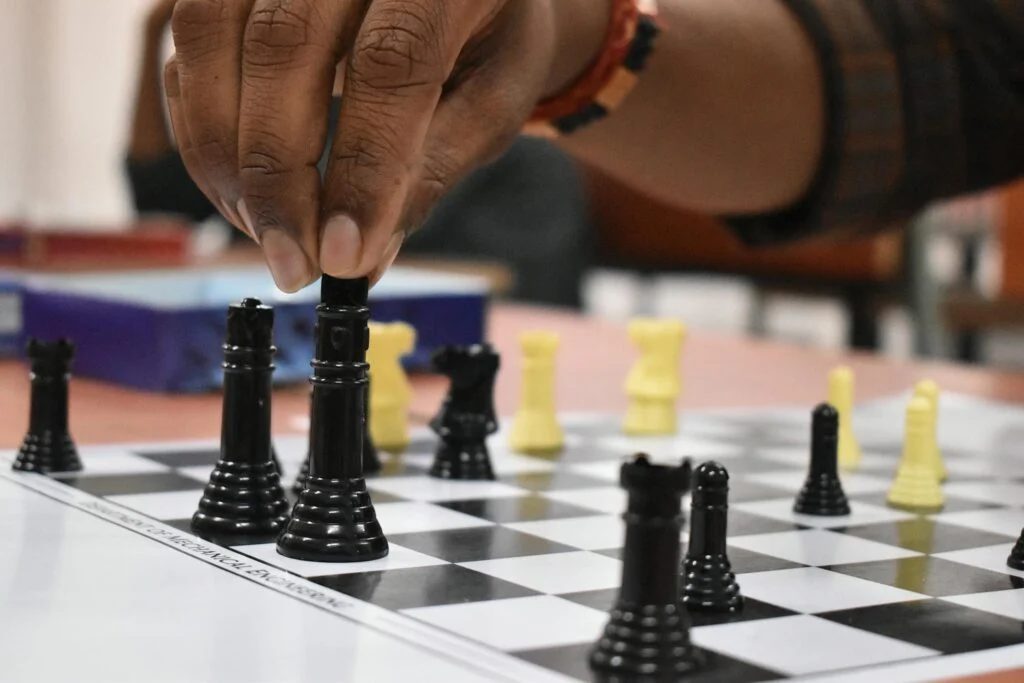
People with an internal locus of control — those who believe their choices shape outcomes — consistently experience lower anxiety, better career results, and stronger relationships than those who see life as a series of random events. Research reveals that viewing life as a strategic game where every decision matters isn’t just philosophical thinking; it’s a measurably better way to live.
The distinction between feeling like life happens to you versus recognizing that you’re actively shaping it represents one of the most crucial psychological frameworks for personal development. Yet most people spend years, even decades, operating from a passive mindset without realizing the cost.
This isn’t about positive thinking or self-help mantras. It’s about understanding that even passive choices — the conversations you avoid, the decisions you defer, the times you stay quiet when something bothers you — are still moves on the board of your life.

The Psychology Behind Passive Decision-Making
Psychologists use the term “locus of control” to describe whether people believe life events result from their own actions or from external forces beyond their influence. Those with an external locus of control tend to see themselves as passengers in their own lives, while those with an internal locus of control recognize their agency in shaping outcomes.
The research consistently shows that people who believe their moves matter tend to make better ones. Conversely, those who view life as fundamentally random often stop trying to play strategically at all.
This pattern often develops in childhood, where early family dynamics can teach children to adopt purely defensive strategies. Some learn to read every emotional shift in a room, becoming experts at preventing conflict rather than pursuing their own goals. Others develop the habit of making themselves small, prioritizing peace over personal advancement.

These childhood strategies can persist well into adulthood, creating patterns where people make what they consider “non-moves” — staying quiet when hurt, agreeing to plans they don’t want, or avoiding difficult conversations entirely.
Why Every Non-Decision Is Still a Strategic Choice
The illusion of not choosing is perhaps the most costly mistake people make in their personal and professional lives. Every moment of passivity represents an active decision to maintain the current situation, even when that situation isn’t serving you.
Consider these common scenarios that people often frame as “things that happened to them”:

- Staying in an unfulfilling job because changing feels risky
- Avoiding difficult conversations in relationships
- Postponing major life decisions indefinitely
- Accepting social plans that drain rather than energize
- Remaining silent when personal boundaries are crossed
Each of these represents an active choice to prioritize short-term comfort over long-term satisfaction. The person making these choices is advancing toward a specific outcome: a life shaped by avoidance rather than intention.
The problem with purely defensive strategies is that they never advance your position toward anything you actually want. You survive, you maintain stability, but you don’t move closer to goals that require risk or assertiveness.
How Childhood Patterns Shape Adult Strategy
In chess, opening moves determine everything that follows. They establish territory, piece mobility, and the fundamental character of the entire game. Most grandmasters study openings obsessively because careless initial moves can make victory impossible later.

Childhood functions as life’s opening game. Most people don’t get to choose these early moves — parents, environment, and circumstances play them instead. But unlike chess, life allows players to recognize these inherited patterns and consciously change strategy.
Many adults discover they’re still playing the same defensive game they learned as children, even when the original threats no longer exist. The eight-year-old who learned to prevent family explosions by staying small might still be using that strategy in boardrooms and relationships decades later.
| Defensive Childhood Strategy | Adult Manifestation | Hidden Cost |
|---|---|---|
| Reading emotional cues to prevent conflict | Over-accommodating in relationships | Personal needs go unmet |
| Staying quiet to maintain peace | Avoiding workplace advocacy | Career advancement suffers |
| Making yourself small during chaos | Difficulty taking up space socially | Authentic connections remain shallow |
| Anticipating others’ needs constantly | Burnout from over-giving | Resentment builds over time |
The Real-World Cost of Passive Positioning
Operating from an external locus of control creates measurable consequences across multiple life domains. People who consistently defer decisions or avoid assertive action often find themselves in positions they never consciously chose.

In relationships, passive positioning can look like agreeing to plans you don’t enjoy, staying quiet about unmet needs, or smiling through situations where you feel invisible. These aren’t neutral non-actions — they’re aggressive moves toward isolation and resentment.
Professionally, the same pattern manifests as avoiding difficult conversations with supervisors, accepting assignments that don’t align with career goals, or failing to negotiate for better conditions. The person making these choices often frames them as “keeping the peace” or “being realistic,” but they’re actually choosing to remain in unsatisfying circumstances.
The cumulative effect resembles a chess game where one player only makes defensive moves. Eventually, the board position becomes so constrained that dramatic action — like ending a relationship or leaving a job — feels like the only remaining option.

Shifting from Reactive to Strategic Thinking
Recognizing that life operates more like chess than weather represents the first step toward more intentional living. This doesn’t mean controlling every outcome, but rather acknowledging that your responses to circumstances significantly influence what happens next.
Strategic thinking involves regularly asking yourself what you’re optimizing for in different life areas. Are your choices moving you toward greater autonomy, deeper relationships, or professional growth? Or are they primarily focused on avoiding discomfort and maintaining the status quo?
The shift from reactive to strategic thinking often requires examining long-held beliefs about safety, risk, and personal agency. Many people discover they’ve been unconsciously prioritizing the illusion of safety over actual growth or satisfaction.

This doesn’t mean every decision needs to be calculated or that spontaneity should be eliminated. Rather, it means developing awareness of your default patterns and consciously choosing when to follow them versus when to try different approaches.
Frequently Asked Questions
What exactly is locus of control and why does it matter?
Locus of control describes whether you believe life events result from your own actions (internal) or external forces (external). Research shows internal locus of control correlates with better mental health, career outcomes, and relationships.
How can someone tell if they’re making passive choices?
Look for patterns of avoiding difficult conversations, deferring major decisions, or consistently prioritizing others’ comfort over your own needs. These often feel like “non-choices” but actively shape your life circumstances.

Is it possible to change childhood patterns that developed for good reasons?
Yes, though it requires conscious effort. Many defensive strategies that protected children become limiting for adults, but recognizing these patterns is the first step toward choosing different responses.
Does strategic thinking mean controlling every outcome?
No, strategic thinking focuses on making conscious choices about your responses and actions, while accepting that you can’t control all results. It’s about playing your best game regardless of external circumstances.
How do you balance strategic thinking with spontaneity?
Strategic thinking provides a framework for decision-making, not rigid rules. You can be spontaneous within the context of understanding what you’re optimizing for in different life areas.
What’s the difference between defensive and strategic approaches to life?
Defensive approaches primarily focus on avoiding problems or discomfort, while strategic approaches actively move toward desired outcomes. Both involve making choices, but with very different long-term results.











Leave a Comment