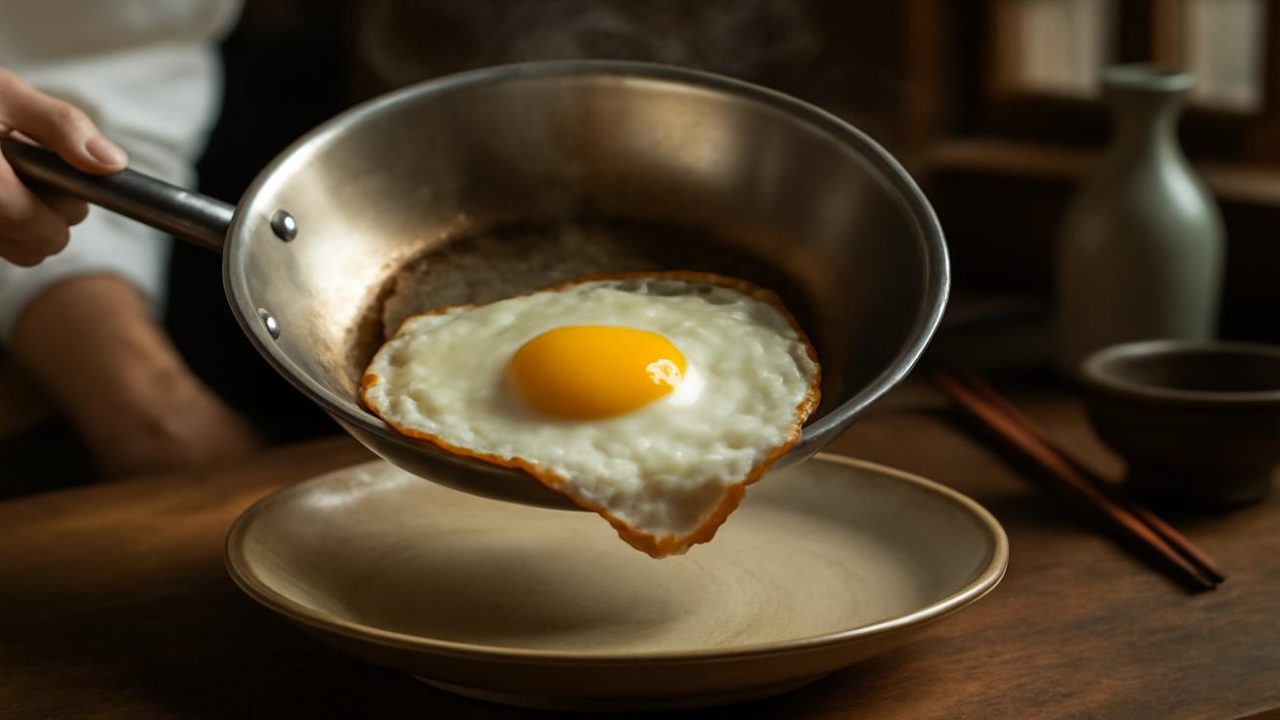
Most home cooks reach for vegetable oil or butter when frying eggs, but a traditional Japanese technique uses rendered animal fat to create eggs that slide effortlessly from the pan without sticking or tearing.
The method involves using small amounts of pork, beef, chicken, or duck fat instead of conventional cooking oils. This approach, common in Japanese home kitchens, offers superior heat control and creates a thin, effective coating that prevents eggs from adhering to cookware.
The technique addresses one of the most frustrating kitchen experiences: eggs that seize, stick, and tear when you try to move them, leaving behind burnt bits and broken yolks that turn a simple breakfast into a messy disappointment.
How the Japanese Fat Technique Works
The process begins with proper timing and temperature control. The pan must be heated gradually, and the fat added before it becomes too hot. Unlike liquid oils that can overheat quickly, solid animal fats melt slowly and provide visual cues about pan temperature.
When the fat begins to soften and melt, it creates a clear, thin coating across the entire pan surface. This layer acts as a barrier between the egg proteins and the metal, preventing the chemical bonds that cause sticking.
The key difference from oil-based methods is control. Rendered animal fats don’t pool in excess amounts or create hot spots that can burn eggs before they’re properly cooked. Instead, they distribute evenly and maintain consistent lubrication throughout the cooking process.

Professional chefs using this method emphasize that the fat and pan must be properly prepared before adding eggs. This preparation phase ensures the cooking surface is optimally conditioned for non-stick results.
Essential Steps for Perfect Results
The technique requires specific steps performed in the correct sequence:
- Heat the pan gradually over medium-low heat
- Add a small piece of solid animal fat to the warming pan
- Allow the fat to melt completely and coat the surface
- Ensure no excess fat pools in the pan
- Add beaten eggs only after the fat has created an even coating
- Use gentle movements to manipulate the eggs during cooking
Temperature control remains critical throughout the process. The fat should melt and spread without smoking or browning, which indicates the heat is too high and could cause the eggs to seize upon contact.

| Fat Type | Melting Point | Flavor Profile | Best For |
|---|---|---|---|
| Pork Fat | Medium | Neutral to mild | General egg cooking |
| Beef Fat | Higher | Rich, savory | Hearty breakfast dishes |
| Chicken Fat | Lower | Mild, clean | Delicate egg preparations |
| Duck Fat | Medium-low | Rich, distinctive | Gourmet applications |
Why This Method Outperforms Traditional Oils
Animal fats offer several advantages over conventional cooking oils for egg preparation. Their higher smoke points and different molecular structures create more stable cooking environments that resist breaking down under heat.
Unlike vegetable oils that can become unstable at high temperatures, rendered animal fats maintain their lubricating properties throughout the cooking process. This consistency prevents the sudden sticking that occurs when oils break down and lose their effectiveness.
The technique also provides better visual feedback. Cooks can observe the fat melting and spreading, giving clear indicators about pan temperature and readiness. This visual guidance helps prevent the common mistake of adding eggs to overheated surfaces.

Additionally, animal fats don’t require the large quantities often needed with oils. A small piece of solid fat can effectively coat an entire pan surface, reducing overall fat content while improving cooking performance.
Practical Benefits for Home Cooking
Home cooks who adopt this method report significantly improved results with fried, scrambled, and folded egg dishes. The eggs move freely during cooking, allowing for better control over texture and doneness.
The technique eliminates the frustrating scraping and cleaning associated with stuck eggs. Pans clean easily after cooking, often requiring only a gentle wipe rather than aggressive scrubbing to remove burnt-on egg proteins.

Cost considerations also favor this approach for many households. Rendered fats can be saved from other cooking projects, making them essentially free additions to the cooking process. A small amount of saved bacon fat or chicken drippings can improve multiple egg-cooking sessions.
The method works across different pan types, including stainless steel, carbon steel, and cast iron. While non-stick pans benefit less dramatically, even they show improved performance with proper fat preparation.
Getting Started with Animal Fat Cooking
Beginning cooks should start with pork fat, which offers the most forgiving melting characteristics and neutral flavor profile. Small pieces of bacon fat or saved pork drippings work well for initial attempts.

Storage of rendered fats requires proper refrigeration and clean containers. Most animal fats keep well when stored in sealed jars in the refrigerator, remaining usable for several weeks.
Quality matters when selecting fats for cooking. Fats from grass-fed animals or high-quality sources generally perform better and offer superior flavor profiles compared to conventional alternatives.
Practice with the timing helps develop intuition for proper pan preparation. Most cooks find they can judge readiness by observing how the fat melts and spreads across the cooking surface.

Frequently Asked Questions
What type of animal fat works best for cooking eggs?
Pork fat offers the most neutral flavor and forgiving melting characteristics for beginners.
How much fat should I use per egg?
A small piece about the size of a pea is sufficient to coat most standard-sized pans.
Can I save and reuse animal fats for cooking?
Yes, properly stored rendered fats keep well in the refrigerator for several weeks when stored in clean, sealed containers.

Does this method work with non-stick pans?
While non-stick pans benefit less dramatically, they still show improved performance with proper fat preparation.
How do I know when the pan is ready for eggs?
The fat should be completely melted and spread evenly across the pan surface without smoking or browning.
Will animal fats make my eggs taste different?
Most animal fats, especially pork fat, provide neutral to mild flavors that don’t significantly alter egg taste when used in small amounts.







Leave a Comment