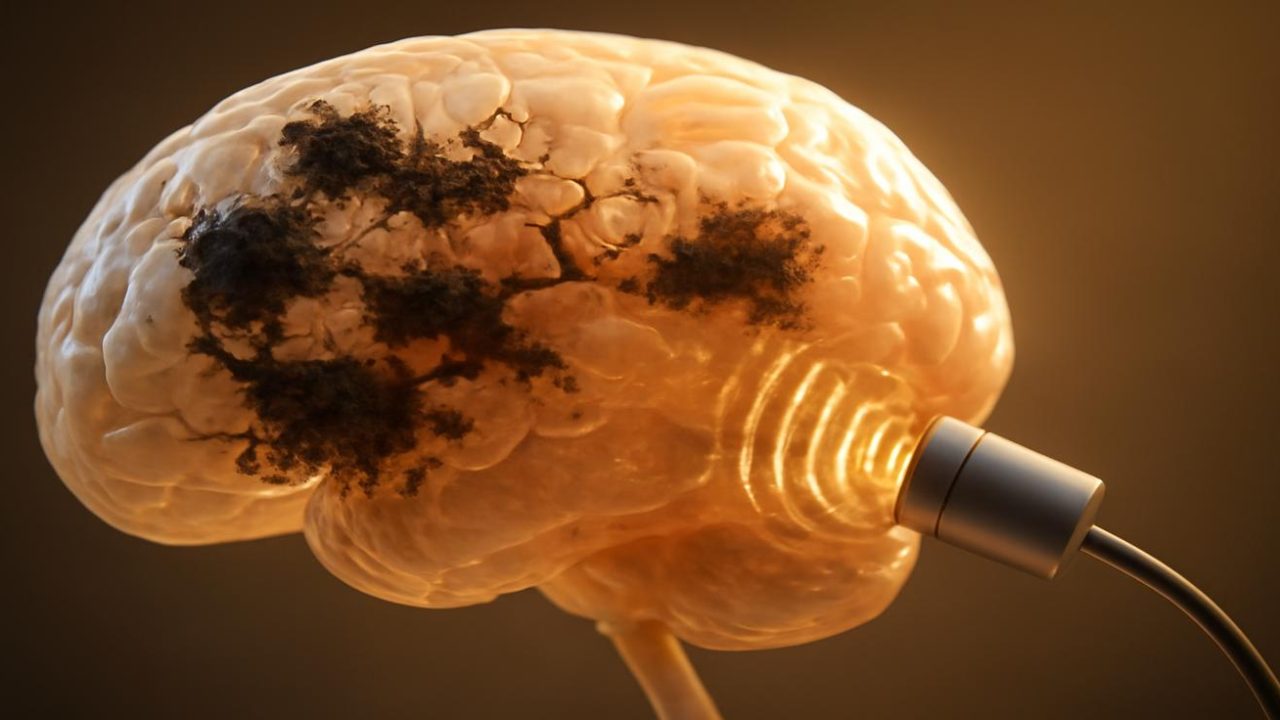
A gentle, rhythmic pulsing sound at exactly 40 hertz — the same frequency as a low hum from machinery — may help break apart the sticky brain plaques that define Alzheimer’s disease. Recent laboratory research has revealed that this specific sound frequency can trigger coordinated brain activity that appears to activate the brain’s natural cleaning mechanisms.
The discovery builds on earlier findings that flickering light at the same 40-hertz frequency could reduce amyloid plaques in mice. Now researchers have extended this sensory stimulation approach to sound, opening new possibilities for non-invasive treatments that work entirely differently from traditional drug approaches.
This research represents a fundamental shift in thinking about Alzheimer’s treatment — instead of introducing foreign substances to fight the disease, scientists are exploring ways to help the brain defend itself using nothing more than carefully timed sensory input.

How Sound Waves Could Rewire Brain Cleaning Systems
The 40-hertz frequency sits in what neuroscientists call the “gamma” range — fast brainwaves associated with attention, working memory, and focus. In healthy brains, these gamma rhythms appear naturally when we concentrate or process complex information.
But in Alzheimer’s disease, gamma rhythms weaken and fragment. The brain loses its ability to maintain the coordinated electrical activity that appears crucial for normal function.
When researchers exposed Alzheimer’s-prone mice to 40-hertz flickering light for an hour daily, something remarkable happened. Brain cells began firing in more coordinated patterns, as if the external flicker had synchronized their internal timing systems.

Even more striking, immune cells in the brain called microglia shifted into an active, plaque-clearing mode. Over time, amyloid plaques in the visual areas of the brain measurably shrank.
The limitation was obvious: light can only effectively reach certain brain regions. Sound, however, travels throughout the brain as physical pressure waves, potentially extending these beneficial effects more widely.
The Science Behind Sensory Brain Stimulation
Sound doesn’t just register in your ears — it moves through your entire body as tiny pressure waves. At a concert, you feel bass vibrations in your chest. A low rumble rattles windows. These same physical forces can influence the electrical rhythms inside your brain.

The research approach is elegantly simple. Scientists expose genetically engineered mice that develop Alzheimer’s-like plaques to precisely controlled sound pulses at the 40-hertz frequency.
The results mirror what researchers observed with light stimulation:
- Neurons begin firing in more synchronized patterns
- Microglia immune cells activate and increase plaque-clearing activity
- Beta-amyloid protein clumps start breaking apart
- Brain regions show improved coordination
The mechanism appears to work by restoring gamma wave activity that naturally weakens in Alzheimer’s disease. When external sensory input provides the missing 40-hertz rhythm, the brain’s internal systems respond by falling back into healthier patterns.

| Brain Component | Normal Function | Alzheimer’s Impact | 40-Hz Stimulation Effect |
|---|---|---|---|
| Gamma Waves | Coordinate brain activity | Weaken and fragment | Restore synchronization |
| Microglia Cells | Clear brain debris | Become less active | Increase cleaning activity |
| Amyloid Plaques | Minimal presence | Accumulate between cells | Begin breaking apart |
| Neuron Communication | Smooth information flow | Disrupted signaling | Improved coordination |
Why This Approach Differs From Traditional Treatments
Current Alzheimer’s treatments focus on introducing external agents — drugs, antibodies, or supplements — to fight the disease directly. Some slow progression modestly, while others carry significant side effects.
Sensory stimulation takes the opposite approach. Rather than adding foreign substances, it works by reactivating the brain’s existing defense mechanisms that have become sluggish or uncoordinated.
The brain already contains microglia cells designed to clear away cellular debris, including amyloid plaques. In healthy brains, these cells actively patrol and clean. In Alzheimer’s, they become less effective.

The 40-hertz stimulation appears to wake up these dormant cleaning systems. It’s not introducing anything new — just providing the rhythmic cues that help existing brain systems remember how to function properly.
This fundamental difference explains why researchers describe the approach as helping the brain “clean itself” rather than fighting the disease with external weapons.
Current Limitations and Research Boundaries
The promising results come with important caveats. All published research to date has been conducted in laboratory mice, not humans. Mouse models of Alzheimer’s disease, while useful, don’t perfectly replicate the complex progression of human dementia.

The plaque reduction observed in studies is meaningful but not complete. Amyloid deposits shrink rather than disappearing entirely. Whether this level of improvement would translate to noticeable cognitive benefits in humans remains unknown.
Sound stimulation appears most effective in brain regions that can be reached by the specific frequencies used. Different areas of the brain may require different approaches or combinations of sensory input to achieve similar effects.
Researchers also haven’t determined optimal treatment duration, frequency of sessions, or whether the benefits persist after stimulation stops. The one-hour daily sessions used in mouse studies may not represent the ideal human protocol.

What Happens Next in This Research
The logical next step involves human clinical trials to determine whether sensory stimulation produces similar brain changes in people with early-stage Alzheimer’s disease or cognitive decline.
These trials will need to address several key questions that animal studies cannot answer:
- Do human brains respond to 40-hertz stimulation the same way mouse brains do?
- What stimulation protocols work best for human patients?
- Can the approach slow cognitive decline or improve daily functioning?
- Are there any unexpected side effects from extended sensory stimulation?
Researchers are also exploring whether combining light and sound stimulation might produce stronger effects than either approach alone. The brain processes multiple sensory inputs simultaneously, and coordinated stimulation across different senses could potentially reach more brain regions.

The timeline for human applications remains uncertain. Even if early trials show promise, developing standardized treatment protocols and determining long-term safety will require several more years of research.
However, the approach offers something that traditional drug development cannot: if proven effective, sensory stimulation treatments would be relatively simple, inexpensive, and accessible compared to complex pharmaceutical interventions.
Frequently Asked Questions
What makes 40-hertz sound special for brain stimulation?
This frequency corresponds to gamma brainwaves that naturally coordinate brain activity but weaken in Alzheimer’s disease.
Has this treatment been tested in humans yet?
No, all research to date has been conducted in laboratory mice with Alzheimer’s-like conditions.
How long do the plaque-clearing effects last?
The duration of benefits after stimulation stops has not yet been determined in published studies.
Could people try this at home with sound equipment?
The research requires precisely controlled frequencies and protocols that haven’t been established for human use.
Does the sound stimulation completely eliminate brain plaques?
No, studies show meaningful reduction in plaque buildup rather than complete elimination.
When might this become available as a treatment?
Human clinical trials would need to demonstrate safety and effectiveness before any treatment protocols could be developed, which could take several years.











Leave a Comment