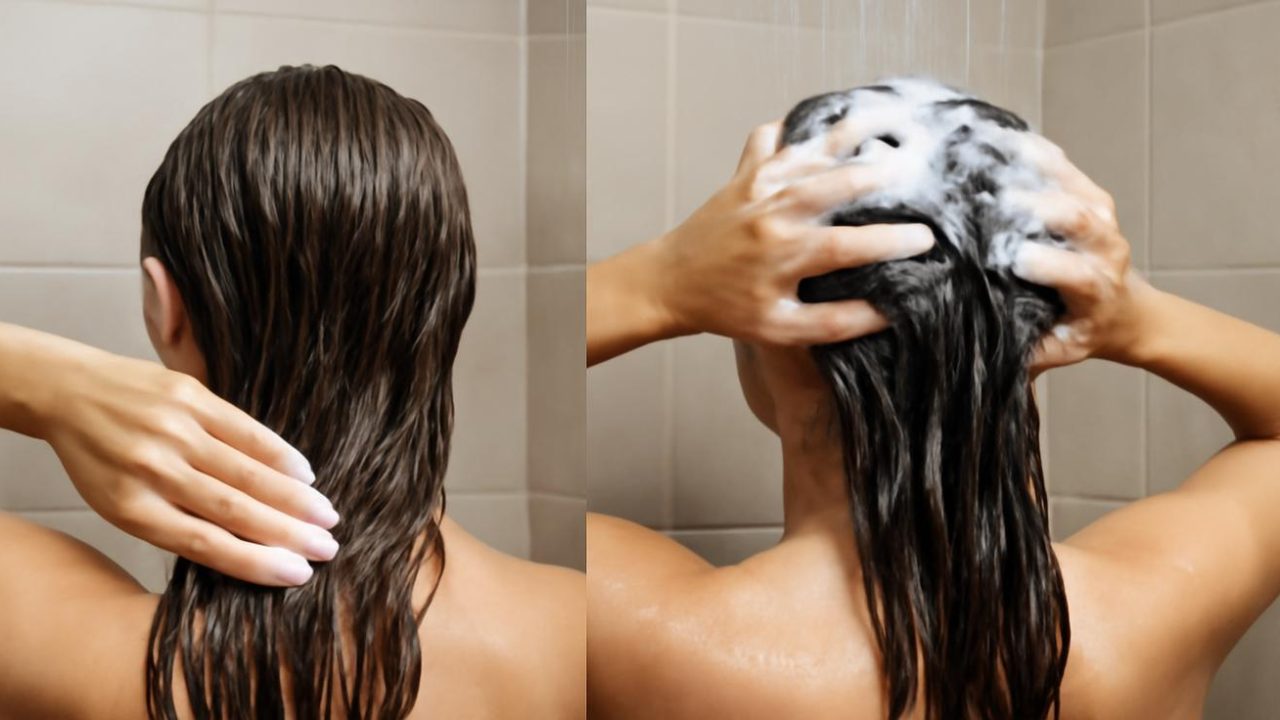
Your hair probably isn’t as clean as you think it is, and hairdressers have noticed. Despite what feels like thorough washing, layers of buildup from oil, styling products, and dry shampoo cling to your roots while conditioner residue slides around your mid-lengths.
The solution, according to many professional stylists, sounds almost too simple: make a “shampoo sandwich.” This technique involves shampooing twice with conditioning in between, then finishing with a gentle cleanse.
If you’ve ever wondered why your hair looks different when you leave the salon compared to when you wash it at home, this methodical approach might be the missing piece you never knew you needed.

Why Your Current Hair Washing Routine Falls Short
Most people learned to wash their hair the same way they learned to brush their teeth: quickly, absentmindedly, and with no nuance. A blob of shampoo, a rushed scrub, some conditioner, rinse, and done.
Stylists who spend their days with hands in other people’s hair see patterns that most of us miss. They notice buildup everywhere—oil, leftover styling products, dry shampoo clinging to roots, and conditioner residue weighing down the mid-lengths.
This explains why your hair might feel heavy even when it’s “clean,” or why your roots go greasy quickly while your ends stay parched. Your scalp and hair lengths are like two different ecosystems that need different care.

Your scalp is alive, constantly producing oil, shedding skin cells, and responding to weather, hormones, and stress. Your lengths, especially the ends, are older, more fragile, and often drier. Trying to treat them both with one quick lather-and-rinse is like washing a silk blouse and muddy sneakers in the same water.
The Shampoo Sandwich Method Explained
The shampoo sandwich separates these jobs through a systematic approach that treats your scalp and hair lengths as the different entities they are.
Here’s how the complete process works:

| Step | Purpose | Focus Area |
|---|---|---|
| First shampoo | Light, scalp-focused cleanse to lift oil and surface residue | Roots and scalp |
| Rinse | Remove loosened buildup thoroughly | All hair |
| Condition | Feed dry areas without coating scalp | Mid-lengths and ends only |
| Light rinse | Leave slip without residue | Conditioned areas |
| Second shampoo | Gentle cleanse to remove leftover product and rebalance | Roots only |
| Final rinse | Cool or lukewarm to seal cuticle and add shine | All hair |
The first shampoo acts as the “breaker wave”—rolling in first to loosen and lift surface grime. Don’t expect a thick, luxurious lather here, especially if your hair is oily or full of product. The underwhelming foam is normal and expected.
Apply a small amount of shampoo—about the size of a coin, more if your hair is long or dense—and work it into your scalp with deliberate, circular motions. Concentrate on the roots rather than piling product all over your lengths.
Why This Technique Works Better Than Traditional Washing
The conditioning step in the middle addresses the fundamental principle that many people get wrong: shampoo is for the scalp, conditioner is for the hair.

During this phase, you avoid putting conditioner near your scalp while ensuring your mid-lengths and ends get the moisture they need. This prevents the common problem of roots that feel greasy while ends remain dry and brittle.
The second shampoo removes any conditioning product that might have migrated toward your roots while giving your scalp a final, gentle cleanse. This step rebalances your scalp without over-stripping or overloading your hair lengths.
Professional stylists swear by this process because it provides intentional, layered care rather than a one-shot approach that tries to solve multiple problems with a single step.

What You’ll Notice After Switching to the Shampoo Sandwich
The most immediate difference is how your hair feels during the washing process itself. The methodical approach creates a sense of thorough cleansing that’s hard to achieve with rushed, single-shampoo washing.
Your scalp will likely feel cleaner for longer periods, while your hair lengths maintain moisture without feeling weighed down by product buildup. The separation of cleansing and conditioning tasks means each step can work more effectively.
Many people notice their hair holds styles better and looks more like it does when they leave a professional salon. This isn’t coincidental—you’re essentially replicating the careful, systematic approach that stylists use.

The final cool rinse helps seal the hair cuticle, which can add shine and reduce frizz. This step is often skipped in rushed home washing routines but makes a noticeable difference in how your hair looks and feels.
Making the Shampoo Sandwich Work for Your Hair Type
The basic structure of the shampoo sandwich remains the same regardless of your hair type, but you can adjust the products and timing to match your specific needs.
For oily hair, you might use a clarifying shampoo for the first cleanse and a gentler formula for the second. Those with dry or damaged hair might opt for moisture-rich formulas throughout and extend the conditioning time.

The key is maintaining the separation between scalp care and length care. Your scalp produces oil and needs regular cleansing, while your lengths need protection and moisture.
This technique works especially well for people who use multiple styling products, dry shampoo, or have hard water that leaves mineral deposits. The double cleanse ensures thorough removal of buildup that single washing often misses.
Frequently Asked Questions
How often should I do the shampoo sandwich method?
This depends on your hair type and lifestyle, but many people find it effective 2-3 times per week, alternating with simpler washing routines.

Will this method make my hair too dry from double shampooing?
The conditioning step in the middle actually helps prevent over-drying, and the second shampoo is gentler and focused only on the roots.
Can I use the same shampoo for both steps?
Yes, though some people prefer a clarifying shampoo first and a gentler formula for the second cleanse.
How long does the entire process take?
Plan for about 10-15 minutes total, including the time for each step and thorough rinsing between stages.
Should I avoid getting conditioner on my scalp completely?
Focus the conditioner on mid-lengths and ends, avoiding heavy application near the scalp to prevent weighing down your roots.
Will this work for all hair types?
The basic principle works for most hair types, though you may need to adjust products and timing based on whether your hair is oily, dry, thick, or fine.











Leave a Comment