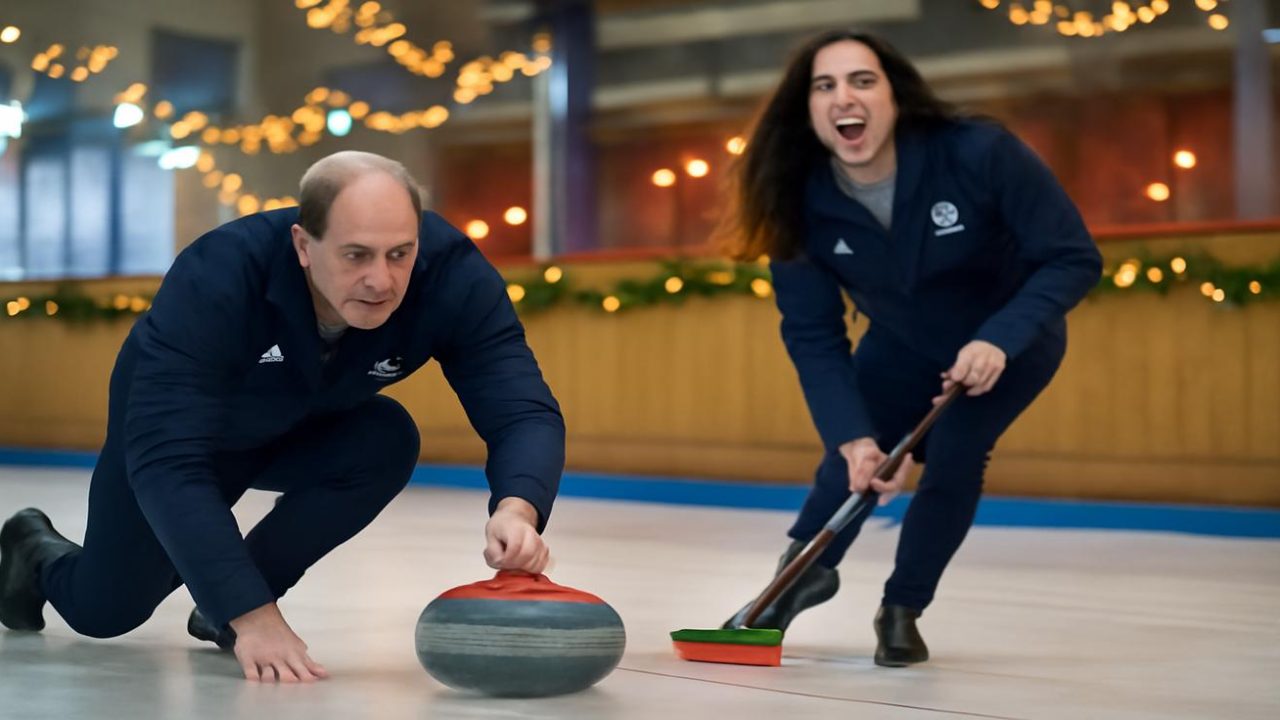
The opal blue ice of a Scottish curling rink became an unlikely stage for royal competition when the Prince and Princess of Wales stepped onto the frozen surface for their first curling challenge. Under the arena lights, with the crisp hiss of brushes and the low rumble of polished granite stones echoing through the rafters, William and Catherine traded their usual formal engagements for something far more unpredictable.
The morning began with cameras clicking and spectators bundled in thick coats, their breath visible in the chilly air. When the royal couple entered the rink in southwest Scotland, the familiar murmur that follows royalty rippled through the crowd before settling into respectful quiet.
This wasn’t about ceremony or red carpets. Just two people, a pair of gleaming curling stones, and the pebbled ice waiting beneath their feet.

Why This Royal Curling Challenge Captured Attention
Curling strips away pretense in ways that formal royal engagements rarely do. The sport demands you get close to the ice—close enough to see the tiny beads of water forming the pebbled surface and hear the subtlest scrape of steel on stone.
William appeared tall and relaxed with his familiar half-smile, while Catherine looked poised but visibly curious as her eyes studied the lines on the ice, the brushes, and the stones. Neither had properly rehearsed for this moment, and it showed in the quick glances they exchanged like teammates preparing for something entirely new.
A local coach greeted them with a broad smile, cheeks pink from hours in the cold, holding his broom like a conductor’s baton. The brief introductions with young players and club members created an atmosphere far removed from typical royal protocol.

The coach’s explanation was simple but revealing: “You slide the stone from here, aiming for the house. Your team sweeps to control the speed and curl. It’s more chess than it is bowling.”
The Intimate Details That Made This Challenge Special
The stones themselves told a story of Scottish heritage—smooth, speckled granite quarried from remote islands and carved with quiet precision. These weren’t just game pieces but chunks of ancient Scotland shaped into tools requiring both strength and delicacy.
Catherine bent forward to study the granite surface while William nodded thoughtfully at the coach’s instructions. The ice beneath them whispered under their cautious steps as they tested the boundary between rubber mat and frozen water.

The arena’s sharp, bright lighting created an almost theatrical atmosphere, contrasting with the weak winter sun visible through the windows. Inside this controlled environment, every sound carried weight—the shuffle of rubber soles, the collective intake of breath from spectators, the coach’s calm instructions cutting through the chilly air.
When the Prince Took His First Shot
The moment of truth arrived when William crouched at the hack for his inaugural throw. Kneeling on the ice, he gripped the stone’s handle while positioning his sliding foot. The arena fell silent except for the coach’s steady guidance, balancing encouragement with technical instruction.
The push-off came faster than planned. William’s shoulders tightened as he released the stone, which gathered its own quiet momentum down the ice. Two young curlers sprang into action with their brushes, sweeping in frantic, rhythmic strokes while their shoes squeaked against the surface.

The distinctive sound of curling filled the space—shhhh, shhhh, shhhh—as the brushes worked to guide the stone’s path. It glided into the house, crossing the rings before coming to rest just off-center. Not perfect, but respectable for a first attempt.
| Element | Description | Royal Challenge |
|---|---|---|
| Ice Surface | Pebbled with water beads | Required careful footing |
| Stones | Scottish granite, precisely carved | Heavier than expected |
| Technique | Balance of strength and finesse | More challenging than anticipated |
| Strategy | Chess-like planning required | Quick learning curve needed |
What Made Catherine’s Approach Different
Catherine’s turn revealed a different approach to the challenge. Her study of the ice conditions and stone positioning suggested careful observation of her husband’s technique. The Princess appeared to absorb the coach’s feedback about William’s delivery, adjusting her stance accordingly.
The competitive element between the royal couple became apparent not through obvious rivalry but in their focused attention to technique and results. Each stone’s journey down the ice carried the weight of friendly competition mixed with genuine effort to master an unfamiliar skill.

The local curling community members guiding them brought decades of experience to bear on teaching complete novices. Their patience with royal beginners demonstrated curling’s welcoming culture, where expertise is shared freely regardless of social status.
The Broader Impact of Royal Sports Engagement
This curling challenge represents more than recreational activity for the Prince and Princess of Wales. Their willingness to attempt unfamiliar sports in public settings helps spotlight traditional Scottish activities that might otherwise lack mainstream attention.
Curling clubs across Scotland likely benefited from the visibility generated by royal participation. The sport, often overshadowed by more prominent athletic pursuits, gained valuable exposure through this high-profile demonstration of its accessibility and appeal.

The informal nature of the challenge also reinforced the couple’s approach to public engagement—choosing authentic experiences over purely ceremonial appearances. Their genuine curiosity about technique and strategy resonated with spectators who appreciated seeing royalty navigate the same learning curve any beginner would face.
What This Reveals About Modern Royal Duties
The Scottish curling challenge exemplified how contemporary royal engagements increasingly emphasize participation over observation. Rather than simply watching demonstrations or receiving briefings, William and Catherine actively engaged with the sport’s demands and challenges.
This hands-on approach creates more memorable interactions with local communities while generating authentic content that resonates across different media platforms. The visual appeal of royalty attempting everyday activities provides compelling storytelling opportunities that traditional ribbon-cutting ceremonies cannot match.

The morning’s events also highlighted Scotland’s cultural heritage through sport, connecting ancient traditions with modern royal representation. The granite stones’ island origins and the rink’s community atmosphere created natural talking points about Scottish identity and tradition.
Frequently Asked Questions
Where did the Prince and Princess of Wales try curling?
They participated in the curling challenge at a rink in southwest Scotland, though the specific venue name wasn’t detailed in the source material.
Had William and Catherine curled before this event?
The source suggests this was their first proper curling experience, describing it as something “neither had properly rehearsed.”

What made this different from typical royal engagements?
Unlike formal ceremonies, this involved active participation in an unfamiliar sport, creating a more casual and authentic interaction with local community members.
How did the Prince perform on his first curling attempt?
His stone landed just off-center in the target area—described as “not perfect, but not bad” for a beginner’s effort.
Who taught them how to curl?
A local coach with pink cheeks from hours in the cold guided them through the basics, along with young players and club members from the curling community.
What type of stones did they use?
Traditional Scottish granite stones, quarried from remote islands and carved with precision—the same type used for generations in the sport.











Leave a Comment