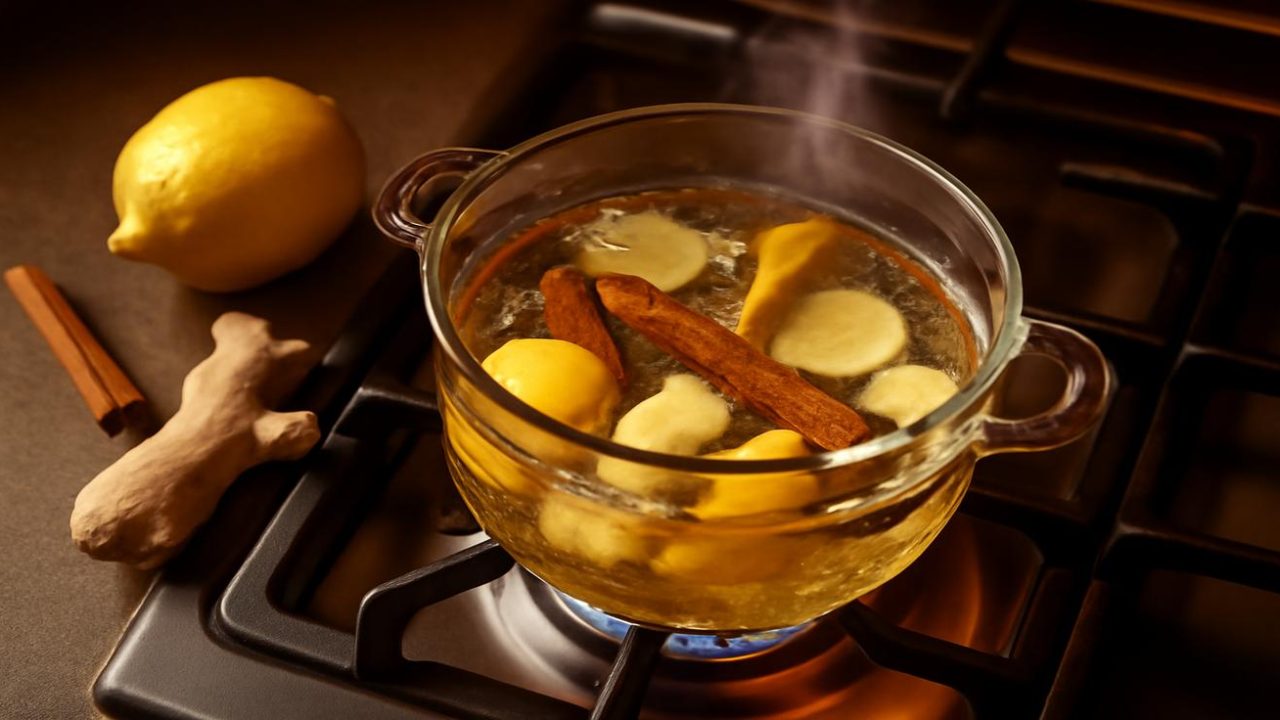
The aroma hits you before the water even reaches a full boil. Across kitchens worldwide, people are dropping lemon peels, ginger slices, and cinnamon sticks into pots of simmering water, creating a ritual that’s part comfort, part wellness tradition, and part genuine chemistry.
This simple mixture has sparked countless online claims about melting belly fat, detoxing livers, and curing colds overnight. But beneath the dramatic promises lies something more nuanced—a blend of plant compounds that science is beginning to understand, wrapped in cultural practices that have persisted for good reason.
The Science Behind Your Kitchen Scraps
What most people toss in the trash—lemon peels—actually contains the most potent compounds. Those tiny, glistening oil glands dotting the skin are packed with limonene, the compound responsible for that bright, clean aroma that fills your kitchen.

When you boil lemon peel, hot water extracts essential oils and bitter flavonoids like hesperidin and eriocitrin. These plant compounds have been studied in research settings for potential antioxidant and anti-inflammatory properties, though they’re not miracle cures—just natural substances that may offer gentle health support.
Ginger brings its own arsenal of bioactive compounds. The knobby root’s signature heat comes from gingerol and shogaol, substances that cultures worldwide have used for centuries to ease nausea, support digestion, and warm the body during cold weather.
Cinnamon completes the trio with cinnamaldehyde, the compound that gives whole cinnamon sticks their distinctive aroma and has been investigated for potential effects on blood sugar regulation and inflammation.

The result isn’t a pharmaceutical drug—it’s a gentle herbal infusion that contributes plant-rich compounds to your daily routine. Think of it as a quiet nudge toward better wellness rather than a magic bullet.
What People Actually Use This Mixture For
Ask five people why they make this brew, and you’ll get five overlapping but different answers. The beauty lies in how easily it fits into everyday life, serving multiple purposes depending on what someone needs.
Many people use it as part of a “detox” ritual, though it’s important to understand what that really means. Your liver and kidneys already work around the clock to filter and process toxins—they don’t need help from a beverage to do their job.

What this mixture can provide is a break from sugary drinks and processed beverages, replacing them with something that feels cleansing and refreshing. It’s hydration with a purpose, offering a moment of mindful self-care in busy days.
Others turn to this combination when they feel a cold coming on or want something warming during winter months. While it won’t cure illness overnight, the ginger’s warming properties and the vitamin C from lemon can provide comfort when you’re under the weather.
Some people simply enjoy it as a caffeine-free alternative to coffee or tea, appreciating the complex flavor profile that’s simultaneously sharp, warm, and soothing.

The Real Benefits You Can Expect
Setting aside the overblown marketing claims, this mixture offers several genuine advantages that explain its enduring popularity across cultures.
| Ingredient | Key Compounds | Traditional Uses | Research Areas |
|---|---|---|---|
| Lemon Peel | Limonene, hesperidin, eriocitrin | Digestive support, freshening | Antioxidant, anti-inflammatory |
| Ginger | Gingerol, shogaol | Nausea relief, warming | Digestive health, inflammation |
| Cinnamon | Cinnamaldehyde | Warming, flavoring | Blood sugar, inflammation |
The combination creates a drink that feels lighter and fresher than sugary alternatives while providing natural compounds your body can use. It’s not about dramatic transformation—it’s about small, consistent choices that support overall wellness.
The ritual itself matters too. Taking time to prepare something nourishing, inhaling the aromatic steam, and sitting with a warm cup creates a moment of calm in busy schedules. This psychological benefit shouldn’t be underestimated.

How to Make It (And Common Mistakes to Avoid)
The process is simple, but small details make a difference in both flavor and effectiveness. Start with organic lemons when possible, since you’re using the peel where pesticide residues typically concentrate.
Use about an inch of fresh ginger root, sliced thin to release more compounds. One cinnamon stick works better than ground cinnamon, which can make the liquid cloudy and gritty.
Bring water to a boil, then reduce to a gentle simmer before adding ingredients. Aggressive boiling can break down delicate compounds and create bitter flavors. Let it simmer for 10-15 minutes, then strain.

Common mistakes include over-boiling, which destroys beneficial compounds, and adding sweeteners that counteract the cleansing effect many people seek. If you need sweetening, a small amount of honey preserves the natural character better than processed sugar.
Managing Expectations in a World of Wellness Claims
The internet overflows with dramatic promises about this simple mixture. Claims about overnight fat loss or instant liver detox set unrealistic expectations that can lead to disappointment.
What this brew actually offers is more subtle but potentially more valuable—a pleasant way to increase fluid intake, reduce reliance on sugary beverages, and incorporate beneficial plant compounds into daily routines.

The compounds in lemon peel, ginger, and cinnamon have legitimate biological activity, but they work gradually and gently. Think weeks and months of consistent use, not overnight transformation.
This mixture works best as part of broader healthy habits—regular exercise, adequate sleep, stress management, and a balanced diet. It’s a supporting player, not the star of your wellness routine.
Why This Simple Practice Endures
In a world of expensive supplements and complicated wellness protocols, the persistence of this simple kitchen practice makes sense. It requires no special equipment, uses ingredients most people have available, and costs almost nothing to make.

The sensory experience alone—the bright citrus aroma, warming spices, and comforting steam—provides immediate satisfaction that expensive supplements can’t match. It engages multiple senses in a way that connects you to the process of nourishing yourself.
Perhaps most importantly, it represents agency over your own wellness. In an era where health advice often feels complicated and contradictory, this mixture offers something you can control, understand, and customize to your preferences.
The practice bridges traditional wisdom with modern understanding, honoring cultural knowledge while acknowledging scientific limitations. It’s neither miracle cure nor meaningless ritual—it’s something in between, which might be exactly what many people need.
Frequently Asked Questions
How often should I drink this lemon peel, cinnamon, and ginger mixture?
Many people enjoy it once or twice daily, though there’s no specific requirement. Listen to your body and adjust based on how you feel.
Can I prepare a large batch and store it for later?
Fresh preparation is ideal for maximum compound activity, but you can refrigerate the mixture for up to 2-3 days. Reheat gently to preserve beneficial properties.
Are there any side effects from drinking this mixture regularly?
Most people tolerate it well, but ginger can be stimulating and may affect some medications. Consult healthcare providers if you take blood thinners or diabetes medications.
Does this mixture actually help with weight loss?
While it may support hydration and reduce sugary drink consumption, there’s no evidence it directly causes weight loss. It works best as part of overall healthy lifestyle changes.
Can I use dried ginger or ground cinnamon instead of fresh ingredients?
Fresh ingredients provide more active compounds and better flavor, but dried alternatives work if fresh isn’t available. Use smaller amounts of dried spices to avoid overwhelming bitterness.
Is it safe to drink this mixture if I’m pregnant or breastfeeding?
Ginger is generally considered safe in food amounts during pregnancy, but consult your healthcare provider about regular consumption of concentrated herbal preparations.











Leave a Comment