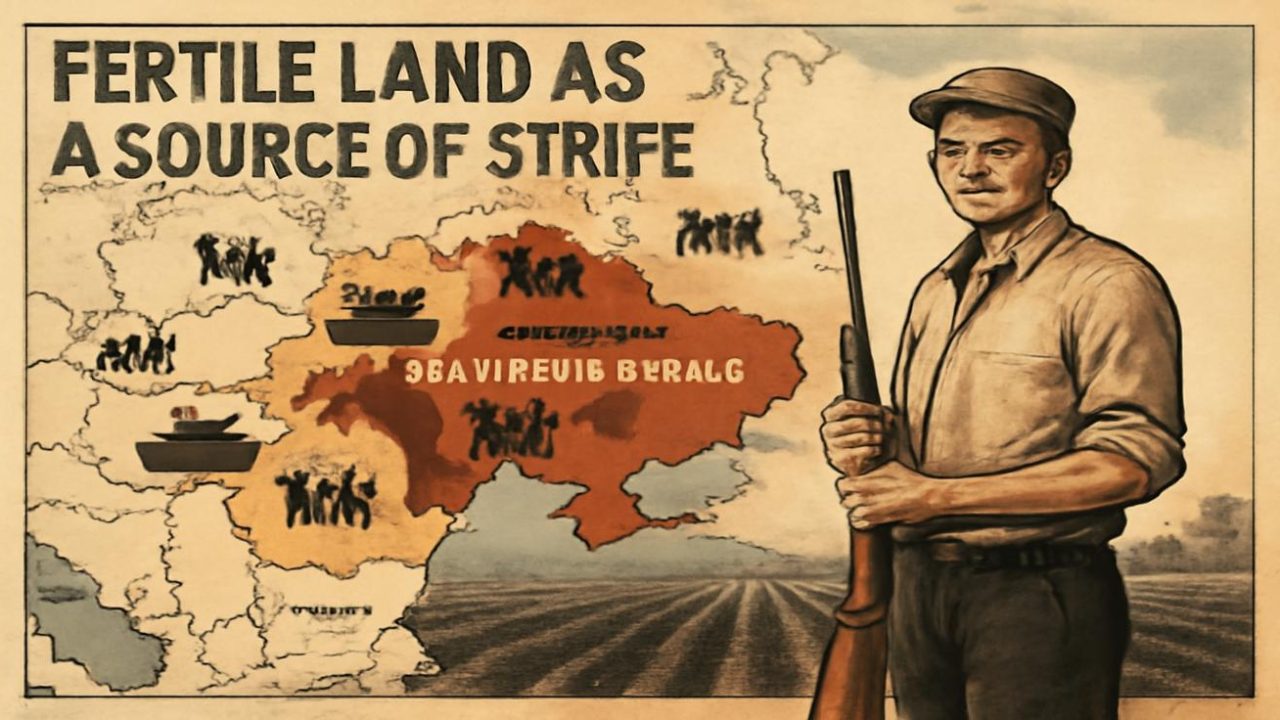
Nearly one-third of the world’s most fertile soil lies within Ukrainian borders—a geological treasure that once promised prosperity but now fuels international conflict and agricultural warfare across Eastern Europe and Central Asia.
The chernozem belt, stretching from Ukraine’s plains through Russia’s southern steppes into northern Kazakhstan, represents more than just farmland. This “black earth” has become a strategic asset that shapes geopolitics, influences global food security, and pits farmers against each other in an escalating battle for control.
What makes this soil so valuable extends far beyond its appearance. The dark earth retains moisture through harsh summers and can triple crop yields without heavy chemical inputs, creating agricultural advantages that translate directly into economic and political power.

The Hidden Strategic Value of Black Earth
Chernozem earned its nickname “black gold” through centuries of natural development. Rich in humus and deep in organic matter, this soil formed over thousands of years from decaying grasses and roots in the steppe environment.
Ukraine’s position at the heart of this geological miracle made the country Europe’s breadbasket before the current war with Russia. Grain grown in Ukrainian black soil travels across the Mediterranean, Africa, and the Middle East, creating supply chains that connect dark fields to distant dinner tables.
When conflict disrupts these agricultural flows, the consequences ripple globally. Bread prices spike thousands of kilometers away from the source, and empty shelves in distant countries trace their origins back to contested Ukrainian farmland.
Russia and Kazakhstan understand this dynamic. All three nations recognize that controlling fertile soil means controlling not just domestic food supplies, but international leverage in an increasingly unstable world.
How Agricultural Assets Became Military Targets
The 2014 Russian annexation of Crimea marked a turning point in how borders and farmland intersect. Military operations didn’t just seize administrative buildings—they captured layers of black earth extending meters deep into the ground.
Unlike political boundaries that exist on paper, soil cannot be relocated or redrawn. Fields that Ukrainian farmers had worked for generations suddenly fell under different national control, creating a new category of territorial dispute centered on agricultural assets.

The current conflict has intensified these dynamics. Satellite images now track not just troop movements but also planting seasons and harvest patterns, as agricultural intelligence becomes military intelligence.
| Region | Chernozem Coverage | Agricultural Impact |
|---|---|---|
| Ukraine | Nearly one-third of global total | Europe’s primary grain exporter |
| Southern Russia | Extensive steppe coverage | Major wheat production region |
| Northern Kazakhstan | Significant belt extension | Key regional food producer |
Climate Change Amplifies Soil Competition
Global climate instability adds urgency to the competition for fertile land. As droughts and extreme weather threaten agricultural regions worldwide, the moisture-retaining properties of chernozem become increasingly valuable.
This soil’s ability to hold water like a secret provides natural drought resistance that cannot be easily replicated. Chemical fertilizers and irrigation systems can improve marginal land, but they cannot recreate the slow-motion miracle of organic matter built up over millennia.

Countries with significant chernozem deposits now possess what amounts to climate-resistant agricultural infrastructure. This advantage grows more pronounced each season as other regions struggle with weather-related crop failures.
The strategic calculations have shifted accordingly. Nations view fertile soil through the same lens once reserved for oil reserves or mineral deposits—as finite resources that determine long-term survival and international standing.
Farmers Caught Between Borders and Bullets
Individual farmers find themselves at the center of conflicts they never chose. Families who viewed their soil as inheritance and safety nets now face questions of ownership that extend far beyond property lines.

The same black earth that promised security across political changes and economic upheavals has become a source of danger. Fields that once represented stability now attract the attention of military planners and satellite surveillance.
Traditional farming rhythms—planting seasons, harvest schedules, crop rotation cycles—must now account for security considerations and territorial disputes. Agricultural decisions increasingly depend on political calculations rather than purely agronomic factors.
Neighbor-against-neighbor tensions emerge as different farmers navigate competing claims on their land. The soil that once united communities through shared agricultural traditions now divides them along new lines of national allegiance and survival strategy.

Global Food Security Implications
The disruption of chernozem-based agriculture extends far beyond regional borders. Countries dependent on grain imports from Ukraine, Russia, and Kazakhstan face supply uncertainties that affect everything from bread prices to political stability.
Middle Eastern and African nations particularly feel the impact of interrupted grain flows. Their food security calculations must now account for agricultural conflicts in Eastern Europe, creating diplomatic pressures that span continents.
International markets react to news from Ukrainian sunflower fields and Kazakhstani wheat regions with the same sensitivity once reserved for oil production announcements. Agricultural commodity prices fluctuate based on military developments and territorial control changes.
This new reality transforms soil quality from a local farming concern into a matter of international security. Countries without significant fertile land face increased vulnerability to supply disruptions and price manipulation by nations that control major chernozem deposits.
Frequently Asked Questions
What makes chernozem soil so valuable compared to other agricultural land?
Chernozem can triple crop yields without heavy chemical inputs and retains moisture through harsh summers due to its high organic matter content built up over thousands of years.
How much of the world’s most fertile soil is located in conflict zones?
Nearly one-third of global chernozem lies within Ukrainian borders, with additional significant deposits in southern Russia and northern Kazakhstan, all regions affected by current geopolitical tensions.

Can this type of fertile soil be created artificially?
No, chernozem formed over millennia through natural processes involving decaying steppe grasses and specific climate conditions that cannot be quickly replicated or replaced once damaged.
How does soil control affect global food prices?
Grain grown in chernozem regions supplies markets across the Mediterranean, Africa, and Middle East, so when conflict disrupts production, bread prices spike thousands of kilometers away from the source.
Why are Russia and Kazakhstan involved in this agricultural competition?
Both countries recognize that controlling fertile soil provides leverage over domestic food supplies and international markets, especially as climate change makes drought-resistant farmland increasingly valuable.
What happens to farmers whose land becomes contested territory?
Farmers face uncertainty about ownership and must make agricultural decisions based on political calculations rather than purely farming considerations, with some losing access to fields they worked for generations.










Leave a Comment