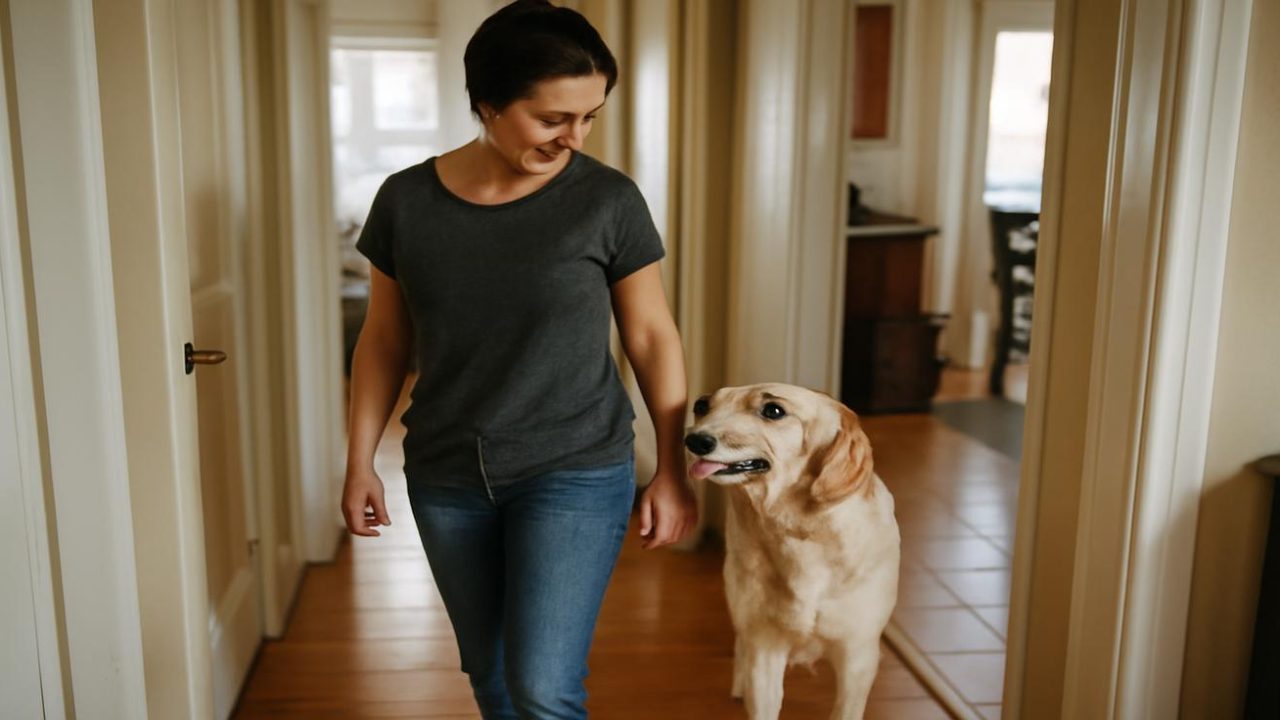
That familiar sound of paws clicking across the floor, following you from room to room, isn’t just coincidence. When your dog shadows your every move—from the kitchen to the bathroom door—you’re witnessing a complex blend of ancient instincts, deep attachment, and learned behavior that reveals just how central you’ve become to their world.
This constant companionship goes far beyond simple clinginess. Your four-legged shadow is communicating something profound about the bond you share, rooted in thousands of years of evolution and strengthened by the daily rhythms of your life together.
The Ancient Pack Instinct Behind Your Dog’s Following Behavior
Your dog’s need to follow you everywhere traces back to their wolf ancestry and thousands of years of evolution alongside humans. In wolf packs, staying close to the group means survival—protection, shared resources, and family connection all depend on maintaining proximity to the pack.

This instinct has been passed down through generations of domestication, but with a crucial difference. Instead of following a pack leader through the wilderness, your dog has identified you as their pack. You represent safety, resources, and social connection all rolled into one person.
Over time, your dog has carefully mapped your habits and behaviors. They know the sound of your footsteps, the rustle of your jacket before a walk, and the way you sigh when you sit down. Their brain has created a simple but powerful equation: where you are equals safety, comfort, and possibility.
This isn’t just fuzzy sentiment—it’s a practiced, careful watchfulness. You’ve become the center of their weather system, the gravitational pull they orbit because that’s where warmth and security live.

What Your Dog’s Following Really Means
When your dog trails you with soft eyes and a relaxed body, not demanding attention but simply existing near you, they’re displaying what experts recognize as healthy attachment behavior. This following serves several important functions in your dog’s emotional and psychological well-being.
The behavior represents multiple needs and motivations working together:
- Safety and security: Even confident dogs find comfort in proximity to their person. That furry shadow at the bathroom door isn’t worried you’ll disappear—their nervous system simply settles when you’re close.
- Predictability and routine: You are your dog’s living schedule. You know when dinner happens, when walks occur, and when fun begins. Following you is like constantly checking the clock.
- Positive reinforcement: You likely reward following behavior without realizing it through casual conversations, dropped crumbs, absentminded head scratches, and affectionate name-calling.
- Attachment and bonding: Healthy canine attachment looks exactly like what you’re experiencing—they care where you are and feel more relaxed in your presence.
The Science Behind Your Dog’s Devotion
Your dog’s following behavior reflects a sophisticated understanding of your role in their life. Through daily interactions and shared experiences, they’ve learned to read your patterns and predict your movements with remarkable accuracy.

This behavioral pattern typically develops through several key factors:
| Factor | How It Develops | What It Means |
|---|---|---|
| Primary Bonding | Early experiences, feeding, comfort during stress | You became “their person” through consistent care |
| Routine Recognition | Daily patterns of feeding, walking, interaction | Following you predicts good things happening |
| Security Seeking | Comfort found in your presence during uncertainty | You represent safety and emotional regulation |
| Social Connection | Pack instincts adapted to human family structure | Staying close maintains social bonds and belonging |
When Following Becomes Something More
While most following behavior reflects healthy attachment, the intensity and context matter. Normal following typically involves a relaxed dog who can settle when you’re stationary and doesn’t show signs of distress when briefly separated.
The key is observing your dog’s overall demeanor. Healthy following looks like a small, living moon tracking your gravity—present but not frantic, attentive but not anxious. Your dog should be able to rest comfortably when you’re settled and shouldn’t display destructive behaviors when you leave.

Most dogs who follow their owners everywhere are simply expressing their deep bond and natural instincts in the safest, most rewarding way they know how. They’ve learned that good things happen when they stay close to you, and their ancient pack instincts tell them this is exactly where they belong.
Understanding Your Role in Your Dog’s World
When you notice that soft click of nails following you down the hallway, that gentle presence shadowing your daily routine, you’re seeing the visible evidence of a profound interspecies relationship that has developed over thousands of years.
Your dog has chosen to orbit around you not just because you provide food and shelter, but because you’ve become their source of emotional regulation, their predictor of good things, and their anchor in an often overwhelming world. That wet nose nudging your elbow and those steady eyes watching from the doorway represent a level of trust and attachment that goes far deeper than simple obedience.

Every small interaction—your voice in the hallway, your laugh from the next room, even your unconscious habits—has been catalogued and treasured by your canine companion. They follow you because in their carefully constructed understanding of the world, you are where safety, love, and possibility all converge.
Frequently Asked Questions
Why does my dog follow me everywhere but not other family members?
Dogs often choose one person as their primary attachment figure, usually the one who feeds them, provides the most care, or spent the most time with them during critical bonding periods.
Is it normal for my dog to watch me through the bathroom door?
Yes, this behavior reflects their pack instincts and desire to maintain proximity for security, not because they think you’ll disappear but because their nervous system settles when you’re close.

Does following behavior mean my dog is anxious or insecure?
Not necessarily. Healthy following involves a relaxed dog who can settle when you’re stationary and doesn’t show distress during brief separations. The key is observing their overall demeanor.
Can I train my dog to follow me less?
While you can modify the behavior through training, following often reflects deep attachment and pack instincts that are natural and healthy expressions of your bond.
Why does my dog seem to predict my movements before I make them?
Dogs are excellent at reading patterns and have mapped your daily habits, learning to recognize subtle cues like the rustle of your jacket or your pre-walk routine that signal what’s coming next.

Should I be concerned if my dog suddenly stops following me?
A sudden change in following behavior could indicate illness, stress, or changes in your routine that have affected your dog’s sense of security and attachment patterns.










Leave a Comment