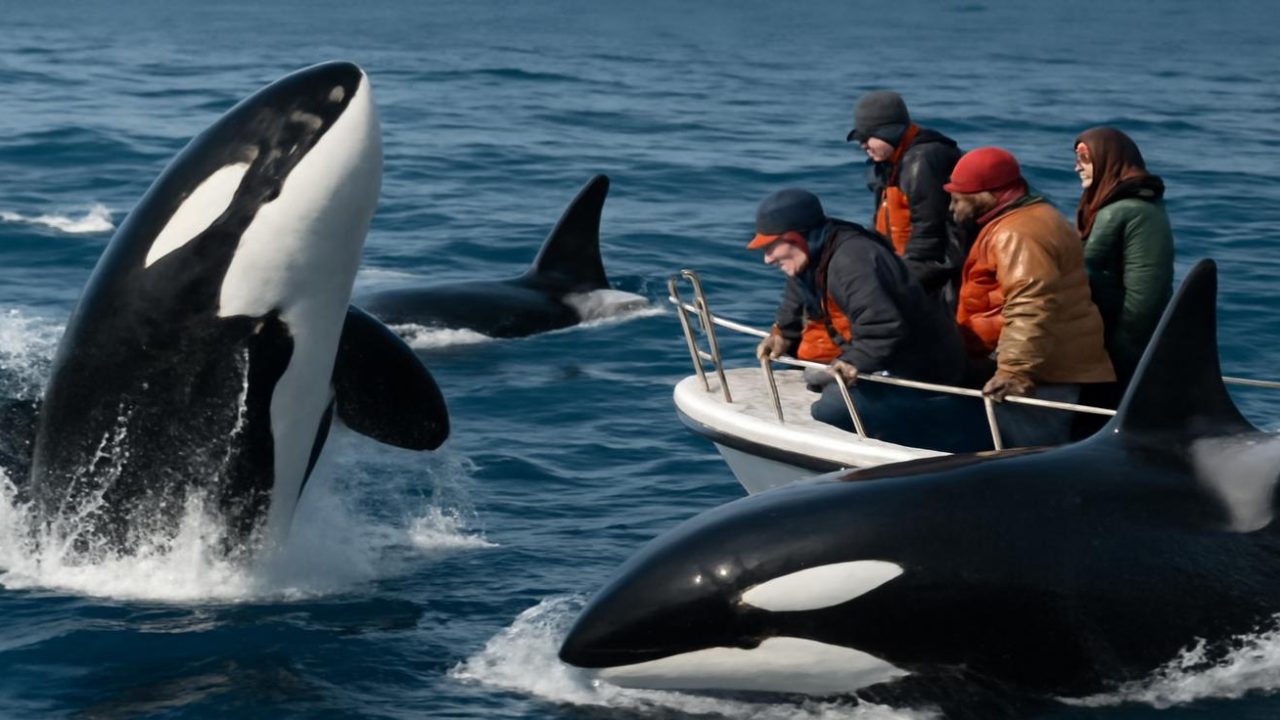
Marine authorities are issuing increasingly urgent warnings as orca groups demonstrate more frequent aggressive behavior toward vessels, with incidents ranging from damaged rudders to complete vessel loss in some cases. The encounters follow a disturbing pattern that has transformed from rare curiosities into systematic confrontations that researchers are scrambling to understand.
These interactions typically involve clusters of orcas approaching boats from behind or beneath, focusing their attacks on rudders, sterns, and keels with what witnesses describe as methodical, strategic ramming rather than random aggression.
The shift represents a significant change in marine wildlife behavior that’s forcing authorities to reconsider safety protocols for vessels operating in affected waters.

The Systematic Nature of Recent Orca Encounters
Reports from affected areas reveal a consistent pattern that distinguishes these incidents from typical marine wildlife encounters. Sailors describe hearing the orcas before seeing them—hollow thuds against the hull that vibrate through the entire vessel structure, followed by the distinctive sound of blowhole exhalations near the surface.
The attacks themselves show clear methodology. Orcas approach in groups, typically targeting the rudder area with repeated ramming that can cause the helm to spin uselessly and result in structural damage to fiberglass and metal components.
Many encounters begin with what appears to be investigative behavior—orcas sliding alongside vessels and appearing to examine the boat before initiating contact. However, the subsequent interactions involve forceful, repeated impacts that can compromise vessel integrity.

The northeastern Atlantic has emerged as a particular hotspot for these incidents, prompting concentrated research efforts and updated maritime safety advisories for the region.
What Scientists Think Is Driving This Behavior
Researchers have developed several theories to explain the increasingly aggressive orca behavior, though no definitive explanation has emerged. The leading hypotheses fall into three main categories: play behavior, cultural learning, and environmental response.
The play theory suggests orcas may be treating boats as novel “toys,” experimenting with these unfamiliar objects in their environment. This explanation aligns with known orca intelligence and curiosity about new stimuli.

Cultural transmission represents another possibility—that some orcas have developed this behavior and are teaching it to others within their social networks. Given the highly social nature of orca communities and their capacity for learning, this could explain the geographic clustering of incidents.
The environmental response theory considers whether the behavior represents displacement, retaliation, or stress reactions related to increasing human presence in marine environments, including noise pollution, fishing activities, and vessel traffic.
Real-World Impact on Maritime Operations
The consequences of these encounters extend far beyond momentary scares for recreational sailors. Structural damage from orca interactions can range from minor rudder scratches to complete rudder blade failures that leave vessels unable to maintain course.

Some incidents have escalated to emergency situations requiring distress calls and rescue operations. In the most severe cases, structural failures have led to complete vessel loss, though these represent a small percentage of total encounters.
The pattern of damage typically affects critical steering components, which can create dangerous situations especially in busy shipping lanes or adverse weather conditions. Instruments may flicker or fail during encounters, and loose gear often shifts throughout the vessel due to the impact vibrations.
| Encounter Element | Typical Description | Potential Impact |
|---|---|---|
| Initial Contact | Hollow thuds against hull | Crew awareness, equipment vibration |
| Visual Identification | Black-and-white bodies near surface | Confirmation of orca presence |
| Targeted Ramming | Repeated impacts on rudder/stern | Steering loss, structural damage |
| Duration | Variable, methodical approach | Escalating damage potential |
How Maritime Authorities Are Responding
Maritime authorities have moved beyond treating these incidents as isolated curiosities, implementing comprehensive response measures that include updated safety advisories, enhanced reporting systems, and coordination with research institutions.

Notices to mariners now include specific warnings about orca behavior in affected regions, with recommendations for vessel operators who encounter aggressive orcas. These guidelines typically advise against attempting to drive orcas away and instead recommend stopping engines and waiting for the animals to lose interest.
Research efforts have intensified, with scientists working to understand both the immediate triggers for aggressive behavior and the longer-term patterns that might predict future incidents. This research involves tracking individual orca groups, analyzing encounter reports, and studying environmental factors that might influence behavior.
The coordination between maritime safety officials and marine biologists represents an unprecedented response to what was previously considered an extremely rare occurrence.

What Vessel Operators Need to Know
Current recommendations for vessel operators focus on recognition, response, and reporting protocols designed to minimize both human risk and potential harm to the orcas themselves.
Recognition involves understanding the distinctive sounds and visual cues that typically precede aggressive encounters—the hollow hull impacts, the appearance of multiple orcas near the vessel, and the focused attention on rudder areas.
Response protocols generally recommend stopping engines, securing loose gear, and avoiding actions that might escalate the encounter. Attempts to scare orcas away or outrun them typically prove ineffective and may increase aggressive behavior.

Reporting requirements have expanded to help researchers track patterns and develop more effective prevention strategies. Detailed encounter reports contribute to the growing database that scientists use to understand this emerging behavior pattern.
The situation continues to evolve as researchers gather more data and authorities refine their recommendations based on real-world encounter outcomes.
Frequently Asked Questions
Are orcas actually becoming more aggressive toward boats?
Reports indicate increasing frequency of aggressive orca behavior toward vessels, particularly in the northeastern Atlantic, with encounters involving systematic ramming of rudders and hulls.

What should boat operators do during an orca encounter?
Current recommendations include stopping engines, securing loose equipment, and avoiding attempts to drive the orcas away, as aggressive responses may escalate the situation.
Why are orcas targeting boat rudders specifically?
The focus on rudders appears consistent across encounters, but researchers have not yet determined whether this represents play behavior, learned technique, or response to environmental factors.
Have there been any human injuries from these encounters?
The source material does not specify human injury rates, though it confirms that some encounters have resulted in vessel loss and emergency situations requiring rescue operations.
Is this behavior spreading to other orca populations?
While incidents are concentrated in certain regions like the northeastern Atlantic, whether the behavior is spreading through cultural transmission remains under investigation by researchers.
What’s being done to prevent future aggressive encounters?
Maritime authorities are issuing updated safety advisories, implementing enhanced reporting systems, and coordinating with researchers to better understand and predict this behavior.










Leave a Comment