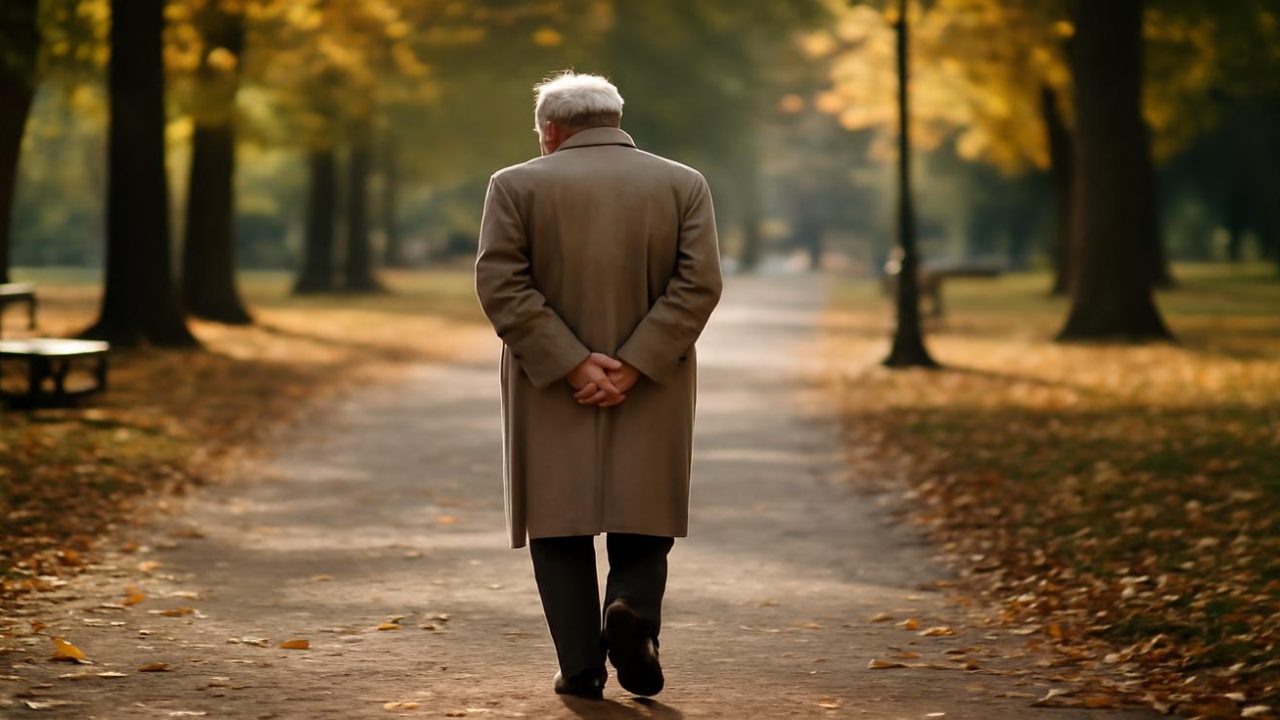
You’ve seen it countless times without really noticing: people walking with their hands clasped behind their backs. In parks, museums, waiting rooms, and city streets, this simple gesture appears everywhere from elderly couples strolling through botanical gardens to security guards pacing gallery floors.
What seems like an unconscious habit actually reveals fascinating insights about human psychology, body language, and the subtle ways we communicate without words. The position sends complex signals about confidence, authority, and mental state that most of us never consciously recognize.
Psychologists classify this behavior as a “background gesture” — one of those subconscious movements that happen while our conscious mind focuses elsewhere. But the meaning behind clasping your hands behind your back is far more layered than you might expect.

The Psychology Behind the Posture
From an evolutionary perspective, the front of your body represents prime real estate for survival and connection. It houses vital organs, serves as the platform for facial expressions and voice projection, and provides space to carry tools, food, or weapons.
When you move your hands behind your back, you’re doing something psychologically significant: exposing your vulnerable front while simultaneously restraining your primary tools for defense and interaction. This creates what researchers call a “paradox of signals” that reveals important information about your mental state.
The gesture typically communicates three key psychological messages. First, it signals calm confidence — you’re not guarding your chest with folded arms or preparing for conflict. Second, it demonstrates non-aggression by visibly removing your hands from any potential threat position. Third, it indicates reflective focus, as settling your arms frees mental bandwidth for deeper observation and thought.

The same basic posture can convey vastly different meanings depending on context. An elderly woman moving slowly among flower beds with hands folded behind her suggests gentle curiosity and respectful observation. A security guard pacing with the same posture projects authority and controlled vigilance.
What Walking With Hands Behind Your Back Really Signals
The psychological interpretation of this gesture depends heavily on accompanying body language and situational context. Several key factors influence how others perceive the behavior:
- Shoulder position: Relaxed shoulders suggest contemplation, while squared shoulders indicate authority
- Walking pace: Slow, measured steps imply reflection, while brisk movement shows purpose
- Gaze direction: Looking around suggests observation, while focused forward gaze indicates determination
- Chest position: An open chest projects confidence, while a slightly curved posture shows humility
The gesture often appears during moments of transition or decision-making. People naturally adopt this position when they need to think through problems, observe new environments, or project calm authority in professional settings.

In many cultures, the posture carries additional significance related to respect and mindfulness. It suggests someone who is present and engaged but not intrusive — observing without interfering.
The Science of Background Behaviors
Psychologists study these unconscious movements as part of broader research into nonverbal communication. Background behaviors like walking with hands behind your back offer insights into people’s emotional states and intentions that conscious gestures might mask.
The positioning creates a unique combination of openness and restraint. By exposing your torso while containing your hands, you signal that you feel secure enough to be vulnerable yet controlled enough to avoid impulsive actions.

| Body Language Element | Psychological Signal | Common Interpretation |
|---|---|---|
| Exposed chest | Confidence and trust | Not feeling threatened |
| Hidden hands | Non-aggression | No intention to act impulsively |
| Upright posture | Alert awareness | Engaged and observant |
| Interlaced fingers | Self-containment | Thoughtful restraint |
This research helps explain why the gesture appears so frequently in settings that require both authority and approachability. Museum guards, hospital administrators, and senior executives often unconsciously adopt this position when they need to project competence without aggression.
Cultural and Professional Contexts
Different environments bring out various aspects of this body language. In educational settings, teachers and professors often walk with hands behind their backs while lecturing, signaling thoughtful authority and creating space for students to engage without feeling threatened.
Healthcare professionals frequently use this posture when consulting with patients or families, projecting calm competence while maintaining respectful distance. The gesture suggests they’re fully present and attentive without being intrusive.

In security and law enforcement contexts, the position serves practical purposes alongside psychological ones. It keeps hands visible and non-threatening while maintaining an alert, professional demeanor that discourages problematic behavior.
The business world sees this gesture most often during informal meetings, office walks, and networking events. Executives and managers unconsciously adopt the position when they want to appear approachable yet authoritative — engaged in conversation but not overly eager or aggressive.
When the Gesture Reveals Inner State
Beyond professional contexts, walking with hands behind your back often emerges during personal moments of reflection or decision-making. The physical act of containing your hands seems to create mental space for deeper thinking.

People commonly adopt this posture when processing difficult news, working through relationship issues, or contemplating major life changes. The gesture appears to serve as a form of self-soothing that promotes clearer thinking.
The position also frequently appears in situations where someone feels slightly out of place but wants to appear composed. New employees touring their workplace, visitors exploring unfamiliar buildings, or anyone navigating social situations where they’re unsure of expectations often unconsciously clasp their hands behind their backs.
This suggests the gesture serves as a kind of psychological anchor — a way to feel grounded and controlled when external circumstances feel uncertain or overwhelming.

Frequently Asked Questions
Is walking with hands behind your back always a sign of confidence?
Not necessarily. While it often indicates calm confidence, the gesture can also signal uncertainty, deep thought, or an attempt to appear more composed than someone actually feels.
Do people from different cultures interpret this gesture differently?
Cultural context can influence interpretation, but the basic psychological signals — openness, non-aggression, and thoughtfulness — tend to translate across most cultures.
Should I consciously adopt this posture to appear more authoritative?
Forced body language often appears unnatural. The gesture works best when it emerges naturally from genuine feelings of calm confidence or reflective focus.

Why do security guards and museum workers commonly use this position?
The posture allows them to project authority and alertness while appearing non-threatening to visitors, creating an ideal balance for their professional responsibilities.
Can this gesture indicate negative emotions like anxiety or stress?
Yes, sometimes people clasp their hands behind their backs as a way to contain nervous energy or maintain composure during stressful situations.
Is there a difference between clasping hands versus just holding them behind your back?
Interlaced or clasped fingers typically suggest more intentional self-containment, while loosely held hands often indicate casual confidence or relaxed observation.











Leave a Comment