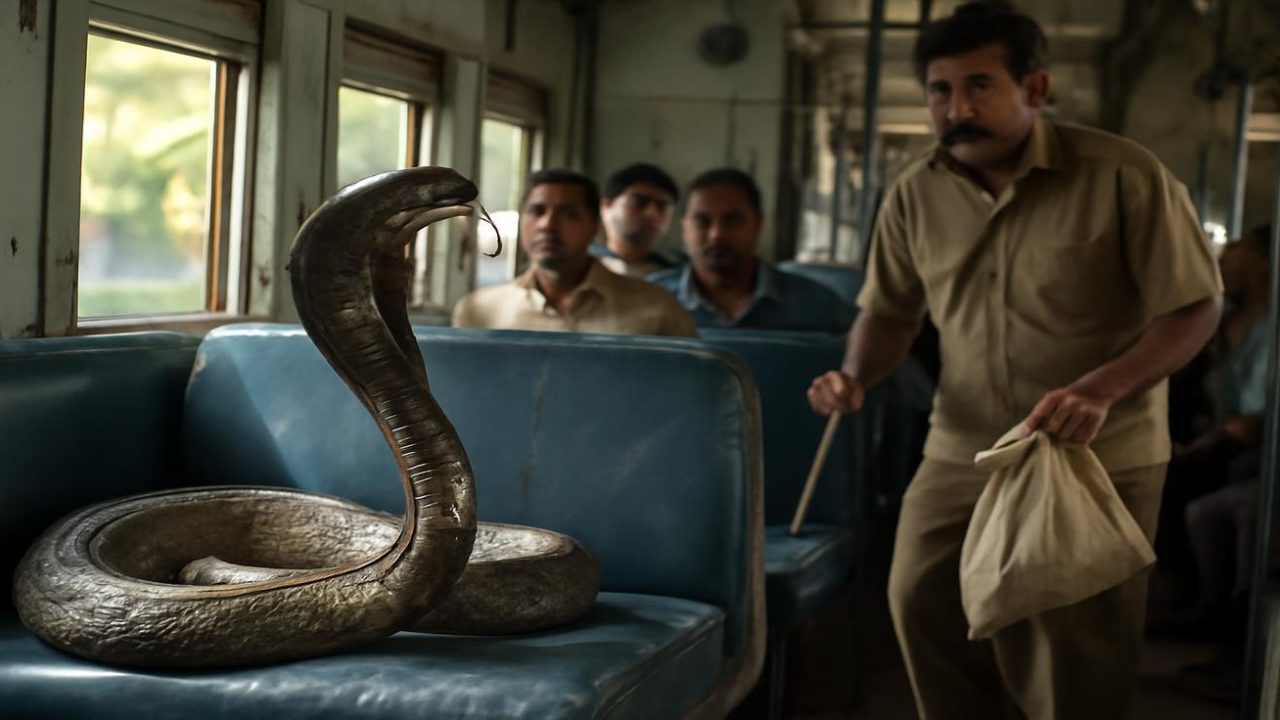
King cobras, the world’s longest venomous snakes, are increasingly turning up in an unexpected place: passenger trains cutting through India and Southeast Asia. What started as rare curiosities have become regular encounters that leave railway staff and passengers dealing with these apex predators in cramped coach compartments.
The phenomenon highlights an unintended consequence of expanding rail networks through snake-rich territories. As trains slice through the green heart of forested regions, they create moving corridors between different ecosystems—and king cobras are taking advantage.
These encounters follow a predictable pattern: screaming passengers, scrambling for upper berths, and the sight of a dark, gleaming serpent with its distinctive hood beginning to fan as it slides down train aisles like “spilled silk.”

Why King Cobras Are Drawn to Train Travel
The attraction isn’t random. Trains create an inadvertent ecosystem that appeals to the hunting instincts of these massive serpents, which can stretch up to 5 meters long.
Railway staff along snake-rich routes report that these encounters are no longer rare. Drivers in Kerala describe braking as colossal serpents try to cross tracks, only to watch them panic and slide under stationary carriages. Tea vendors in Assam have witnessed cobras calmly gliding into gaps between coaches at twilight, as if they understand the timetable.
For a king cobra, trains represent a moving edge between worlds: forest on one side, farmland on the other, with garbage heaps creating unintended feeding stations for rodents and frogs. This overlap of food and shelter creates exactly the conditions that draw predators.

The snakes don’t distinguish between a stationary machine and temporary shelter. To them, a train at the forest’s edge smells of prey and safety—until their chosen refuge begins to move.
The Unexpected Ecosystem Inside Train Coaches
Long-distance sleeper coaches create surprisingly attractive hunting grounds, especially at night when fluorescent lights dim to a weary blue. The floors become scattered with forgotten food items: crumbs, biscuit wrappers, dropped samosas, and banana peels drying in corners.
Under seats, in narrow, dusty hollows, cockroaches and mice run their midnight circuits. This late-night buffet draws in smaller prey animals that form the foundation of the food chain king cobras depend on.

But here’s the crucial detail: king cobras don’t primarily hunt rats and mice. They’re snake specialists—predators that hunt other predators. When smaller snakes move into rail yards and stations to feast on abundant rodent life, king cobras follow the scent trail.
From a snake-hunter’s perspective, a garbage-laced rail yard represents a map of opportunity. The king cobra tracks its prey through this artificial ecosystem, slipping into gaps between undercarriages, under cargo, and into dark corners near wheel assemblies.
Understanding the King Cobra’s Strategic Nature
These aren’t ordinary reptiles stumbling accidentally onto trains. King cobras are deliberate, strategic creatures that herpetologists describe as unusually calm and thoughtful in their movements.

When a king cobra rears up, its gaze reaches waist level on an average adult. The sight of one raising its head and flaring its hood triggers something primitive in human observers—a warning left behind by evolutionary ancestors.
Unlike most snakes, king cobras are known for their almost eerie intelligence. They patrol large territories, sometimes traveling kilometers through bamboo thickets and forest edges. Their presence on trains represents an extension of this territorial behavior into human-created environments.
The snakes navigate by sensing shelter, shadow, vibration, and heat. They don’t understand train schedules, but they do understand the environmental cues that trains inadvertently provide.

The Railway Staff Response
Railway workers have developed informal protocols for dealing with these encounters, though official policies vary by region and rail system.
The frequency of sightings has forced staff to become amateur herpetologists, learning to distinguish between venomous and non-venomous species during emergency situations. Many carry basic snake-handling equipment or know which local wildlife experts to contact.
Train schedules sometimes face delays when large serpents are discovered, as safety protocols require careful removal rather than rushed extraction that could provoke defensive behavior.

| King Cobra Characteristics | Details |
|---|---|
| Maximum Length | Up to 5 meters (sometimes more) |
| Primary Prey | Other snakes (snake specialist) |
| Behavioral Traits | Deliberate, strategic, unusually calm |
| Territory Range | Kilometers through forest edges |
| Hood Position When Threatened | Head at human waist level when reared |
The Broader Environmental Context
These train encounters reflect larger changes in how wildlife adapts to expanding human infrastructure. As rail networks extend deeper into previously untouched habitats, they create new interfaces between human and animal territories.
The king cobra’s presence on trains isn’t necessarily a sign of habitat destruction, but rather evidence of these apex predators’ adaptability. They’re following food sources and shelter opportunities into spaces humans never intended to share.
For passengers, the experience serves as a dramatic reminder of the wild ecosystems their journey passes through. The screaming, scrambling, and phone cameras that typically greet these encounters reflect how disconnected most travelers are from the natural world their transportation systems traverse.

The phenomenon also demonstrates how human infrastructure can inadvertently support wildlife corridors, even when those corridors lead to uncomfortable close encounters in confined spaces.
What Passengers Can Expect
Travelers on routes through snake-rich territories should understand that these encounters, while dramatic, don’t necessarily indicate immediate danger. King cobras typically seek escape routes rather than confrontation when discovered.
The snakes usually enter trains seeking shelter and prey, not human contact. Their presence indicates they’re following natural hunting patterns that happen to intersect with human transportation.

Most encounters resolve with wildlife removal rather than aggressive incidents, though the initial discovery often creates chaos among unprepared passengers.
Railway authorities recommend remaining calm, avoiding sudden movements, and alerting staff immediately rather than attempting amateur snake handling with phone cameras.
Frequently Asked Questions
How often do king cobras actually board trains?
Railway staff along snake-rich routes report these encounters are no longer rare curiosities, though specific frequency data isn’t provided.
Do king cobras deliberately choose trains as transportation?
No, they’re seeking shelter and following prey scents, not understanding that trains move between locations.
Are passengers in immediate danger when a king cobra is discovered?
King cobras typically seek escape routes rather than confrontation, though they should be handled only by professionals.
What attracts king cobras to train environments?
They follow other snakes that are drawn to rodent populations around food waste and garbage near rail stations.
Why don’t king cobras hunt the mice and rats directly?
King cobras are snake specialists that primarily hunt other snakes rather than rodents.
Which rail routes see the most king cobra encounters?
Routes through India and Southeast Asia that pass through forested regions, with specific mentions of Kerala and Assam.










Leave a Comment