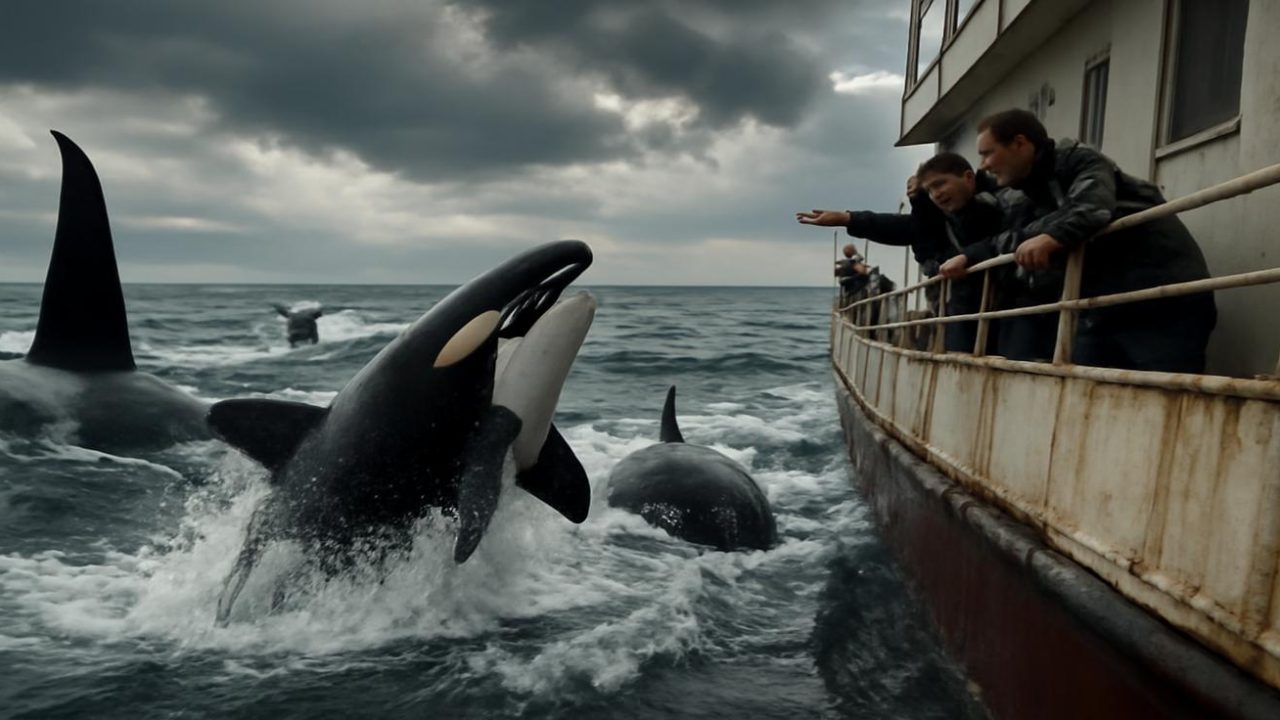
Orcas in the North Atlantic have begun targeting commercial vessels in what marine experts are calling a coordinated behavioral pattern that spans from the Strait of Gibraltar to the Bay of Biscay. These encounters follow a strikingly similar script: small groups approach vessel sterns, make repeated contact with rudders, and sometimes cause boats to lose steering control.
The incidents represent more than isolated animal encounters. Reports describe deliberate, tactical approaches that suggest something fundamental has changed in how these apex predators interact with human vessels in their territory.
What makes these encounters particularly unsettling is their methodical nature. Crews describe rhythmic impacts against hulls, coordinated surfacing patterns, and what appears to be systematic testing of vessel weak points.

When Ocean Giants Started Changing the Rules
Captain Miguel Ramos experienced this new reality firsthand during a midnight encounter off the Portuguese coast. What began as mysterious banging sounds from below deck quickly escalated into something far more concerning.
The impacts had a deliberate rhythm—methodical strikes that reverberated through the ship’s hull. On radar, nothing appeared, but floodlights revealed the unmistakable black-and-white forms of orcas moving beneath the surface with calculated precision.
The crew initially spotted three orcas, then five, their dorsal fins cutting through the waves like blades. The animals weren’t simply curious—they were targeting the rudder specifically, causing the vessel to shudder and yaw as steering momentarily jammed.

In a desperate attempt to reduce the vessel’s profile, the crew killed the engines. The orcas continued their coordinated assault, surfacing around the stern with explosive breaths visible in the ship’s lights before finally disappearing into the darkness.
The captain’s log entry that night captured the essence of these new encounters: “Orcas. Coordinated impacts. Targeting rudder. This did not feel random.”
The Spreading Pattern That Has Maritime Experts Concerned
These North Atlantic encounters represent a dramatic shift from typical orca-vessel interactions. Traditional sightings involved distant observations or playful bow-riding behavior. The current pattern involves deliberate, sustained contact that often results in mechanical damage.

The consistency across incidents has led experts to classify this as a spreading “behavioral trend” rather than isolated events. Reports describe nearly identical scenarios playing out across hundreds of miles of ocean.
Key characteristics of these encounters include:
- Small groups of orcas approaching from behind vessels
- Sustained contact specifically with rudder systems
- Coordinated surfacing and diving patterns
- Methodical testing of vessel structural points
- Duration lasting from minutes to extended periods
The geographic spread extends from traditional orca territories near Gibraltar northward into the Bay of Biscay, suggesting either expanding behavior patterns or communication between different orca populations.

| Encounter Element | Traditional Behavior | Current Pattern |
|---|---|---|
| Approach Method | Distant observation or bow-riding | Coordinated stern targeting |
| Contact Type | Minimal or playful | Sustained rudder impacts |
| Group Behavior | Individual curiosity | Synchronized tactical approach |
| Outcome | Brief interaction | Potential steering damage |
Why This Behavioral Shift Matters for Maritime Safety
The implications extend far beyond individual vessel encounters. Commercial shipping, fishing operations, and recreational boating all face potential disruption from this emerging pattern.
Smaller sailboats have reported catastrophic damage in some cases, while larger commercial vessels experience steering difficulties and mechanical stress. The psychological impact on crews cannot be understated—the realization that intelligent marine predators are making calculated decisions about vessel interactions.
The tactical nature of these approaches suggests orcas are learning and potentially teaching these behaviors within their social groups. What begins as isolated incidents could evolve into widespread behavioral adaptation across orca populations.

Maritime safety protocols may need updating to address coordinated marine mammal interactions that go beyond traditional wildlife encounter procedures. Current guidelines assume random or defensive animal behavior, not strategic targeting of vessel systems.
What Triggers These Coordinated Orca Assaults
The underlying cause of this behavioral shift remains unclear, but the pattern’s consistency suggests environmental or social factors within orca communities. Something has changed in their world, prompting this new response to human maritime activity.
The encounters often begin with a single fin appearing parallel to vessel hulls, followed by additional orcas surfacing with “choreographed precision.” This suggests communication and coordination that goes beyond spontaneous curiosity.

Crew attempts to reduce vessel attractiveness—such as shutting down engines—have shown mixed results. The orcas appear to make deliberate decisions about engagement that aren’t easily influenced by standard deterrent methods.
The rhythmic nature of impacts suggests these aren’t aggressive attacks but rather systematic investigation or interaction attempts. However, the potential for damage remains significant regardless of intent.
Maritime Response to the Growing Threat
Vessels operating in affected areas now monitor radio chatter for encounter reports from other ships. The shared intelligence helps crews prepare for potential orca interactions and adjust routes when possible.

The encounters have created an atmosphere of nervous anticipation among maritime workers. Radio communications frequently include warnings about recent sightings and behavioral patterns observed in specific areas.
Current response strategies remain limited and largely reactive. Once orcas begin their coordinated approach, crews have few effective options beyond waiting for the animals to disengage on their own terms.
The maritime industry faces the challenge of developing protocols for encounters with highly intelligent marine mammals exhibiting unprecedented tactical behavior. Traditional wildlife management approaches may prove inadequate for this emerging threat.

Frequently Asked Questions
Are these orca encounters actually coordinated attacks?
Experts describe them as coordinated behaviors rather than aggressive attacks, though the systematic targeting of rudders suggests tactical decision-making.
How widespread are these North Atlantic orca encounters?
Reports span from the Strait of Gibraltar to the Bay of Biscay, indicating either expanding behavior patterns or communication between orca populations.
What should vessel crews do during these encounters?
Current protocols remain limited, with some crews attempting to reduce vessel attractiveness by shutting down engines, though results vary.
Have any vessels been seriously damaged by these orca interactions?
Smaller sailboats have suffered catastrophic damage in several cases, while larger vessels typically experience steering difficulties and mechanical stress.
What’s causing this change in orca behavior?
The underlying triggers remain unclear, but the pattern’s consistency suggests environmental or social factors within orca communities have changed.
Are these encounters dangerous for the orcas involved?
The source material does not address potential risks to the orcas from these vessel interactions.











Leave a Comment