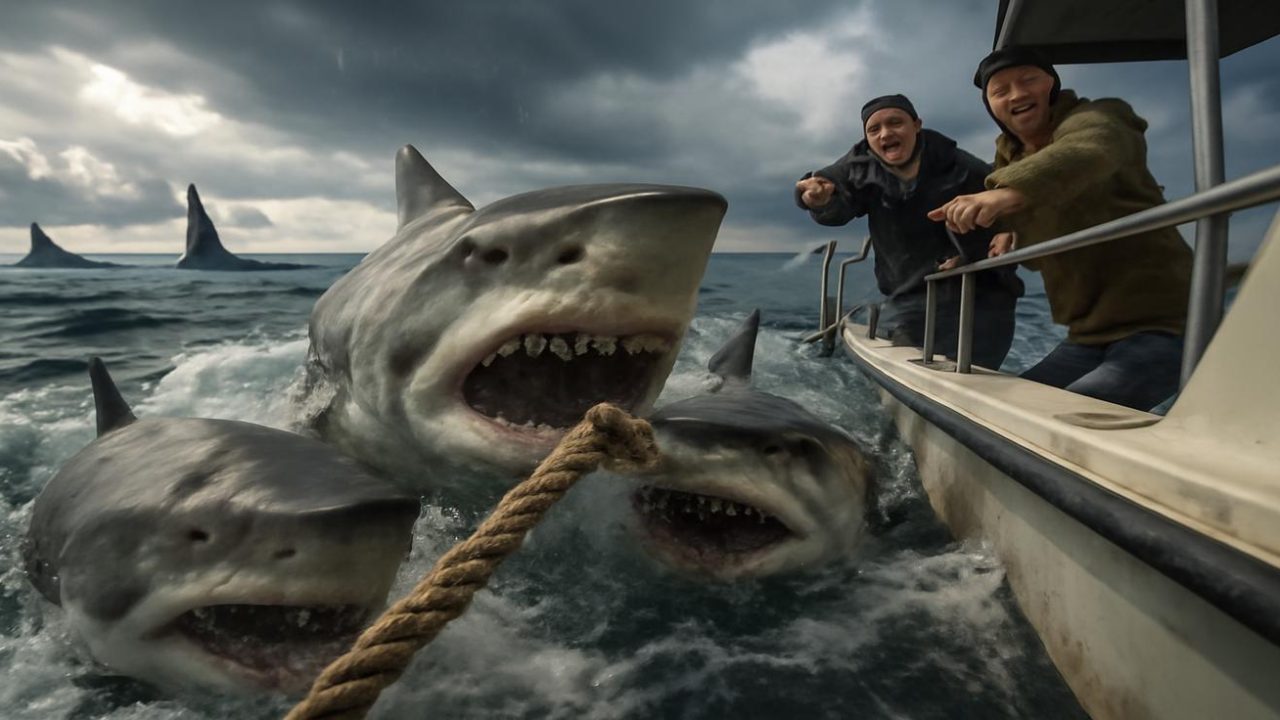
The ocean fell completely silent before three orcas surrounded a small fishing boat, followed by sharks that began aggressively biting through the vessel’s anchor rope in what crew members describe as one of the most unsettling marine encounters they’ve ever experienced.
The incident unfolded during early morning hours when a fishing crew was working in deep waters off the coast. What started as routine fishing operations quickly transformed into a tense standoff involving multiple apex predators in behavior that left experienced fishermen shaken.
The encounter highlights growing concerns about increasingly bold orca interactions with vessels, now coupled with unusual shark behavior that marine experts are still working to understand.

When the Ocean Went Silent
The first warning sign wasn’t visual—it was auditory. The crew noticed an eerie quiet descending over the water, replacing the usual chorus of wind, waves, and seabirds with an unsettling stillness.
Dan, one of the fishermen aboard the vessel, later described the moment: “It felt like the ocean was holding its breath.” The gulls that had been circling overhead suddenly scattered toward shore in an agitated flock, abandoning their usual feeding patterns.
The boat rocked gently, as if nudged from below. Then came the first contact—a heavy thud against the hull. Not damaging, but firm enough to command immediate attention. Another bump followed from the opposite side, establishing a pattern that would continue throughout the encounter.

When the crew spotted the first orca fin cutting through the surface, they realized they were dealing with something more significant than curious marine life. Two more orcas appeared, bringing the total to three animals moving deliberately around their vessel.
Orcas Close In on Fishing Vessel
The orcas demonstrated behavior that aligned with recent reports of increasingly assertive whale interactions with boats. They moved close—closer than normal curiosity would typically bring them—crossing directly under the boat’s transom and reappearing at the bow.
Each time the animals passed beneath the hull, crew members felt vibrations resonating through the vessel. The orcas maintained their presence without vocalizing, creating an atmosphere of tension that experienced fishermen found deeply unsettling.

Recent years have seen a surge in documented orca-boat interactions, including incidents involving damaged rudders, rammed hulls, and vessels spun in circles by animals displaying what researchers describe as deliberate rather than curious behavior.
The fishing crew was aware of these reports, understanding that their encounter might escalate beyond a simple wildlife sighting. Their concerns proved justified when the situation took an unexpected turn.
Sharks Begin Aggressive Anchor Rope Attack
While the orcas maintained their position around the boat, the crew’s anchor rope began exhibiting unusual behavior. The line, which extended from the bow into the depths, started trembling and producing a low, taut humming sound.

Initially, crew members assumed the orcas were testing the anchor line as they moved through the area. However, the rope’s movement changed from gentle tugging to violent shuddering, accompanied by a deep grinding noise described as resembling “stone being chewed in a giant throat.”
Investigation revealed the true source of the disturbance: sharks had arrived and were actively biting the anchor rope. The captain identified the first attacker as a large shark with a pale belly, heavy jaw, and blunt nose, its powerful jaws clamping down repeatedly on the braided line.
Additional sharks joined the assault, their dark shapes weaving beneath the surface in focused, aggressive behavior that differed markedly from typical cruising patterns. The sound of rope fibers under crushing force carried through the hull, creating an audible reminder of the predators’ presence.

Understanding This Unusual Marine Behavior
The combination of orca presence followed by aggressive shark behavior represents an unusual sequence of events that marine biologists are working to understand. Several factors may contribute to such encounters:
- Territorial disputes between apex predators in feeding areas
- Stress responses triggered by human vessel presence during natural hunting activities
- Sensory confusion caused by boat vibrations, anchor lines, or engine noise
- Opportunistic behavior as predators investigate potential food sources
- Environmental changes affecting normal predator-prey relationships
The timing of shark arrival after orca presence suggests possible predator interaction dynamics that researchers are still documenting. Whether the sharks were attracted by the orcas’ presence, responding to the same environmental cues, or reacting to the fishing vessel itself remains unclear.
Anchor ropes may trigger aggressive responses in sharks due to their resemblance to struggling prey or their interference with normal swimming patterns in territorial waters.

What This Means for Marine Safety
Encounters involving multiple apex predators present unique challenges for vessel operators and highlight the need for updated safety protocols when fishing or boating in areas with high marine predator activity.
Current recommendations for orca encounters include maintaining distance, avoiding sudden movements, and shutting off engines when possible. However, the addition of aggressive shark behavior complicates standard response procedures.
The incident underscores the importance of monitoring anchor lines and other equipment that extends into the water during predator encounters. Damaged anchor systems can compromise vessel safety, particularly in challenging weather conditions or strong currents.

Marine safety experts emphasize the value of crew communication during wildlife encounters, ensuring all personnel understand the developing situation and potential risks to vessel integrity.
Patterns in Recent Predator Encounters
This incident adds to growing documentation of bold marine predator behavior around fishing and recreational vessels. The pattern of silent approach, sustained presence, and equipment interference suggests learned behaviors that may be spreading among predator populations.
| Encounter Element | Observed Behavior | Crew Response |
|---|---|---|
| Environmental Warning | Ocean silence, bird departure | Increased vigilance |
| Orca Contact | Hull bumping, close circling | Visual monitoring, position awareness |
| Shark Arrival | Anchor rope biting, aggressive approach | Equipment assessment, safety protocols |
The escalating nature of the encounter—from environmental cues through orca presence to shark aggression—provides a framework for understanding how complex marine predator situations develop and intensify.

Documentation of such events helps marine researchers track behavioral patterns and develop more effective guidance for vessel operators who may face similar situations in predator-rich waters.
Frequently Asked Questions
Why did the ocean become silent before the orcas appeared?
Marine animals often detect predator presence before humans do, causing birds and surface activity to cease as smaller creatures seek safety.
Is it normal for sharks to bite anchor ropes?
While not common, sharks may attack anchor lines that resemble struggling prey or interfere with their movement through territorial waters.
What should boat crews do when orcas approach their vessel?
Current recommendations include maintaining distance, avoiding sudden movements, and monitoring the animals’ behavior for signs of aggression or sustained interest.
Do orcas and sharks typically interact in the same area?
Both are apex predators that may compete for territory and food sources, though direct interactions between the species are not fully understood.
How can fishing crews prepare for encounters with multiple marine predators?
Crews should establish communication protocols, monitor equipment extending into water, and understand safety procedures for wildlife encounters before departing.
Are these types of encounters becoming more frequent?
Recent years have seen increased documentation of bold orca behavior around vessels, though whether actual incidents are increasing or reporting has improved remains unclear.










Leave a Comment