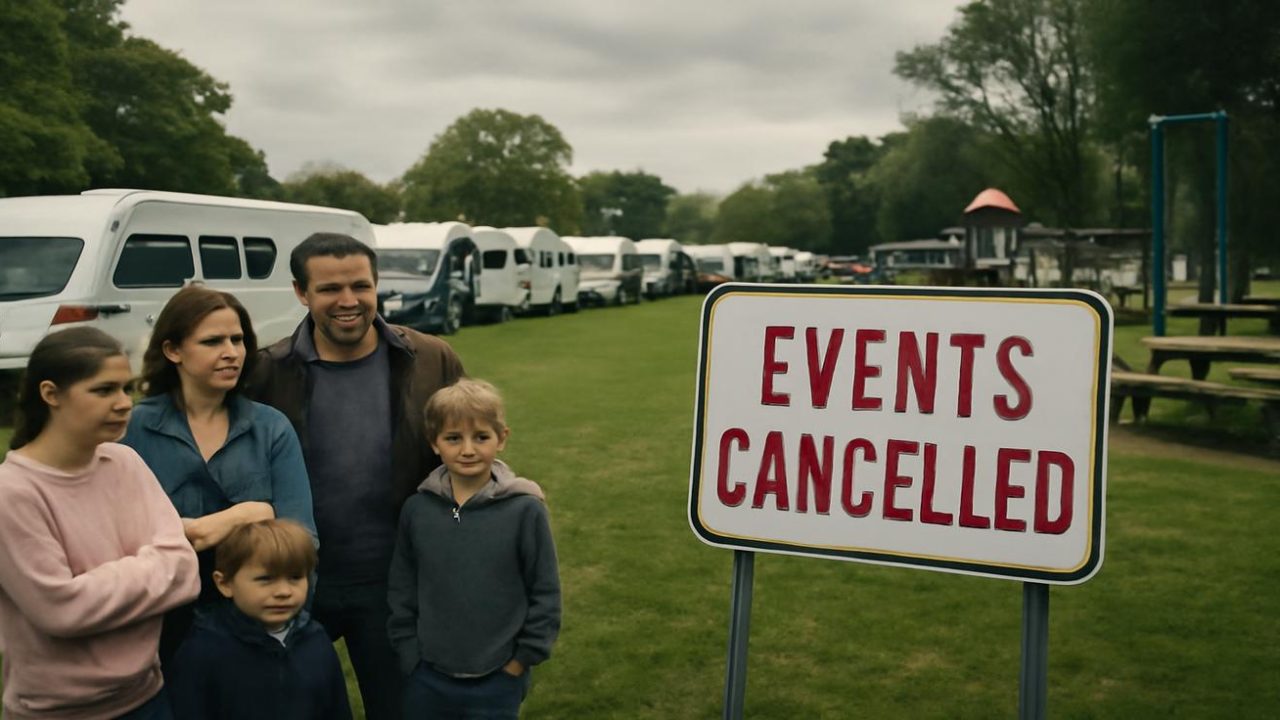
A convoy of caravans has settled into a popular family park, forcing the cancellation of planned weekend events and transforming a space that typically hosts bouncy castles and charity runs into an impromptu campsite. The arrival has sparked conversations about public space usage and community boundaries.
The scene unfolded on a Thursday afternoon when multiple white caravans entered through the park’s iron gates with practiced efficiency. Within half an hour, the vehicles had formed a rough circle in the field where festival fencing was scheduled to be installed the following morning for weekend events.
The transformation was immediate and comprehensive, replacing the familiar sounds of children playing and footballs hitting grass with idling engines, squeaking doors, and the clatter of tow-bars.

How a Family Park Became an Overnight Campsite
The park typically serves as a predictable backdrop for suburban family life. Parents arrive with takeaway coffees while toddlers navigate the playground in rubber boots. Teenagers claim benches for phone scrolling sessions, and older couples trace slow walking circuits around the paths.
On most weekends, the flat open field books months in advance for various community events. Dog shows, funfairs, charity runs, and school fetes rotate through the calendar, supported by council posters stapled along the railings advertising upcoming attractions like jazz afternoons, kite festivals, and farmers’ markets featuring artisanal cheese.
A laminated notice beside the café declares the space “a shared space for all members of the community.” That simple phrase about community would gain new complexity as the convoy established itself in the heart of the park.

The travelers demonstrated clear experience with such setups. Children jumped down from vehicles as doors opened, feet immediately squelching into the grass. A woman in a bright skirt unhitched cables with smooth, practiced motions. Two men consulted a map before gesturing across the field to coordinate the positioning.
Weekend Events Cancelled as Word Spreads Rapidly
News of the convoy’s arrival spread faster than the approaching rain clouds. Text messages and local forum posts simplified the situation into a stark headline: “Travellers have taken over the family park.”
The planned weekend carnival became the first casualty of the occupation. Stalls that were meant to arrive with candyfloss machines and colored lights remained parked in their storage depots. The council sent emails to residents acknowledging the situation, though the source material cuts off before revealing the complete official response.

From the café veranda, staff members watched the developments unfold. One barista was observed composing text messages about the situation while wiping his hands on his apron. The atmosphere in the park gained what observers described as a “grainy texture,” with the previously open space feeling suddenly smaller and charged with tension.
Parents in the playground began calling their children closer, voices maintaining lightness while carrying new edges of concern. The watching from various points around the park created a palpable shift in the environment.
The Immediate Impact on Park Users and Local Community
The convoy’s presence immediately altered the daily rhythms that locals had come to expect from their community space. The field that held a bouncy castle and bunting just the previous weekend now featured a gas stove with a whistling kettle and voices calling for children in accents unfamiliar to regular park users.

Dogs appeared excited by the changes, barking with what observers interpreted as sensing something shifting in the air. The rearrangement challenged assumptions about what the space represents and who belongs there.
Early dog walkers stopped to stare as the first caravan entered, with small audiences forming around pram handles. A teenager struggled to control his dog’s curiosity about the newcomers. These initial reactions set the tone for how the community would process this unexpected development.
| Typical Park Activities | Current Situation |
|---|---|
| Weekend carnival with stalls | Event cancelled |
| Open field for sports and picnics | Occupied by caravan circle |
| Scheduled festivals and markets | Status unclear |
| Regular family activities | Continuing with increased tension |
Questions About Public Space and Community Rights
The situation raises fundamental questions about how public spaces function and who gets to determine appropriate usage. The park’s official designation as “a shared space for all members of the community” takes on new meaning when different groups have conflicting ideas about sharing.

Regular users had developed expectations about the park’s role in their lives – as a place for birthday picnics, learning to ride bikes, and taking shortcuts when running late. These established patterns now face disruption from a group with different space needs and usage patterns.
The efficiency with which the travelers established their temporary community suggests this isn’t their first such arrangement. Their practiced approach to positioning vehicles and setting up basic amenities indicates familiarity with temporary occupation of public spaces.
Local residents’ rapid communication about the development through group chats and online forums demonstrates how quickly community boundaries can be perceived as threatened, even in spaces officially designated for broad public use.

What Happens Next Remains Unclear
The source material ends abruptly with the council’s email response still incomplete, leaving questions about official next steps unanswered. The immediate cancellation of weekend events suggests authorities are treating this as a significant disruption requiring response.
The travelers appear settled for more than a brief stop, given the thoroughness of their setup and the organized nature of their temporary community. Their presence challenges both the practical scheduling of planned events and broader assumptions about public space usage.
Whether this situation will resolve through negotiation, official intervention, or voluntary departure remains to be seen. The efficiency of the travelers’ arrival suggests they understand both their rights and the likely timeline for any official response.

For regular park users, the immediate question involves whether their familiar routines and planned activities can coexist with this new temporary community, or whether the space will remain effectively divided until the situation resolves.
Frequently Asked Questions
What specific events were cancelled due to the caravan convoy?
The weekend carnival was cancelled, with stalls remaining in their depots instead of setting up as planned.
How many caravans are involved in this situation?
The source describes “a convoy” that formed a circle in the field, but doesn’t specify an exact number of vehicles.

What was the council’s official response?
The council sent emails acknowledging the situation, but the complete official response is not provided in available information.
Are travelers allowed to camp in public parks?
The legal specifics of this situation have not been clarified in available reporting.
How long do the travelers plan to stay?
The duration of their planned stay has not been confirmed or reported.
Can regular park activities continue during this time?
Some activities appear to be continuing with increased tension, though major scheduled events have been cancelled.











Leave a Comment