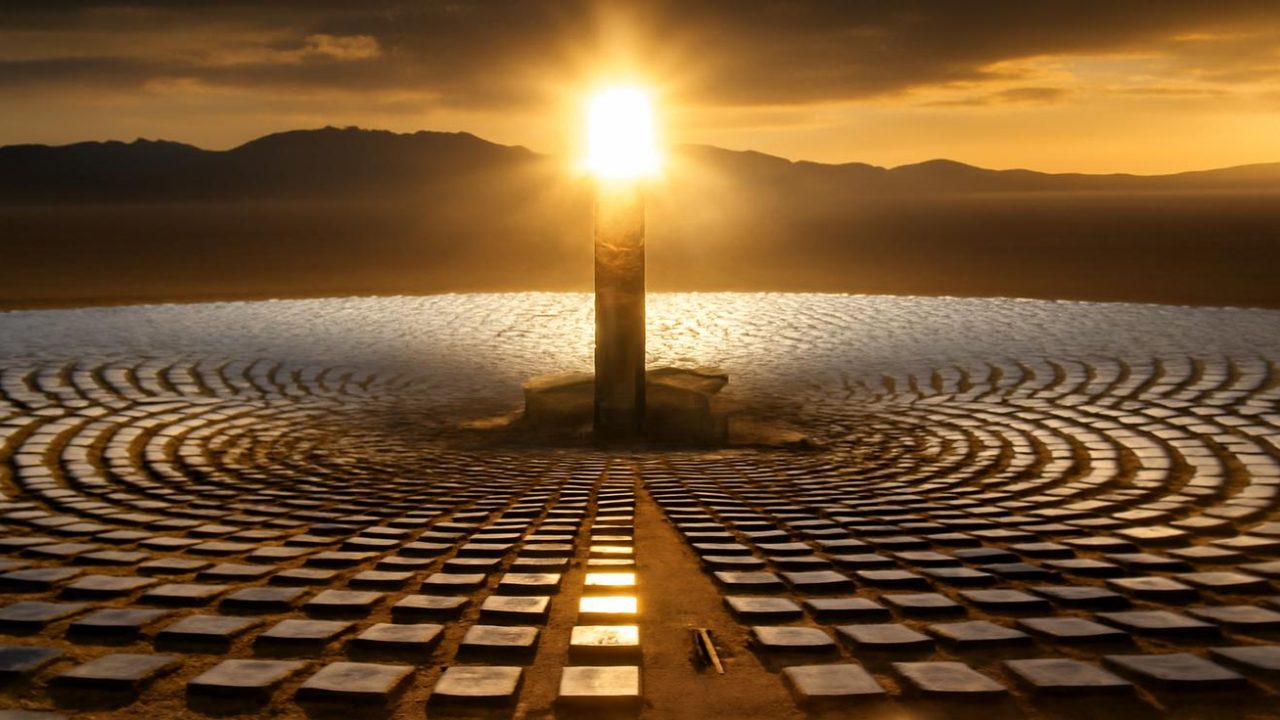
Deep in the world’s deserts, engineers are constructing massive facilities that concentrate sunlight into beams so intense they create what amounts to an artificial sun—one powerful enough to generate electricity for entire cities long after the real sun has set.
These concentrated solar power plants represent a dramatic departure from traditional solar panels. Instead of converting sunlight directly into electricity, they use thousands of mirrors to focus the sun’s rays onto a single point, creating temperatures that can exceed 1,000 degrees Celsius.
The technology promises to solve one of renewable energy’s biggest challenges: how to keep the lights on when the sun isn’t shining.

How Desert Mirror Fields Create Artificial Suns
The heart of these facilities is what engineers call a solar field—thousands of mirrors called heliostats that blanket the desert floor as far as the eye can see. Each mirror can tilt and swivel independently, tracking the sun’s movement across the sky with algorithmic precision.
These mirrors work together to focus sunlight onto a single point at the top of a central tower. The concentrated beam creates such intense brightness that it appears like a star pinned low in the sky, visible from miles away.
At the tower’s peak sits a receiver—a steel shell lined with ceramic and insulation, no bigger than a small room. This receiver captures the concentrated sunlight equivalent to dozens of city blocks worth of solar energy.

Inside the receiver, a fluid is pumped through narrow channels. This fluid might be molten salt, specialized oil, or pressurized air. As the concentrated light strikes the receiver, it heats this fluid to brutal temperatures—sometimes exceeding 1,000 degrees Celsius.
The superheated fluid then flows through a system where physics takes over: steam rises, turbines spin, and electricity flows into cables that carry power to distant cities. The entire process produces no smoke, flames, or emissions—just clean electricity from concentrated sunlight.
The Key Advantage: Storing Heat Means Storing Time
What sets these concentrated solar power plants apart from traditional solar panels isn’t just their intensity—it’s their ability to generate electricity hours after sunset.

Traditional solar panels are limited by daylight hours. They produce maximum power when the sun shines directly on them, then fall silent as shadows lengthen. But concentrated solar power plants can store the heat they generate.
The molten salt or other heated fluid can be stored in insulated tanks, maintaining temperatures of 500 to 600 degrees Celsius for hours. This stored thermal energy can then be used to generate steam and electricity well into the night.
This thermal storage capability addresses one of the grid’s most pressing challenges: matching electricity supply with demand. Power consumption typically peaks in the evening when people return home, just as solar panels stop producing electricity.

Engineering Challenges in Extreme Environments
Building and operating these facilities requires overcoming significant technical hurdles. The desert environments where they’re constructed subject equipment to extreme conditions.
The mirrors must maintain precise positioning despite temperature swings, sandstorms, and constant exposure to intense sunlight. Each heliostat requires sophisticated tracking systems and regular maintenance to keep reflective surfaces clean and aligned.
The receiver system faces even greater challenges. Components must withstand temperatures that would melt many metals while maintaining structural integrity and efficiency. Engineers describe working with these thermal forces like sailors working with tides—powerful natural phenomena that can be harnessed but never fully controlled.

The facilities require extensive infrastructure including pipes as wide as tree trunks, massive pumps, complex valve systems, and arrays of sensors that monitor every aspect of the operation. Control rooms track thermal flux and energy output in real-time, adjusting mirror positions and fluid flows to optimize performance.
Current Scale and Future Potential
These concentrated solar power facilities already operate in several desert regions around the world. The largest installations cover thousands of acres and can generate hundreds of megawatts of electricity—enough to power substantial urban areas.
The technology particularly suits regions with abundant sunshine and available land. Desert locations provide ideal conditions: intense solar radiation, minimal cloud cover, and vast open spaces away from populated areas.

Each facility represents a significant investment in both infrastructure and technology. The mirror fields alone require precise manufacturing and installation of thousands of individual tracking systems. The central towers and thermal storage systems demand specialized materials and engineering expertise.
Proponents argue that concentrated solar power could play a crucial role in transitioning away from fossil fuel power plants, particularly for providing reliable electricity during evening peak demand hours.
The Technology’s Place in Clean Energy’s Future
As electricity grids worldwide grapple with integrating more renewable energy sources, concentrated solar power offers unique advantages. Unlike wind or traditional solar power, these facilities can dispatch electricity on demand, similar to conventional power plants.

The thermal storage capability means grid operators can treat these facilities more like traditional power plants that can ramp up production when needed. This dispatchability makes concentrated solar power particularly valuable for grid stability.
However, the technology faces competition from rapidly declining costs of solar panels combined with battery storage systems. The economic viability of concentrated solar power depends on factors including local solar resources, land costs, and electricity market structures.
Engineers continue refining the technology, working to improve efficiency, reduce costs, and extend thermal storage duration. Some facilities are experimenting with different heat transfer fluids and storage media to push operating temperatures even higher and store energy for longer periods.

The vision driving these desert installations extends beyond individual facilities. Advocates see networks of concentrated solar power plants providing clean, dispatchable electricity across entire regions, turning the world’s sun-drenched deserts into massive clean energy resources.
Frequently Asked Questions
How hot does the concentrated sunlight actually get?
The concentrated light at the receiver can heat fluids to temperatures exceeding 1,000 degrees Celsius, with typical operating temperatures ranging from 500 to 600 degrees Celsius.
How long can these plants generate electricity after sunset?
The thermal storage systems can maintain the heated fluid at operating temperatures for hours after sunset, allowing continued electricity generation into the night.
How many mirrors are used in these facilities?
Large concentrated solar power plants use thousands of individual mirrors, each capable of independent tracking and positioning to focus sunlight on the central receiver.
What type of fluid is heated in the receiver?
Different facilities use various heat transfer fluids including molten salt, specialized oils, or pressurized air, depending on the specific technology and operating requirements.
How do these compare to regular solar panels?
Unlike solar panels that convert sunlight directly to electricity, concentrated solar power plants use mirrors to focus sunlight for heating fluids, which then generate steam to drive turbines and produce electricity.
Where are these facilities being built?
The facilities are constructed in desert regions with abundant sunshine and available land, though specific locations and project details vary by installation.









Leave a Comment