
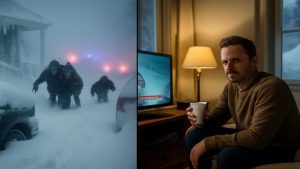
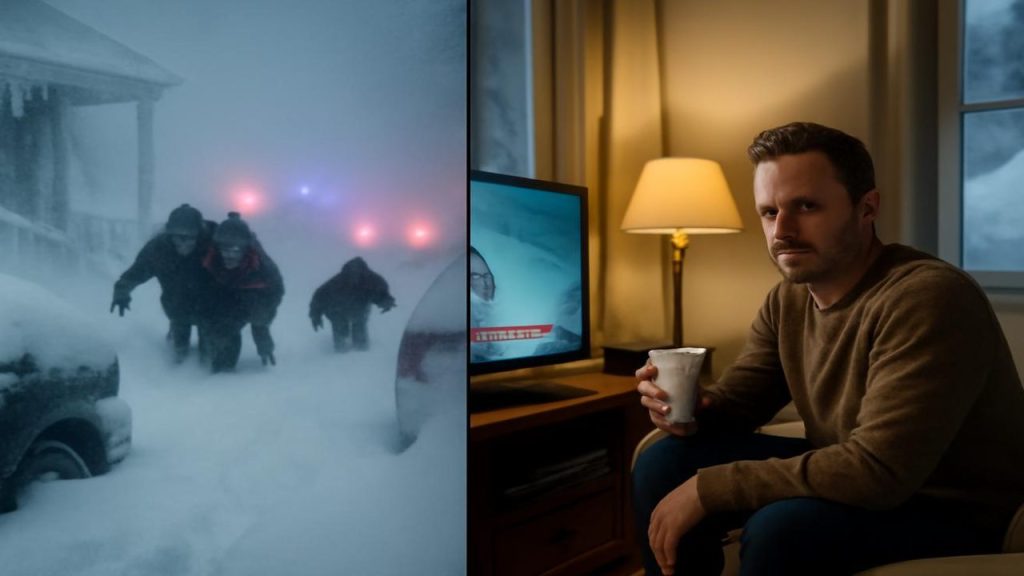
As meteorologists track a potential polar vortex disruption that could bring historic cold and dangerous travel conditions across the nation, Americans are deeply divided over whether these warnings represent responsible forecasting or exaggerated climate drama designed to capture attention.
The split is playing out everywhere from grocery store aisles to social media comment sections, where some praise forecasters for sounding early alarms while others accuse them of catastrophizing normal winter weather for ratings.
The debate reflects a broader tension in weather communication: how do you warn people about something that hasn’t happened yet—something that might unfold as a major disruption or might fizzle into a fairly normal cold snap?

Understanding the Polar Vortex Threat
Despite its dramatic name, the polar vortex isn’t a new phenomenon invented by cable news. High above the Arctic in the stratosphere, a sprawling whirl of cold air spins counterclockwise around the pole like a cold crown encircling the top of the world.
Under normal circumstances, this frozen system stays contained by strong winds. But sometimes that crown buckles through an event called “sudden stratospheric warming.”
When the polar vortex weakens or splits, great lobes of frigid air can slump southward into North America, Europe, or Asia weeks later. Streets that usually see manageable cold suddenly find themselves locked in ice. Airports stall, highways shut down, and pipes burst in cities unaccustomed to single-digit temperatures.

This disruption pattern has meteorologists on edge, watching the high atmosphere like cardiologists monitoring an irregular heartbeat. If the polar vortex falters in just the right way, extreme cold could spill into regions far from the Arctic.
The Public Divide Over Weather Warnings
The current controversy stems from how people interpret and respond to these forecasts. In grocery stores across the country, shoppers are having markedly different conversations about the same weather predictions.
Some consumers are stocking up on supplies after hearing forecasts of “minus twenties with the wind,” while others dismiss the warnings entirely, citing previous forecasts that promised severe weather but delivered only modest impacts.

Social media amplifies this divide. Weather-related posts featuring animated jet streams and captions warning of “travel paralysis” generate fierce debate in comment sections. Supporters thank meteorologists for providing advance notice, while critics accuse forecasters of chasing ratings through fear-mongering.
The tension reflects a fundamental challenge in modern weather communication: balancing the need to prepare people for potentially dangerous conditions against the risk of crying wolf when forecasts don’t materialize as predicted.
The Science Behind Polar Vortex Predictions
Forecasting polar vortex disruptions involves analyzing complex atmospheric patterns weeks in advance. Meteorologists examine multiple data models showing pressure, temperature, and wind speed patterns that can indicate whether the Arctic air mass will remain stable or break apart.
The challenge lies in translating this high-atmosphere science into practical advice for the public. A polar vortex disruption doesn’t guarantee severe weather for any specific location—it increases the probability of extreme cold events across large regions.
| Polar Vortex State | Typical Impact | Travel Effects |
|---|---|---|
| Stable/Strong | Cold stays in Arctic | Normal winter conditions |
| Weakened | Cold air pushes south | Increased delays possible |
| Disrupted/Split | Extreme cold outbreak | Potential travel paralysis |
Weather offices must balance providing enough advance warning for people to prepare while acknowledging the inherent uncertainty in long-range forecasting. Too little warning leaves people unprepared for dangerous conditions. Too much drama can lead to forecast fatigue where people stop taking legitimate warnings seriously.
Real-World Consequences of Weather Communication
The stakes in this debate extend beyond academic discussions about forecasting accuracy. How people respond to polar vortex warnings can have serious practical consequences.

When extreme cold does materialize, those who heeded advance warnings are better positioned to avoid dangerous travel, ensure adequate heating supplies, and protect vulnerable family members. Businesses can adjust schedules and supply chains to minimize disruptions.
Conversely, forecast skepticism can leave people unprepared when severe weather actually strikes. The memory of previous forecasts that seemed overblown can lead to dangerous complacency when genuine threats emerge.
The challenge for meteorologists is maintaining credibility while communicating the probabilistic nature of long-range forecasts. Unlike tomorrow’s high temperature, polar vortex disruptions involve cascading atmospheric effects that can vary significantly in timing, location, and intensity.

What Happens Next with This Weather Pattern
As the current polar vortex situation develops, meteorologists continue monitoring high-atmosphere conditions for signs of weakening or disruption. The effects of any significant changes typically take weeks to manifest in surface weather patterns.
For the public, this means the debate over appropriate response will likely continue as forecasters provide updates on the evolving situation. The atmospheric patterns that drive polar vortex behavior operate on timescales that don’t align well with daily weather forecasts or social media attention spans.
The broader question of how to communicate weather risks in an era of information overload and declining institutional trust remains unresolved. Weather services must navigate between providing actionable warnings and avoiding the kind of dramatic presentation that feeds public skepticism.

Whether this particular polar vortex threat materializes into significant impacts or fades into a routine cold snap, the underlying tension between caution and catastrophizing will persist. Each forecast becomes a test case in the ongoing challenge of effective weather communication.
Frequently Asked Questions
What exactly is a polar vortex disruption?
It occurs when warm air weakens the spinning mass of cold air above the Arctic, potentially allowing frigid temperatures to spill into lower latitudes weeks later.
How far in advance can meteorologists predict polar vortex disruptions?
Scientists can detect signs of potential disruptions weeks ahead, but the specific timing and location of resulting cold outbreaks remain difficult to pinpoint precisely.

Why do some people think polar vortex warnings are exaggerated?
Previous forecasts that predicted severe impacts but resulted in milder conditions have led some to view these warnings as overly dramatic or ratings-driven.
Does a polar vortex disruption guarantee extreme cold everywhere?
No, it increases the probability of extreme cold events across large regions, but doesn’t guarantee severe weather for any specific location.
How should people respond to polar vortex warnings?
The source material doesn’t provide specific preparation recommendations, though it notes that advance warnings help people avoid dangerous travel and ensure adequate heating supplies.
Are polar vortex events becoming more common?
The source material doesn’t address trends in polar vortex frequency or whether climate change affects these patterns.








Leave a Comment