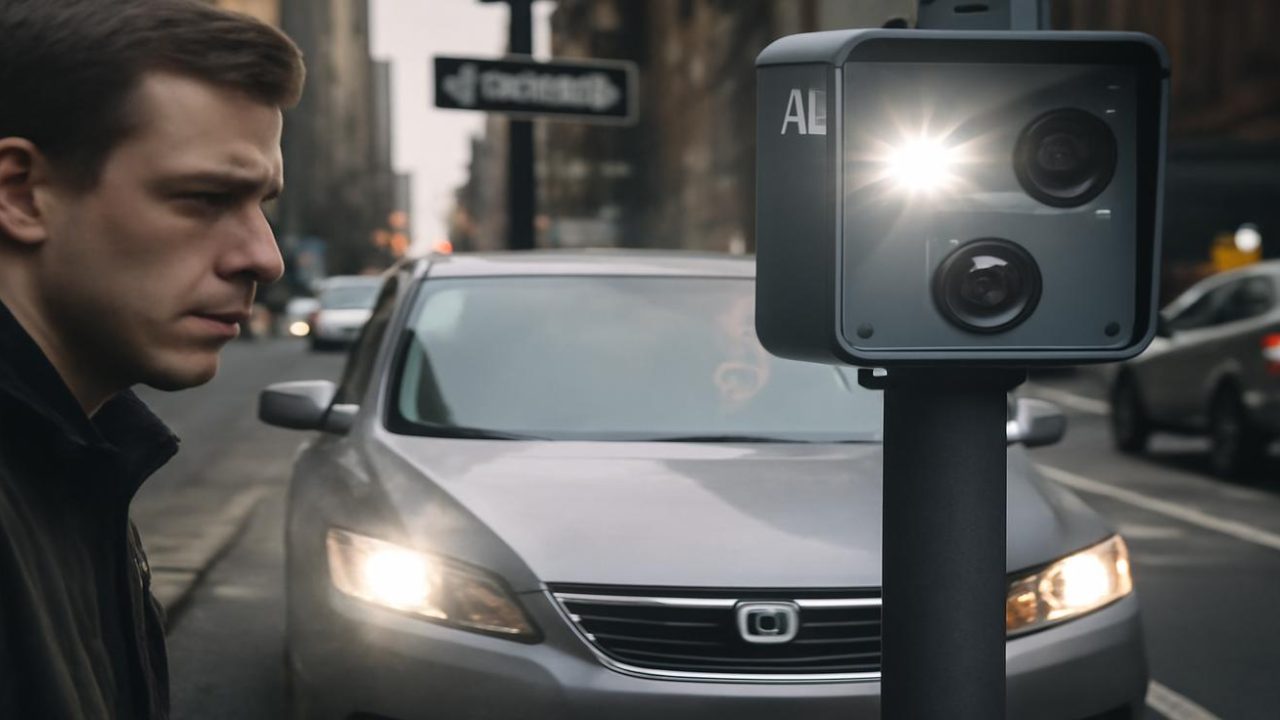
AI-powered cameras are quietly revolutionizing traffic enforcement across the globe, issuing fines through automated systems that never sleep, never get distracted, and never give warnings. For drivers accustomed to human officers who might offer a friendly reminder instead of a ticket, this shift represents a fundamental change in how traffic laws are enforced.
The technology arrives without fanfare—just a thin envelope in the mailbox containing a photograph of your vehicle, a timestamp, and an amount due. No roadside conversation, no opportunity to explain, no human discretion involved. Simply an algorithm that measured, calculated, and judged your driving in a fraction of a second.
This technological transformation is reshaping roads worldwide, but it’s also igniting fierce debates about privacy, surveillance, and the balance between safety and freedom.

How AI Traffic Enforcement Actually Works
Modern AI traffic cameras represent a significant leap beyond traditional speed cameras. These systems can monitor multiple violations simultaneously, from speeding and red-light running to phone use, seatbelt compliance, and even minor lane violations.
The cameras use neural networks to analyze driver behavior in real-time. Some systems can detect the tilt of a driver’s head to determine if they’re looking at their phone, while others monitor compliance with traffic signals and speed limits with unprecedented precision.
Unlike human officers who work shifts and can only monitor limited areas, AI cameras operate continuously. They’re positioned at intersections, along highway corridors, and increasingly in suburban areas where traditional enforcement was sporadic.

The technology varies in visibility—some cameras are obvious and bulky, designed to deter violations through their mere presence. Others are compact and discrete, catching violations that drivers never realize were recorded until the citation arrives days later.
The Safety Case: Numbers Behind the Technology
Traffic safety advocates point to compelling statistics from early AI camera deployments. Cities report significant drops in average speeds after installation, with some corridors seeing reductions of nearly 7 mph on previously dangerous stretches.
The consistency of AI enforcement appears to change driver behavior more effectively than sporadic human patrol. When drivers know that every violation will be detected and penalized, compliance rates improve dramatically.

Key safety improvements reported include:
- Sharp decreases in speeding violations after drivers adapt to consistent enforcement
- Reduced serious crashes along AI-monitored corridors
- Significant drops in red-light running at equipped intersections
- Improved overall compliance with traffic laws in monitored areas
Intersections with histories of serious accidents have seen measurable improvements after AI camera installation. The technology’s ability to enforce laws uniformly, without the inconsistency of human judgment, creates predictable consequences that influence driver behavior.
| Violation Type | Detection Method | Typical Fine Range |
|---|---|---|
| Speeding | Radar/Lidar with AI verification | $50-$300 |
| Red Light Running | Intersection sensors with photo capture | $100-$500 |
| Phone Use | AI analysis of driver head position | $200-$400 |
| Seatbelt Violations | Visual AI detection systems | $75-$200 |
The Privacy Debate: When Roads Become Surveillance Networks
Critics argue that AI traffic enforcement represents a concerning expansion of automated surveillance. The same qualities that make these systems effective for safety—their tireless attention and comprehensive monitoring—also make them powerful tools for tracking civilian movement.

Unlike human officers who focus on specific violations, AI systems can potentially record and analyze vast amounts of data about driving patterns, routes, and behaviors. This information could theoretically be used for purposes beyond traffic enforcement.
Privacy advocates raise several concerns about the technology’s broader implications:
- Continuous monitoring of vehicle movements and locations
- Potential for data sharing between agencies and jurisdictions
- Risk of function creep, where systems designed for traffic enforcement expand to other uses
- Limited transparency about data retention and usage policies
The technology’s precision also eliminates traditional police discretion. Human officers might issue warnings for minor violations or consider circumstances like medical emergencies. AI systems make determinations based solely on detected violations, without context or flexibility.

Real-World Impact on Daily Driving
For millions of drivers, AI enforcement is changing the fundamental experience of being behind the wheel. The knowledge that every movement might be monitored and analyzed creates a new relationship with driving.
Some drivers report feeling constantly watched, particularly in areas with high camera density. Others appreciate the predictability—knowing that traffic laws will be enforced consistently rather than arbitrarily.
The technology particularly affects habitual behaviors that many drivers previously considered minor infractions. Rolling stops, brief phone glances, and marginally excessive speeds that once carried minimal risk of citation now result in automatic penalties.

Commuters who use the same routes daily are adapting their driving patterns to avoid violations. This behavioral change extends beyond monitored areas, as drivers become more conscious of compliance even where enforcement is uncertain.
The financial impact can be significant for households receiving multiple citations. Unlike traditional traffic stops where officers might issue warnings, AI systems generate citations for every detected violation, potentially creating substantial unexpected expenses.
What This Means for the Future of Traffic Enforcement
The expansion of AI traffic enforcement appears likely to accelerate, driven by both safety benefits and revenue generation potential for municipalities. As the technology becomes more sophisticated and less expensive, deployment is spreading from major cities to smaller communities.

Future developments may include more comprehensive monitoring capabilities, integration with vehicle-to-infrastructure communication systems, and expanded violation detection. Some systems under development can identify distracted driving, aggressive lane changes, and following distances.
The legal framework around AI enforcement continues evolving, with courts addressing questions about due process, accuracy standards, and privacy protections. These decisions will shape how extensively the technology can be deployed and what safeguards must be implemented.
For drivers, adaptation strategies are becoming necessary skills. Understanding where cameras are located, recognizing different system types, and adjusting driving habits accordingly are increasingly important for avoiding citations.

The technology also raises questions about equity in enforcement. Areas with higher camera density may see disproportionate citation rates, potentially creating uneven impacts across different communities and economic groups.
Frequently Asked Questions
Can AI traffic cameras make mistakes in identifying violations?
While AI systems are generally accurate, they can occasionally misinterpret situations or have technical malfunctions, which is why most jurisdictions maintain appeals processes for disputed citations.
Do AI cameras record continuously or only when violations occur?
Most systems activate recording when potential violations are detected, though some maintain continuous monitoring capabilities for traffic management purposes.
Can drivers challenge AI-generated traffic citations?
Yes, drivers typically retain the right to contest citations in court, where they can challenge the accuracy of the technology or circumstances of the alleged violation.
Are there limits on where AI traffic cameras can be installed?
Placement regulations vary by jurisdiction, but most require proper signage and restrict cameras in certain areas like school zones during specific hours.
How accurate are AI systems at detecting phone use while driving?
Current systems analyze head position and hand movements to detect potential phone use, though accuracy rates and legal standards for this technology continue to evolve.
Will AI enforcement eventually replace human traffic officers?
While AI systems handle routine violations increasingly well, human officers remain necessary for complex situations, investigations, and circumstances requiring judgment and discretion.











Leave a Comment