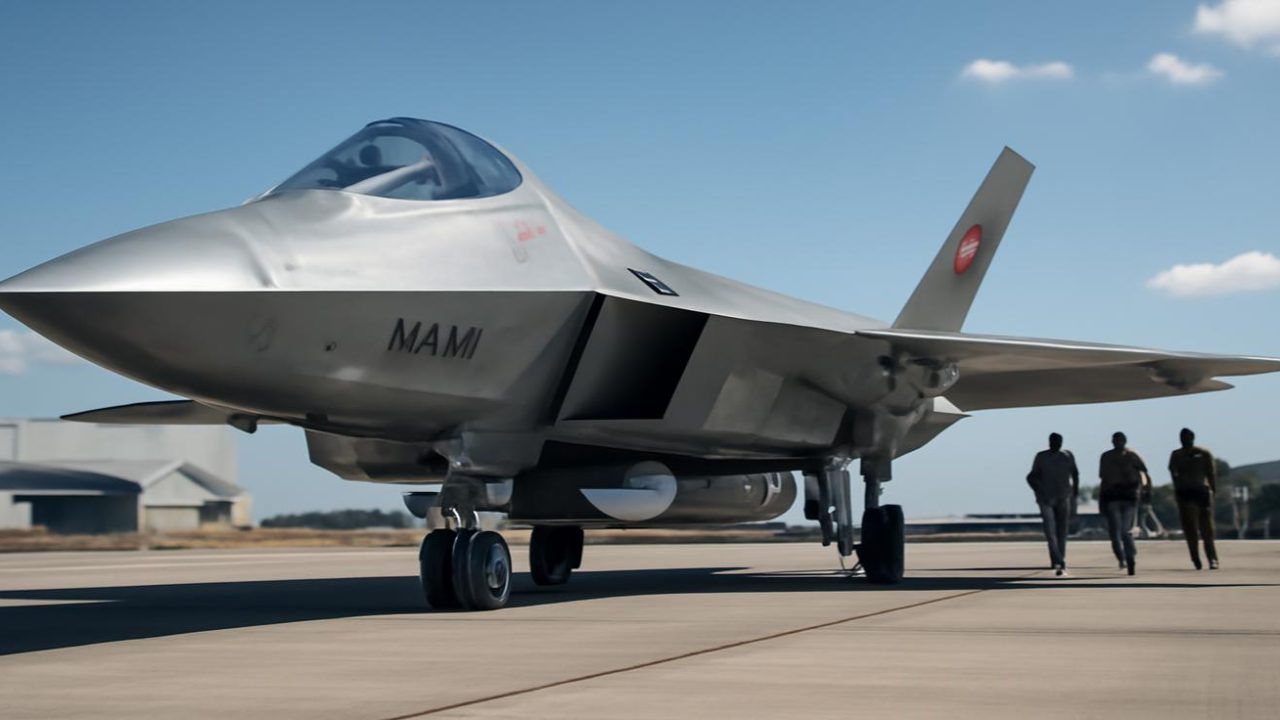
Turkey has just unveiled its second KAAN fighter prototype, marking a significant escalation in its bid to challenge American dominance in the fifth-generation stealth fighter market. The rollout represents more than just another military aircraft — it’s a direct response to being expelled from the F-35 Lightning II program and a bold statement of technological independence.
The sleek, matte-gray aircraft emerged from its hangar with all the theatrical precision of a geopolitical power play. With its knife-edged silhouette and angular stealth design, the KAAN prototype signals Turkey’s transition from defense customer to competitor in one of the world’s most exclusive military technology sectors.
This development comes as Turkey seeks to reshape its defense relationships after a dramatic fallout with Washington over arms deals and strategic partnerships.

How Turkey’s F-35 Expulsion Led to the KAAN Program
The story behind KAAN begins with a partnership gone wrong. Turkey was once a key player in the F-35 program, building components and training pilots to operate the advanced American stealth fighter. Turkish defense contractors were integrated into the F-35 supply chain, and the country was preparing to incorporate the jets into its own air force.
That relationship shattered when Turkey purchased Russia’s S-400 air defense system. Washington viewed this as incompatible with NATO security protocols and a potential intelligence threat to F-35 technology. Sanctions followed, and Turkey found itself pushed out of the F-35 program entirely.
The expulsion was more than just a business setback — it was a strategic humiliation that exposed Turkey’s dependence on American defense technology. KAAN emerged as Turkey’s answer to this vulnerability, representing what officials describe as a bid for technological sovereignty.

Turkish Aerospace Industries designed KAAN as a fifth-generation, twin-engine stealth fighter that could rival the F-35’s capabilities while freeing Turkey from Washington’s control over its air defense systems.
What Makes KAAN Different from the F-35
While both aircraft operate in the same technological space, they represent fundamentally different approaches to modern air power. The F-35 Lightning II was built as a multinational program led by the United States, creating shared logistics and training frameworks across allied nations.
KAAN, by contrast, reflects Turkey’s desire to break free from what it sees as dependence on someone else’s strategic marketplace. The aircraft features several key design elements that mirror successful stealth technology:
- Light-absorbing fuselage materials designed to minimize radar detection
- Sculpted air intakes that hide engine signatures from radar systems
- Carefully angled surfaces and softened edges following stealth design principles
- Advanced avionics and sensor systems for networked warfare capabilities
- Electronic warfare suites integrated into the aircraft’s design
The second prototype rollout suggests Turkey has moved beyond proof-of-concept to iterative design improvements. Engineers are now focused on refining thermal management systems, data links, and the complex sensor networks that determine how the aircraft processes battlefield information.
Industry observers note that producing two prototypes relatively quickly indicates a maturing industrial ecosystem rather than a one-off demonstration project.
The Global Impact of Turkey’s Fighter Development
KAAN’s development is being watched closely in defense capitals around the world, particularly in Washington where the F-35 program has been a cornerstone of military exports and alliance management.

The F-35’s greatest strength has been its ecosystem approach — countries that buy the fighter also buy into American training programs, maintenance contracts, and strategic partnerships. This creates long-term relationships that extend far beyond aircraft sales.
Turkey’s independent path threatens this model by demonstrating that capable allies can develop alternatives when pushed out of American programs. The success or failure of KAAN could influence how other countries approach their own defense procurement decisions.
| Aircraft | Country | Generation | Program Status |
|---|---|---|---|
| F-35 Lightning II | United States | Fifth-generation | Active production |
| KAAN | Turkey | Fifth-generation | Prototype testing |
| F-22 Raptor | United States | Fifth-generation | Limited production |
The broader implications extend beyond military hardware to questions of technological sovereignty and alliance structures. Turkey’s ability to develop advanced stealth technology independently challenges assumptions about which countries can compete in the most sophisticated defense sectors.

Technical Challenges Ahead for the KAAN Program
Developing a fifth-generation fighter aircraft represents one of the most complex engineering challenges in modern manufacturing. The second KAAN prototype will need to demonstrate not just that it can fly, but that it can match the performance standards set by established aircraft like the F-35.
Critical testing phases ahead include flight envelope expansion, where engineers gradually push the aircraft to its operational limits. The prototype must prove its stealth characteristics work as designed, its avionics systems integrate properly, and its engines provide sufficient power and reliability.
Manufacturing scalability presents another major hurdle. Building individual prototypes is vastly different from establishing production lines capable of delivering aircraft to operational squadrons. Turkey will need to demonstrate it can produce KAAN fighters consistently and cost-effectively.

The aircraft’s electronic warfare capabilities and sensor fusion technology will face particular scrutiny, as these systems often determine success in modern aerial combat more than raw speed or maneuverability.
What Happens Next in the KAAN Development Timeline
The second prototype rollout marks the beginning of more intensive testing phases designed to validate KAAN’s design and performance characteristics. Engineers will conduct increasingly complex taxi tests before attempting first flight, gathering data on everything from engine performance to control system responsiveness.
Flight testing will likely extend over several years, with each prototype contributing different data sets to the overall development program. The goal is series production capability, but that timeline depends heavily on test results and continued government funding.

Turkey’s broader defense industrial strategy suggests KAAN is part of a larger effort to develop indigenous military technology across multiple sectors. Success with the fighter program could accelerate other advanced weapons development projects.
International interest in KAAN will depend largely on its demonstrated capabilities compared to established alternatives. Countries seeking alternatives to American defense technology may watch Turkey’s progress closely, particularly nations concerned about potential sanctions or export restrictions.
Frequently Asked Questions
Why was Turkey removed from the F-35 program?
Turkey was expelled after purchasing Russia’s S-400 air defense system, which Washington viewed as incompatible with NATO security and a potential threat to F-35 technology.

How does KAAN compare to the F-35 Lightning II?
Both are fifth-generation stealth fighters with advanced avionics, but KAAN represents Turkey’s bid for technological independence while the F-35 is part of a U.S.-led multinational program.
When will KAAN enter active military service?
The aircraft is currently in prototype testing phase, and series production timelines have not been confirmed in available reporting.
What makes this the second prototype significant?
A second prototype suggests Turkey has moved beyond proof-of-concept to iterative design improvements and indicates a maturing industrial development program rather than a one-time demonstration.
Could other countries purchase KAAN fighters?
This possibility has not been confirmed, as the program is currently focused on prototype development and testing phases.
What are the main technical challenges facing KAAN?
The aircraft must prove its stealth capabilities, avionics integration, engine reliability, and demonstrate that Turkey can scale from prototype production to operational manufacturing.









Leave a Comment