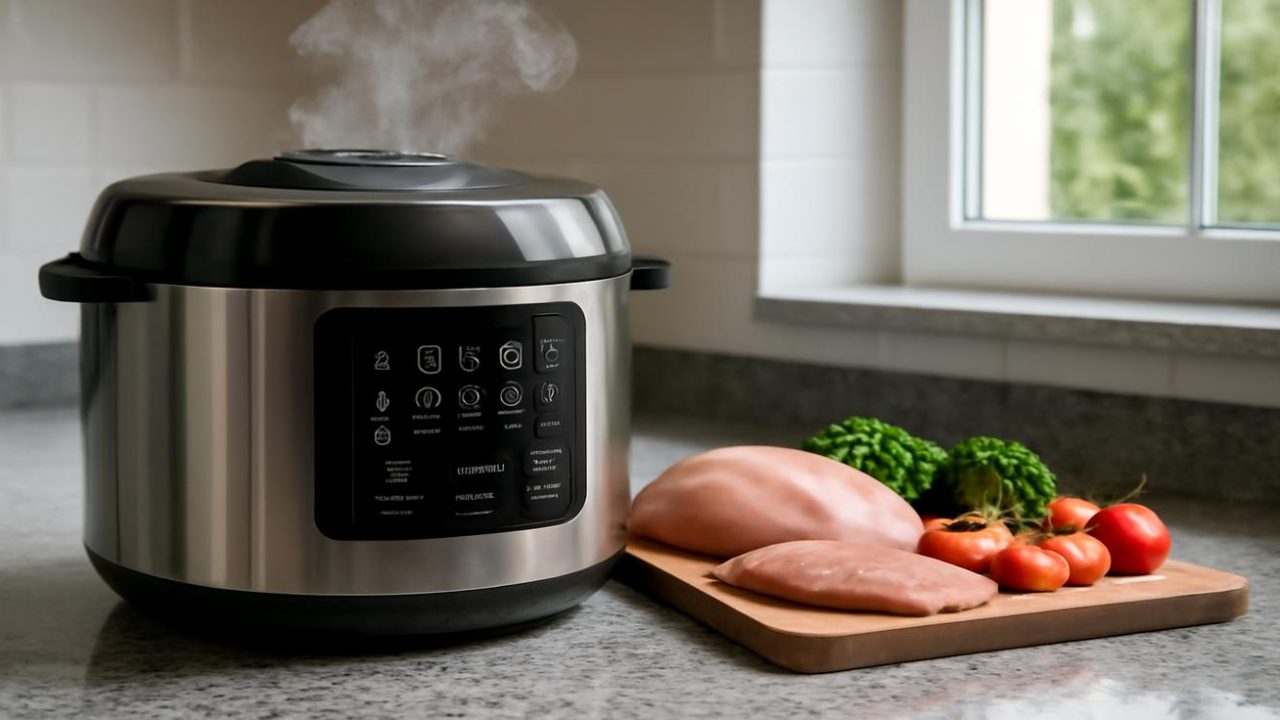
Air fryers dominated kitchen countertops for years, promising crispy results without the oil and mess of traditional frying. But a new generation of countertop appliances is challenging that reign, offering nine different cooking methods in a single device that takes up less space than multiple gadgets.
These multi-function cookers represent a shift from the air fryer’s single-minded approach to hot air circulation. Instead of just blasting food with high-speed heated air, these devices can bake, roast, steam, grill, toast, slow cook, and dehydrate—all while maintaining the convenience that made air fryers so popular in the first place.
The appeal lies not just in versatility, but in addressing the limitations that air fryer users have discovered over time: uneven cooking in large batches, dried-out proteins, and the constant need to work in small portions while the rest of dinner grows cold.

Why Air Fryers Started Losing Their Appeal
The air fryer revolution began with a simple promise: enjoy “fried” foods without the guilt or mess of deep frying. For years, this compact appliance delivered on that promise, transforming frozen fries into something resembling restaurant quality and breathing new life into leftovers.
But as home cooks pushed these devices harder, the cracks began to show. Large batches of vegetables never quite cooked evenly. Chicken breasts emerged golden on the outside but disappointingly dry inside. The constant shuffling of small batches became a choreographed dance that left other components of dinner cooling on the sidelines.
The air fryer’s fundamental limitation became clear: it was designed to do one thing very well, but modern kitchens demanded more flexibility. As countertop real estate became increasingly precious, people started asking whether one device could replace three, four, or even five others.

This shift in expectations opened the door for a new category of appliances that promised not just air frying capabilities, but a complete cooking solution in a compact form factor.
Nine Cooking Methods in One Compact Device
The newest generation of multi-method cookers typically combines nine or more cooking techniques into a single appliance. While exact specifications vary by manufacturer, the core concept remains consistent: one intelligent cooking chamber that can adapt its behavior based on the selected method.
These devices often feature a door instead of a drawer, racks instead of a basket, and sophisticated programming that understands the difference between crisping leftovers and slow-cooking a stew. The result is an appliance that can function as a mini oven, steamer, and even approximate a restaurant-grade combi-oven.

| Cooking Method | Primary Function | Best Applications |
|---|---|---|
| Air Fry | High-speed hot air circulation | Fries, wings, reheating pizza |
| Bake | Even, dry heat like a mini oven | Cakes, cookies, casseroles |
| Roast | Higher temperature with controlled airflow | Vegetables, whole chickens, beef |
| Steam | Moist heat cooking | Fish, vegetables, rice |
| Grill | High direct heat | Steaks, burgers, vegetables |
| Toast | Radiant heat from elements | Bread, bagels, English muffins |
| Slow Cook | Low, steady heat over time | Stews, braises, tough cuts |
| Dehydrate | Low heat with air circulation | Fruit leather, jerky, herbs |
| Reheat | Gentle warming without overcooking | Leftovers, pre-cooked items |
The key innovation lies in how these devices shift their behavior between modes. When baking, they function like a traditional oven with even heat distribution. When steaming, they introduce moisture to prevent proteins from drying out. When slow cooking, they maintain low, steady temperatures over extended periods.
What This Means for Your Kitchen Counter
The practical implications of this technology extend beyond cooking versatility. For many home cooks, these multi-function devices represent a solution to the countertop clutter that has accumulated over years of single-purpose appliance purchases.
A single unit can potentially replace an air fryer, toaster oven, slow cooker, food dehydrator, and steamer. This consolidation is particularly appealing in smaller kitchens where every square inch of counter space matters.

The cooking experience also changes significantly. Instead of managing multiple appliances with different timers and temperature controls, users work with one interface that can seamlessly transition between cooking methods. This means starting vegetables on roast, adding protein on a steam-bake combination, and finishing with a quick air-fry crisp—all in the same chamber.
The moisture control capabilities represent perhaps the biggest advancement over traditional air fryers. By introducing steam when needed, these devices can prevent the dryness that plagued air-fried proteins while still achieving the desired exterior texture.
The Technology Behind the Versatility
These multi-function cookers achieve their versatility through several key technological improvements over standard air fryers. Advanced heating element placement allows for more precise temperature control and heat distribution. Sophisticated fan systems can adjust airflow speed and direction based on the selected cooking method.

Many models incorporate steam generation systems that can introduce controlled amounts of moisture during cooking. This capability transforms the cooking environment from the dry heat of traditional air frying to something closer to professional steam ovens used in commercial kitchens.
The programming intelligence represents another significant advancement. Rather than simply setting temperature and time, these devices understand the requirements of different cooking methods and adjust multiple variables accordingly.
Smart sensors in higher-end models can monitor internal food temperature, humidity levels, and even browning progress, making automatic adjustments to achieve optimal results without constant user intervention.

What to Consider Before Making the Switch
While these multi-function devices offer impressive versatility, they’re not necessarily the right choice for every kitchen. The learning curve can be steeper than with single-purpose appliances, as users need to understand how to optimize each cooking method.
Size considerations matter as well. While these units aim to replace multiple appliances, they’re typically larger than standard air fryers. Kitchen layouts with limited counter space may not accommodate the footprint required for optimal functionality.
Capacity becomes crucial for larger households. Some multi-function cookers prioritize versatility over volume, potentially requiring multiple batches for family-sized portions—the same limitation that frustrated many air fryer users.

Price points vary significantly across brands and feature sets. Entry-level models may offer the nine cooking methods but lack the sensor technology and build quality that make the experience truly seamless.
Frequently Asked Questions
Do these multi-function cookers actually replace air fryers completely?
Yes, air frying is typically one of the nine cooking methods included, often with comparable or improved results due to better heat distribution and moisture control.
How much counter space do these devices typically require?
Most models are larger than standard air fryers but smaller than having multiple separate appliances, though exact dimensions vary significantly by brand and capacity.

Can these devices handle the same food quantities as dedicated appliances?
Capacity varies by model, with some prioritizing versatility over volume, potentially requiring batch cooking for larger families.
Are the cooking times similar to using separate appliances?
Cooking times are generally comparable, with some methods potentially faster due to improved heat distribution and the ability to combine techniques in sequence.
What’s the learning curve like compared to simple air fryers?
The learning curve is typically steeper due to the multiple cooking methods available, but most models include preset programs to simplify the initial experience.
Do these units require special maintenance beyond regular air fryers?
Maintenance requirements vary by model, with steam-capable units potentially requiring periodic descaling, though most cleaning procedures remain similar to standard countertop appliances.









Leave a Comment