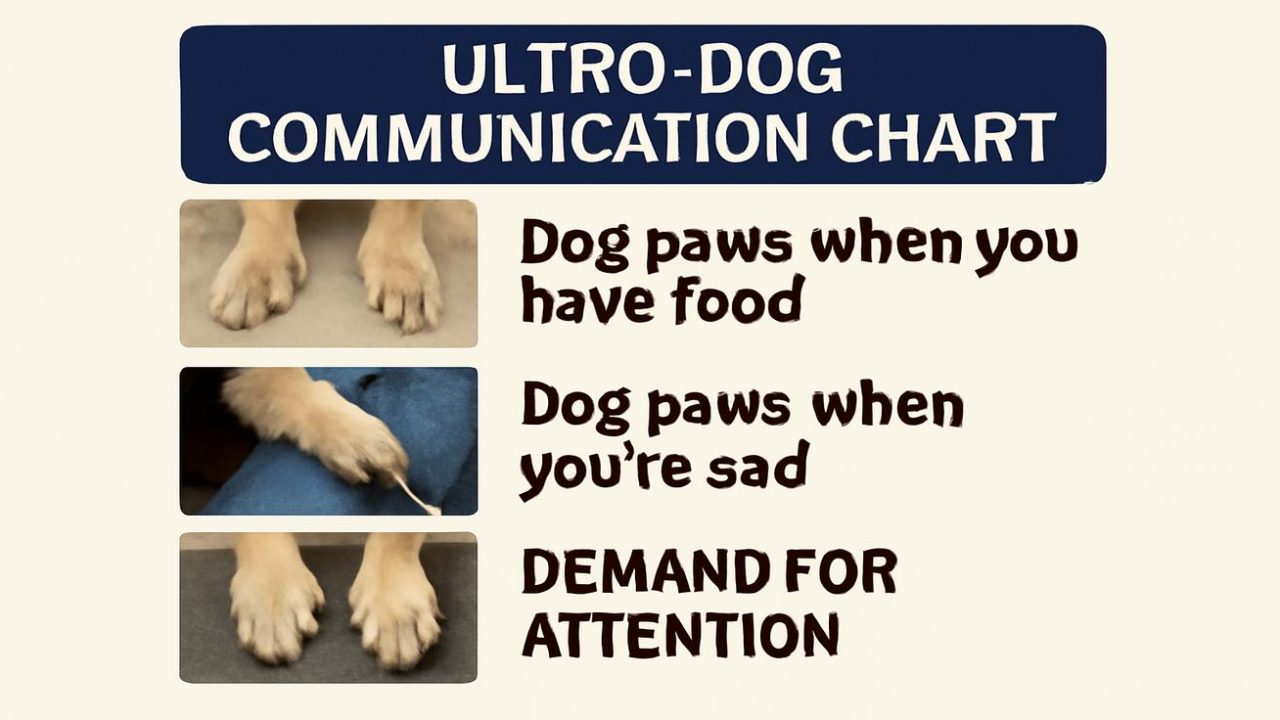
When your dog places a paw on your knee, you’re not receiving a friendly greeting — you’re getting a complex emotional signal that most pet owners completely misinterpret, according to animal behavior experts.
That gentle paw press isn’t your dog’s way of saying hello or asking to play. Instead, animal behaviorists who have studied this gesture for decades agree on something many owners find uncomfortable: a raised paw typically signals uncertainty, anxiety, or a plea for reassurance rather than playful interaction.
The widespread misunderstanding of this behavior reveals how often we project human social customs onto our pets, missing the deeper communication happening right under our noses.

Why Most Dog Owners Get This Wrong
Social media feeds overflow with videos of dogs offering paws, usually captioned with phrases like “He just wants love!” or “She’s saying hi!” These interpretations feel natural because many dogs learn to “shake” on command, making the gesture seem like a trained trick or greeting.
But ethologists — scientists who study animal behavior — observe something entirely different when they analyze pawing in canine communication. Among dogs interacting with each other, pawing isn’t a greeting at all.
Instead, it functions as what researchers call a “bid” — a request for attention, reassurance, space, or for something in the environment to change. When dogs paw at each other in natural settings, it’s typically how a more uncertain individual tests another dog’s reaction, seeking permission or trying to de-escalate tension.

That same uncertainty doesn’t disappear just because the recipient happens to be a human scrolling through their phone on the couch.
The Science Behind the Paw Press
Animal behavior experts classify the paw-lifting gesture as an “ambivalent movement” — a behavior that sits between approach and avoidance. Your dog isn’t lunging forward enthusiastically or backing away; instead, they’re carefully extending just one part of their body into your space to test your response.
The sequence typically unfolds like this: your dog watches you before you notice them, often with ears slightly pulled back or in a neutral position. Their body may lean slightly closer before the front paw lifts and hovers briefly before making contact.

That moment of suspension reveals the gesture’s true nature. Your dog is bridging the gap just enough to gauge whether you’re receptive, available, or if the interaction feels safe to continue.
| Common Interpretation | Actual Meaning According to Behaviorists |
|---|---|
| “Hello” or greeting | Request for attention or reassurance |
| Playful interaction | Testing your emotional availability |
| Learned trick behavior | Uncertainty or mild anxiety signal |
| Demanding pets or treats | Seeking comfort or status confirmation |
What Your Dog Is Really Asking
When that paw lands on your leg, your dog is essentially asking a series of questions: “Do you see me? Do I matter right now? Is everything okay between us? Is everything okay with me?”
The gesture often occurs during moments when dogs feel uncertain about their place in the social dynamic or when they’re seeking emotional regulation. Unlike the boisterous energy of genuine play invitations, the paw press tends to be deliberate and gentle.

Dogs are exceptionally skilled at learning which behaviors generate responses from humans. If pawing successfully draws attention — whether positive or negative — they’ll repeat it. But the underlying motivation stems from their need for social confirmation rather than simple attention-seeking.
This explains why the behavior often intensifies during periods of change, stress, or when owners seem distracted or emotionally unavailable. The paw becomes a bridge between the dog’s internal uncertainty and their need for reassurance from their human companion.
Why This Matters for Dog Owners
Understanding the true meaning behind paw pressing can dramatically improve how you respond to your dog’s emotional needs. Instead of dismissing it as a cute trick or casual greeting, recognizing it as a request for reassurance allows for more meaningful interaction.

When your dog places a paw on you, they’re often in a slightly vulnerable emotional state. A gentle acknowledgment — making eye contact, speaking softly, or offering calm physical contact — addresses their actual need rather than reinforcing attention-seeking behavior.
This knowledge also helps identify when dogs might be experiencing low-level stress or uncertainty that isn’t obvious through other behaviors. Frequent pawing might indicate your dog needs more predictable routines, clearer boundaries, or simply more consistent emotional connection.
The behavior becomes particularly significant during major life changes like moving homes, schedule shifts, or family additions. Increased paw pressing during these periods signals your dog’s need for extra reassurance rather than increased stimulation or play.

How to Respond Appropriately
Recognizing pawing as a request for emotional support rather than entertainment changes how you should respond. Instead of immediately reaching for treats or launching into play, try acknowledging your dog’s emotional state first.
Simple responses that address their need for reassurance include making calm eye contact, speaking in a gentle voice, or offering steady physical contact. These responses validate their bid for connection without overwhelming them with stimulation they weren’t actually seeking.
If pawing becomes excessive or seems driven by anxiety, consider whether environmental factors might be contributing to your dog’s uncertainty. Changes in routine, household stress, or inconsistent responses to their communication attempts can all increase this behavior.

The goal isn’t to eliminate pawing entirely — it’s healthy communication — but rather to understand and respond to the emotional need underlying the gesture.
Frequently Asked Questions
Is pawing always a sign of anxiety in dogs?
Not necessarily anxiety, but it typically indicates some level of uncertainty or need for reassurance rather than playful greeting behavior.
Should I ignore my dog when they paw at me?
Completely ignoring the behavior might increase their uncertainty, but responding calmly to their need for reassurance is more appropriate than treating it as attention-seeking.

Do all dogs use pawing to communicate?
Most dogs use pawing as part of their communication toolkit, though individual dogs may rely on it more or less depending on their personality and what responses they’ve learned to expect.
Can training reduce excessive pawing behavior?
Training can help, but addressing the underlying need for reassurance and predictable responses is often more effective than simply trying to eliminate the behavior.
Does the way my dog paws at me matter?
Yes — gentle, deliberate pawing typically signals different needs than frantic or repeated pawing, which might indicate higher levels of stress or urgency.
Is this behavior different from dogs who have been taught to “shake”?
Dogs who know “shake” as a command may paw more frequently, but the underlying emotional motivation for unprompted pawing remains the same regardless of training history.







Leave a Comment