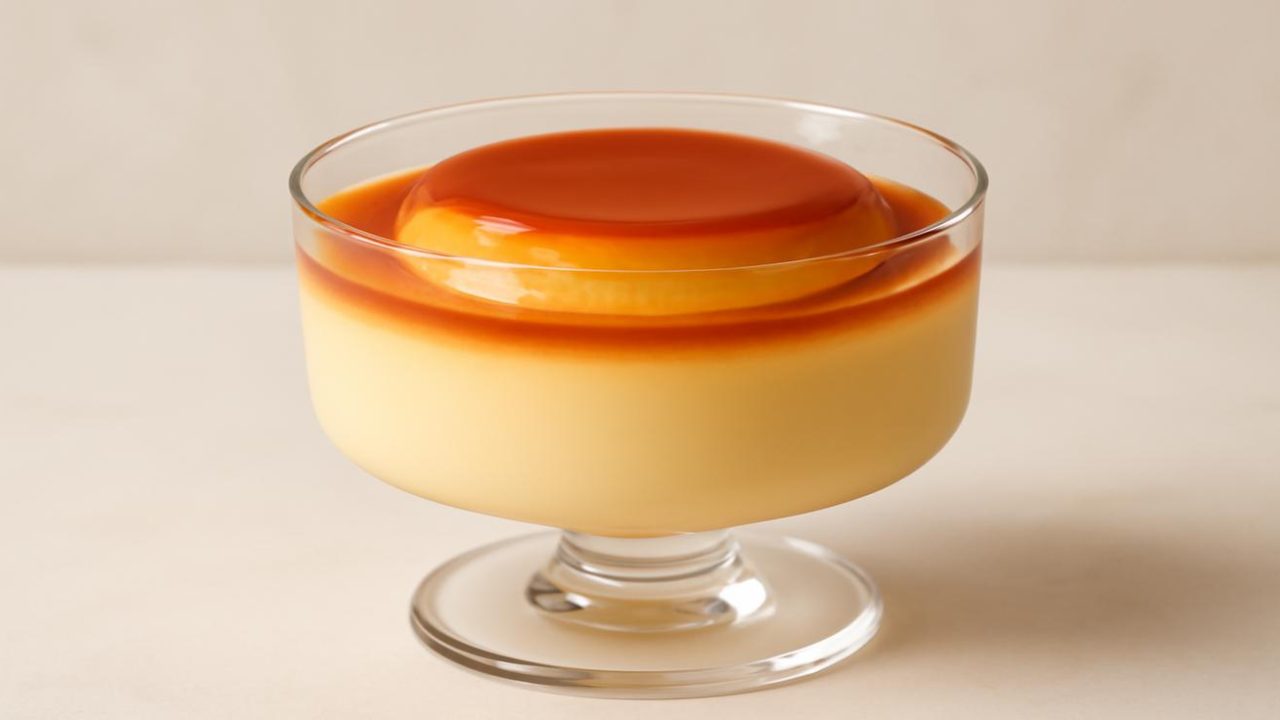
A two-ingredient Brazilian pudding is captivating home cooks across the internet with its impossibly simple recipe and foolproof results. The viral dessert requires only sweetened condensed milk and heavy cream, yet produces a silky, custard-like texture that has social media users calling it “cloud-like” and comparing it to “eating chilled silk.”
The pudding’s appeal lies not just in its minimal ingredient list, but in what it represents to exhausted home cooks. In an era of complicated recipes and kitchen perfectionism, this Brazilian-inspired dessert offers pure comfort with zero drama.
The recipe has been flooding social media feeds with videos showing golden-edged puddings emerging from ovens, their centers trembling and ready to be carved into quivering spoonfuls of creamy dessert.

What Makes This Brazilian Pudding So Special
Traditional Brazilian pudim de leite typically requires eggs, milk, and a caramel layer, all carefully baked in a water bath. This viral version strips away the complexity while maintaining the beloved flavors that Brazilians associate with leite condensado—sweetened condensed milk.
The texture falls somewhere between a flan and panna cotta. It’s denser than mousse, creamier than jelly, and softer than cheesecake. The magic happens when two ordinary supermarket ingredients join forces in the oven’s heat to create a custard that needs no additional thickening agents.
The taste delivers pure nostalgia—imagine every caramel candy from childhood, now smoothed and lightened by cream. It’s unabashedly comforting rather than sophisticated, which seems to be exactly what people crave right now.

The pudding sets firm enough to slice cleanly, but once it hits your tongue, it melts with an almost audible sigh of satisfaction.
The Two-Ingredient Magic Formula
The beauty of this recipe lies in its democratic simplicity. No specialty ingredients or artisanal components required—just two pantry staples that most people already have on hand.
| Ingredient | Purpose | What It Brings |
|---|---|---|
| Sweetened Condensed Milk | Base sweetener and structure | Thick, sticky sweetness and caramel notes |
| Heavy Cream | Richness and texture | Velvety mouthfeel and buttery roundness |
Because there are only two players on stage, you actually taste each one distinctly. The milky sweetness from the condensed milk mingles with the soft, buttery richness of the cream. That’s the entire flavor profile, and that simplicity feels almost radical in today’s complicated food landscape.

The preparation couldn’t be more straightforward: pour, mix, bake, and chill. No tempering eggs, measuring cornstarch, or blooming gelatin in cold water. No special tools or fussy techniques that might trip up novice bakers.
Why the Internet Can’t Stop Making This Pudding
Social media videos reveal a pattern beyond just the dessert itself—people are obsessed with what this pudding represents. It’s become a symbol of accessible comfort for home cooks who feel defeated by overly complex recipes.
The pudding offers relief from what many describe as “kitchen perfectionism”—the pressure to execute complicated techniques flawlessly or risk failure. Instead, this Brazilian creation promises success even on your most tired day in your messiest kitchen.

Comments on viral videos consistently emphasize the emotional connection people feel to this dessert. Users describe it as the culinary equivalent of a deep exhale, a dessert that barely asks anything of you while delivering maximum comfort in return.
The visual appeal contributes significantly to its social media success. Videos capture that perfect moment when a spoon carves through the golden surface, revealing the creamy interior with steam curling upward like tiny ghosts.
The Comfort Food Revolution
This Brazilian pudding phenomenon reflects a broader shift toward comfort and simplicity in home cooking. After years of “ultimate, upgraded, double-roasted, small-batch” everything, people are gravitating toward recipes that prioritize ease and emotional satisfaction over complexity.

The dessert taps into powerful nostalgia, evoking childhood memories of simple sweets without requiring advanced baking skills. It’s dessert for people tired of feeling like they need a food science degree to create something delicious.
The recipe’s foolproof nature particularly resonates with home cooks who’ve been intimidated by traditional custard-making techniques. No risk of curdled eggs or grainy textures—just reliable, creamy results every time.
Social media users frequently mention making this pudding as a form of self-care, a way to nurture themselves and their families without the stress typically associated with homemade desserts.

What Happens When You Make It
The actual cooking process reinforces why this pudding has captured so many hearts. The ingredients combine easily, without the anxiety-inducing steps that can derail other custard recipes.
As it bakes, the pudding develops its characteristic golden edges while the center remains perfectly jiggly. The transformation from two simple liquids to a sophisticated-tasting dessert feels almost magical to first-time makers.
The chilling process allows the flavors to meld and the texture to achieve its signature consistency—firm enough to slice but yielding enough to melt on the tongue.

Many home cooks report feeling genuinely accomplished after successfully making this pudding, particularly those who typically avoid dessert recipes due to their complexity.
Frequently Asked Questions
What exactly are the two ingredients in Brazilian pudding?
Sweetened condensed milk and heavy cream (also called table cream) are the only two ingredients needed.
How is this different from traditional Brazilian pudim?
Traditional pudim de leite usually requires eggs, milk, caramel, and careful water bath baking, while this version simplifies the process dramatically.

What does the texture actually feel like?
It’s described as falling between flan and panna cotta—denser than mousse, creamier than jelly, and softer than cheesecake.
Why is this pudding considered foolproof?
Unlike traditional custards, there are no eggs to temper, no cornstarch to measure, and no gelatin to bloom—just two ingredients that naturally set when baked.
What does it taste like?
The flavor resembles childhood caramel candies that have been smoothed and lightened by cream—pure comfort rather than sophisticated complexity.
Can you really make this in any kitchen?
Yes, the recipe requires no special tools or techniques, making it accessible even in small or poorly equipped kitchens.











Leave a Comment