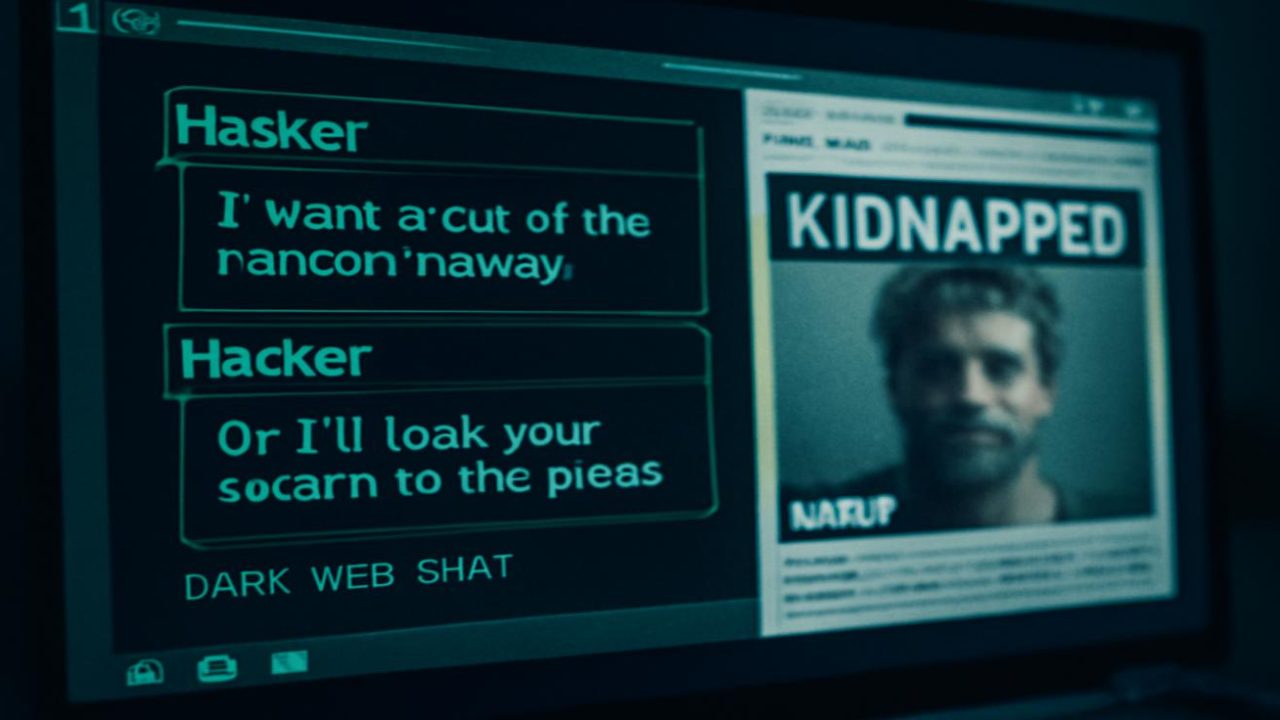
A cybercriminal who calls himself “Orchid” has turned the tables on cryptocurrency kidnappers, demanding 30 percent of their ransom profits from three separate abductions. The hacker discovered the criminals’ blockchain transactions and threatened to expose their identities unless they paid him in Monero within seven days.
This unprecedented case of criminal-on-criminal extortion highlights how digital currencies have transformed both kidnapping operations and the underground economy that surrounds them. While kidnappers believed cryptocurrency made them untraceable, they discovered that blockchain technology actually creates permanent records that skilled analysts can follow.
The three kidnappings followed similar patterns: high-value targets or family members were abducted during vulnerable moments, with ransom demands delivered exclusively through cryptocurrency payments rather than traditional cash drops.

How Cryptocurrency Changed the Kidnapping Business
Modern ransom operations have evolved far beyond the duffel bags of cash and parking garage exchanges that characterized traditional kidnapping schemes. Today’s criminals demand payment through Bitcoin and other digital currencies, believing the technology offers anonymity and untraceable transactions.
The three cases that attracted Orchid’s attention followed a consistent methodology. Victims were taken at transitional moments—leaving private schools, exiting vehicles in parking structures, or returning from weekend properties. The kidnappers avoided violence and theatrical displays, focusing instead on swift, efficient operations.
Families received contact within hours, hearing distorted voices reading prepared scripts with strict instructions to avoid law enforcement. The critical difference from historical cases was the payment structure: no bank accounts, no physical cash exchanges, only cryptocurrency transfers.

Panicked families scrambled to understand digital currency systems, reaching out to business associates, younger relatives, or anyone with cryptocurrency knowledge. With trembling hands, they navigated unfamiliar exchange platforms and wallet interfaces, watching strings of numbers and letters that represented their loved one’s freedom.
The Blockchain Trail That Exposed Everything
The kidnappers employed sophisticated laundering techniques, using coin mixers and multiple wallet transfers to obscure their transaction paths. They moved funds across international borders faster than any physical currency could travel, confident that blockchain technology rendered them invisible to authorities.
Their fundamental misunderstanding proved costly: while cryptocurrency can provide privacy, blockchain technology creates permanent, publicly viewable transaction records. Every transfer, every wallet interaction, every attempt to launder proceeds leaves digital fingerprints that never disappear.

Orchid operated more like a “field biologist of crime” than a typical hacker, systematically analyzing blockchain data through specialized tools and custom scripts. While others consumed social media, he studied transaction trees and wallet clusters, tracking criminal behavior patterns across the digital landscape.
His expertise extended beyond basic blockchain analysis. Using block explorers, analytics dashboards, and proprietary monitoring systems, Orchid could trace cryptocurrency movements that criminals assumed were untraceable. His obsessive attention to detail and sleepless surveillance of transaction patterns made him uniquely qualified to spot criminal activity.
The Extortion Demand That Changed Everything
The threatening message arrived just after midnight, containing no subject line and originating from an unrecognized email address. The recipient—identified only as “Rafael” in the source material—opened the communication with extreme caution, immediately understanding its implications.

Four words dominated the screen: “I know what you did.” Below this stark accusation, Orchid had compiled a comprehensive forensic trail including blockchain transactions, wallet addresses, and timestamps that connected all three kidnapping operations.
| Demand Element | Specification |
|---|---|
| Payment Amount | 30% of total proceeds from all three operations |
| Payment Method | Monero cryptocurrency |
| Deadline | Seven days |
| Threat | Public exposure of criminal identities |
The demand’s professional tone and precise documentation demonstrated Orchid’s thorough investigation. He had successfully penetrated what the kidnappers believed were perfectly compartmentalized, anonymized operations buried within millions of daily cryptocurrency transactions.
Rafael required multiple readings before comprehending the full scope of Orchid’s knowledge. The hacker possessed detailed information not just about the ransom payments, but about the kidnapping operations themselves, effectively positioning himself as an uninvited partner demanding profit-sharing.

Why This Case Matters for Digital Crime
This situation represents a significant evolution in cybercriminal behavior, where hackers target other criminals rather than traditional victims. The case demonstrates that cryptocurrency’s perceived anonymity can be penetrated by sufficiently skilled analysts with proper tools and methodology.
The incident reveals critical vulnerabilities in how criminals use blockchain technology. Despite employing coin mixers and multi-wallet laundering strategies, the kidnappers left discoverable patterns that enabled Orchid to reconstruct their entire operation timeline.
Law enforcement agencies studying cryptocurrency crimes can learn from Orchid’s techniques, understanding that blockchain analysis tools and persistent monitoring can expose even sophisticated criminal operations. The permanent nature of blockchain records means that crimes committed today remain discoverable indefinitely.

For potential cryptocurrency criminals, this case serves as a warning that digital currencies offer far less anonymity than commonly believed. The same technology that enables rapid, borderless transactions also creates permanent audit trails accessible to anyone with sufficient analytical capabilities.
What This Means for Cryptocurrency Security
The case highlights the dual nature of blockchain technology: while it can facilitate criminal activity, it simultaneously creates tools for detecting and prosecuting that same activity. Every transaction exists permanently on public ledgers, available for analysis by law enforcement, security researchers, and apparently, other criminals.
Cryptocurrency users engaging in legitimate activities should understand that their transaction patterns are potentially visible to sophisticated analysts. While this creates privacy concerns for law-abiding users, it also means that criminal exploitation of these systems faces significant detection risks.

The story demonstrates how criminal ecosystems adapt and evolve, with different criminal actors potentially targeting each other rather than focusing solely on traditional victims. This internal predation could disrupt criminal operations more effectively than external law enforcement efforts.
Frequently Asked Questions
Who is “Orchid” and how was he able to track the kidnappers?
Orchid is the pseudonym used by a hacker who specializes in blockchain analysis, using tools like block explorers and analytics dashboards to trace cryptocurrency transactions that criminals believed were anonymous.
How much money did Orchid demand from the kidnappers?
Orchid demanded 30 percent of the total proceeds from all three kidnapping operations, to be paid in Monero cryptocurrency within seven days.

Why did the kidnappers think cryptocurrency would make them untraceable?
The criminals used coin mixers and moved funds through multiple wallets across borders, believing these techniques would obscure their transaction trails and provide anonymity.
What made these kidnappings different from traditional cases?
Unlike historical kidnappings involving cash payments and physical exchanges, these operations demanded ransom exclusively through cryptocurrency transfers, with no bank accounts or physical currency involved.
How did Orchid contact the kidnappers?
Orchid sent an email with no subject line containing the message “I know what you did” along with detailed blockchain evidence connecting all three kidnapping operations.
What does this case reveal about blockchain technology?
The case demonstrates that while cryptocurrency can provide some privacy, blockchain technology creates permanent, publicly viewable transaction records that skilled analysts can trace despite criminals’ attempts to obscure their activities.











Leave a Comment