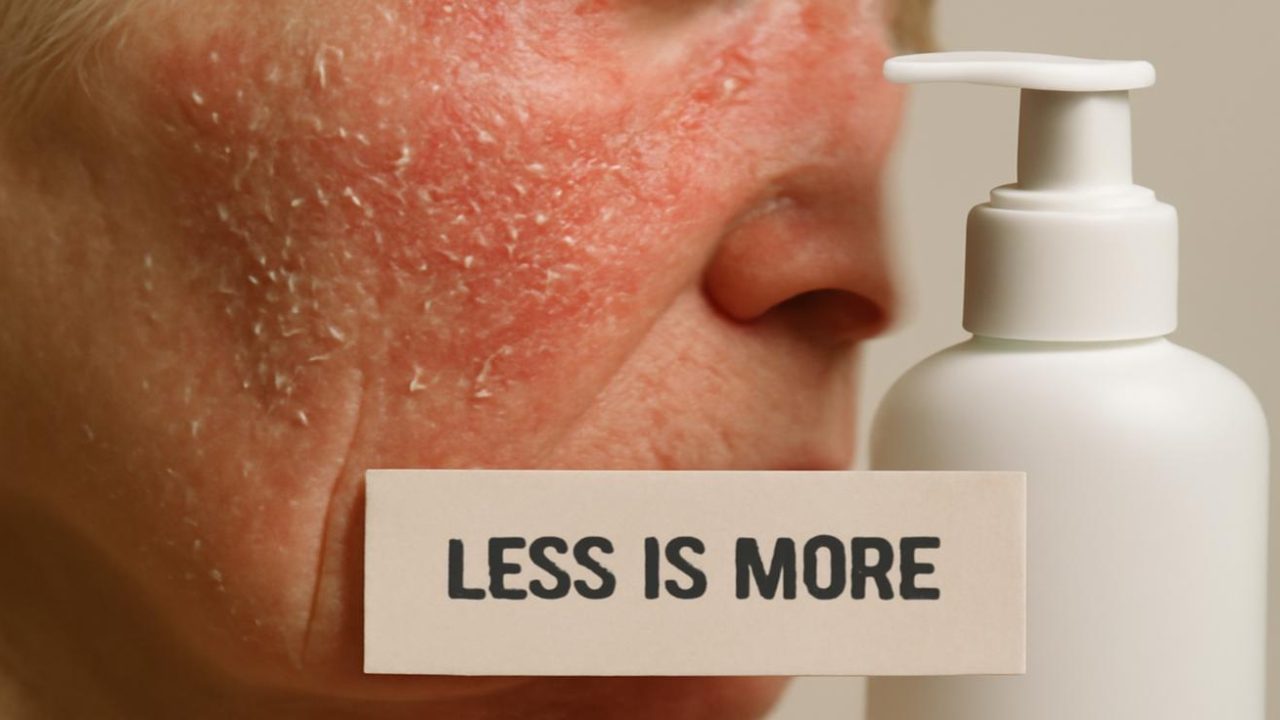
Dermatology waiting rooms are quietly filling with older adults who have been doing “all the right things” for their skin, only to find themselves red, itchy, tight, and strangely more fragile than before. The culprit? Over-exfoliation among people over 65 has become what skin specialists describe as a secret epidemic.
The irony is almost painful. Many in this age group grew up believing a “good scrub” was the gold standard of cleanliness, then later embraced anti-aging products promising renewal and resurfacing. What they didn’t anticipate was how their aging skin would react to this aggressive approach.
For a 70-year-old whose skin is naturally thinner and drier, trying to keep up with intensive exfoliation routines can feel like sandblasting old wood—at first, the results look promising, but then the damage becomes apparent.

Why Over-Exfoliation After 65 Is More Dangerous Than You Think
To understand why skin specialists are especially concerned about over-exfoliation in older adults, you need to picture your skin’s outermost barrier as a village wall made of tightly packed cells held together by natural oils and lipids. Its job is simple but crucial: keep moisture in, keep irritants out.
Around your mid-sixties, this protective system starts working with fewer resources. The skin produces less natural oil, cell turnover slows, and collagen becomes more scarce and delicate. The barrier is already working overtime with a reduced repair crew.
When older adults use the same aggressive exfoliation routines designed for younger skin, they’re essentially attacking an already compromised defense system. The results often start subtly—a little more redness after washing, moisturizer that doesn’t seem to absorb, or a papery tightness that lingers for hours.

Most people blame these symptoms on weather, stress, or allergies. The natural response? More exfoliation. If the skin looks dull, surely it needs another peel, scrub, or acid treatment. This creates a destructive cycle that deepens quietly, layer by layer.
The Modern Skincare Trap Catching Seniors
The bathroom counter tells the story: bottles of exfoliating cleanser, glycolic pads, retinol cream, motorized cleansing brushes, and jars of “peel night masks” crowded together like eager salespeople. The labels all promise the same things: renewal, resurfacing, polishing, brightening.
The language of skincare has shifted from gentle maintenance to active renovation. While a 25-year-old might tolerate this approach temporarily, mature skin responds very differently to the same aggressive treatments.

Common signs of over-exfoliation in older adults include:
- Persistent redness that doesn’t fade after cleansing
- Increased skin sensitivity to products previously well-tolerated
- New broken capillaries appearing on the face
- Rash-like irritation around the mouth or nose
- Skin that feels tight even hours after moisturizing
- Increased appearance of fine lines despite “anti-aging” efforts
What Happens When Aging Skin Gets Over-Scrubbed
The damage from over-exfoliation doesn’t announce itself dramatically. Instead, it’s the slow unraveling of skin defenses that have already been weathered by more than six decades of sun, wind, hot water, and daily cleansing.
When the skin barrier becomes compromised through excessive exfoliation, several problems cascade together. The skin loses its ability to retain moisture effectively, leading to chronic dryness that no amount of moisturizer seems to fix. Irritants that would normally be blocked now penetrate more easily, causing inflammation and sensitivity.

The visible signs many seniors are trying to address—dullness, uneven texture, age spots—often become more pronounced when the skin is over-exfoliated. The damaged barrier can’t reflect light properly, making the complexion appear more tired and aged than before treatment began.
| Age Group | Skin Barrier Thickness | Natural Oil Production | Recommended Exfoliation Frequency |
|---|---|---|---|
| 25-35 years | Full thickness | Normal to high | 2-3 times per week |
| 45-55 years | Slightly reduced | Decreasing | 1-2 times per week |
| 65+ years | Significantly thinner | Much lower | Once per week or less |
The Psychology Behind the Scrubbing
Understanding why over-exfoliation is so common among older adults requires looking beyond skincare routines to the psychology involved. Many people in their sixties and seventies approach their reflection with what one source describes as “a familiar mix of tenderness and suspicion.”
The bathroom mirror becomes a place of scrutiny: Are those lines deeper than last week? Are those patches darker? The natural response is to press harder with exfoliating tools, feeling that raw tingle and thinking it must be working.

This mindset, combined with decades of messaging that equates thorough cleaning with good hygiene, creates a perfect storm for skin damage. The generation that grew up with washcloths and strong soap now faces shelves full of products promising to turn back time through active resurfacing.
What Skin Specialists Want You to Know
Experienced dermatologists report seeing this trend more frequently in their practices. When asked about patterns among older patients, many express the same concerned reaction—a recognition that well-intentioned skincare routines are causing more harm than good.
The key insight specialists want to share is that mature skin requires a fundamentally different approach. Rather than trying to speed up cellular turnover or aggressively remove surface layers, the focus should shift to supporting and protecting the skin’s existing barrier function.

For people over 65, this means:
- Reducing exfoliation frequency to once per week or less
- Choosing gentler chemical exfoliants over physical scrubs
- Prioritizing barrier repair through ceramides and fatty acids
- Using lukewarm water instead of hot for cleansing
- Applying moisturizer to damp skin to lock in hydration
- Avoiding products with high concentrations of acids or retinoids without professional guidance
Breaking the Over-Exfoliation Cycle
Recovery from over-exfoliation requires patience and a complete routine overhaul. The first step is recognizing that the tight, stinging sensation many people interpret as “working” is actually a sign of barrier damage.
The healing process involves temporarily eliminating all active ingredients—acids, retinoids, scrubs, and cleansing brushes—and focusing exclusively on gentle cleansing and intensive moisturizing. This can be psychologically challenging for people who have been conditioned to believe that more aggressive equals more effective.

Most importantly, expectations need to shift from dramatic transformation to gentle maintenance. Healthy mature skin should feel comfortable, flexible, and resilient—not tight, red, or constantly irritated, no matter how many anti-aging promises are involved.
Frequently Asked Questions
Why is over-exfoliation more dangerous for people over 65?
Aging skin is naturally thinner with reduced oil production and slower repair processes, making it more vulnerable to damage from aggressive exfoliation routines designed for younger skin.
What are the first signs that someone is over-exfoliating?
Early warning signs include persistent redness after cleansing, increased sensitivity to previously tolerated products, and skin that feels tight even hours after moisturizing.

How often should people over 65 exfoliate their skin?
Most skin specialists recommend reducing exfoliation to once per week or less for people over 65, focusing on gentle methods rather than aggressive scrubs or high-concentration acids.
Can the damage from over-exfoliation be reversed?
Yes, but recovery requires temporarily eliminating all active ingredients and focusing on barrier repair through gentle cleansing and intensive moisturizing, which can take several weeks to show improvement.
What should replace aggressive exfoliation in mature skincare routines?
The focus should shift to supporting the skin’s existing barrier function through ceramides, fatty acids, gentle cleansing with lukewarm water, and consistent moisturizing on damp skin.
Why do many older adults fall into the over-exfoliation trap?
Many grew up believing thorough scrubbing equals good hygiene, then later embraced anti-aging products promising renewal, not realizing their mature skin requires a fundamentally different, gentler approach.











Leave a Comment