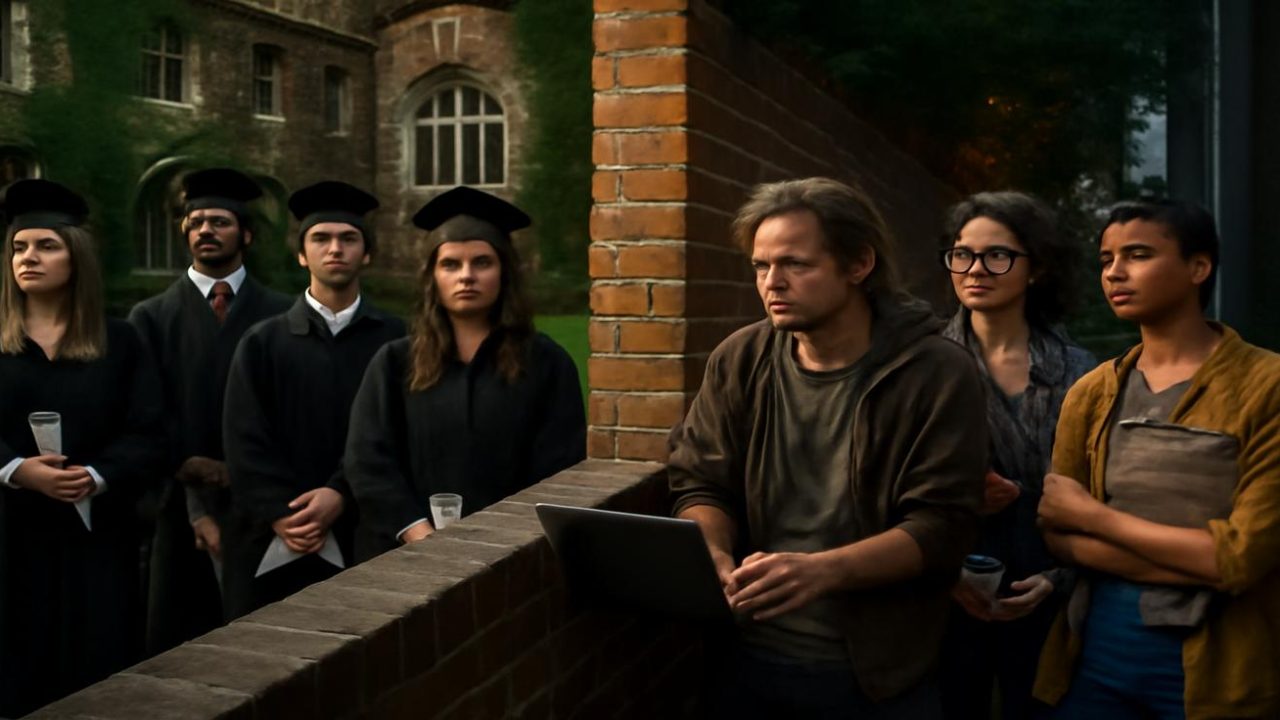
The most prestigious universities in America are quietly mass-producing a troubling type of graduate: brilliant on paper, yet strangely similar in thought and ambition. Despite record-low acceptance rates and sky-high test scores, these elite institutions may be filtering out the very originality they claim to cultivate.
The problem isn’t that students at top universities aren’t smart. They overwhelmingly are, arriving with near-perfect scores and accomplishment lists that read like procurement documents. But somewhere in the grueling admissions process, something essential gets lost: the messy, inefficient, occasionally offensive quality we call originality.
What emerges instead is a peculiar form of credentialed mediocrity — students who have learned to anticipate what adults want to see and serve it back, polished and optimized for success.

The Assembly Line of Elite Admissions
To understand how elite universities produce such similar graduates, you have to examine the pipeline that delivers students to their gates. The process works like a sophisticated sieve, with multiple filters that screen out not just academic weakness, but also certain types of brilliance.
The first filter is financial. SAT tutors, private college counselors, legacy advantages, and access to strong schools shape who even gets to compete. But the second filter proves more insidious: cultural fluency.
The modern admissions process demands students master a specific dialect. They must sound “passionate” without appearing unstable, “driven” without seeming ruthless, and “resilient” without revealing too much damage. Students learn to craft essays featuring hardships that are compelling but not too dark, leadership that appears collaborative but not passive.

This creates a curious paradox. Some of the most original young people never learn this admissions dialect. They’re too busy actually making things, breaking things, or thinking in directions that don’t photograph well in applications.
The Quiet Flattening of Campus Culture
Walk across an elite campus and you can observe the results of this filtering process. The choreography is unmistakable: well-maintained lawns, students moving with hurried purpose, an air of importance as if history itself is taking notes.
But sit in a dining hall long enough, and a curious sameness emerges in conversation. Students describe nearly identical paths: double-majoring in economics and computer science, recruiting for consulting or tech, expressing interest in making “impact.” Their stories, despite individual variations, sound eerily alike.

The distance between “high-achieving” and “truly original” becomes the ghost that stalks these campuses. Originality doesn’t fit neatly in rubrics or ranking systems. It rarely makes for easy recommendation letters. So the system, with stubborn efficiency, selects for something more predictable: compliance dressed up as excellence.
How the System Rewards Conformity
The current meritocracy teaches students a fundamental lesson before they even arrive on campus: don’t be difficult, be impressive. This distinction shapes everything that follows.
Students learn early to translate passion — that unruly, unpredictable force — into bullet points suitable for applications. Curiosity narrows into strategy. Risk becomes something you manage rather than something you take. The very qualities that drive innovation get smoothed away by the admissions process.

By the time students reach elite universities, many have already internalized the system’s core message. They’ve learned to optimize for metrics rather than pursue genuine interests. They’ve discovered that standing out means excelling within predetermined categories, not creating new ones.
| Traditional Merit Indicators | What They Actually Measure |
|---|---|
| Perfect test scores | Ability to master standardized formats |
| Club leadership positions | Skill at navigating institutional hierarchies |
| Volunteer hours | Understanding of what looks good to adults |
| Essay writing ability | Fluency in admissions rhetoric |
The Cost of Credentialed Mediocrity
This system produces graduates who are undeniably accomplished yet strangely limited. They excel at executing plans created by others but struggle to generate truly original ideas. They can optimize existing systems but rarely question whether those systems should exist at all.
The implications extend far beyond individual students. These graduates become tomorrow’s leaders in business, politics, and culture. Their shared background and similar thinking patterns create echo chambers in positions of power.

When elite institutions consistently reward the same type of thinking, they risk creating a leadership class that excels at managing the status quo but lacks the vision to imagine alternatives. The very people society needs to solve complex problems may never make it through the gates.
The irony is profound: in their quest to identify the best and brightest, elite universities may be systematically excluding the minds most capable of breakthrough thinking.
What This Reveals About Modern Meritocracy
The problems at elite universities reflect deeper issues with how society defines and rewards merit. The current system conflates achievement with potential, compliance with excellence, and optimization with innovation.

Few people defend this broken meritocracy out loud anymore, yet it continues to shape millions of lives. Parents invest enormous resources helping children navigate admissions requirements. Students sacrifice years of authentic exploration to build the right profile. Universities maintain the charade while privately acknowledging its limitations.
The acceptance email that arrives at 2:17 a.m., glowing on a teenager’s cracked phone screen, still feels like salvation to families. But that moment of triumph may actually represent something more troubling: another original mind successfully processed through a system designed to produce impressive conformity.
The question isn’t whether elite universities will continue to attract brilliant students. They will. The question is whether those institutions can evolve beyond their current role as expensive factories for credentialed mediocrity, or whether truly innovative thinking will increasingly happen elsewhere.

Frequently Asked Questions
Do elite universities actually produce mediocre graduates?
The graduates are highly accomplished by traditional measures, but the admissions process may filter out original thinking in favor of predictable excellence.
What makes someone “culturally fluent” in college admissions?
It means understanding how to present passion, leadership, and resilience in ways that admissions officers recognize and value, often learned through expensive counseling.
Why don’t original thinkers succeed in elite admissions?
Original thinking is often messy and doesn’t fit standard application formats, while the process rewards students who can anticipate and deliver what adults want to see.

How does this affect society beyond individual students?
These graduates become tomorrow’s leaders, potentially creating echo chambers in positions of power and limiting breakthrough thinking in important fields.
Is there evidence that truly talented people are being excluded?
The source suggests some of the most original young people never learn the “admissions dialect” because they’re focused on actually creating and innovating rather than optimizing applications.
What would need to change to fix this system?
The source material doesn’t provide specific solutions, focusing instead on identifying and describing the current problems with elite university admissions processes.











Leave a Comment