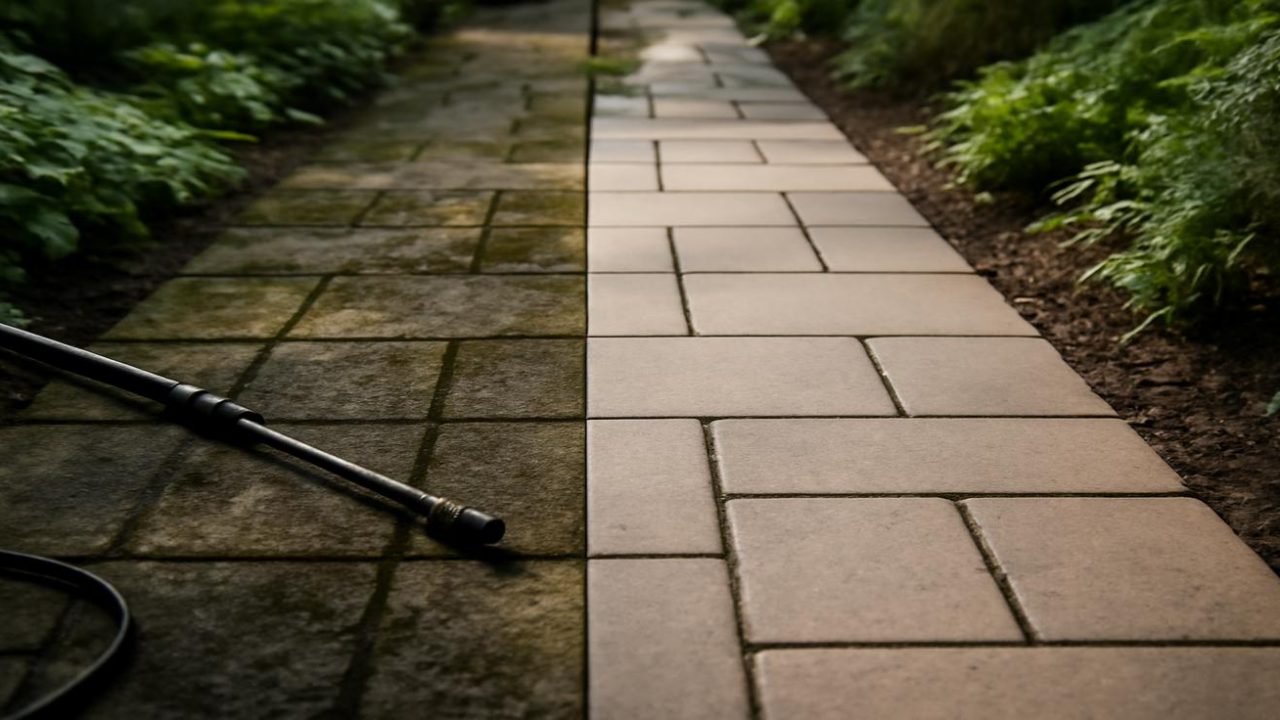
That blackened patio you once loved—where you spent summer evenings with friends and morning coffee—has transformed into a map of dark patches, green-black film, and tired-looking stone. Garden paths show similar wear: moss creeping through cracks, algae smeared across paving stones, and a persistent layer of grime that makes everything look older than it should.
The good news? You don’t need industrial equipment, harsh chemicals, or weekend-long scrubbing sessions to restore these surfaces. Simple, gentle methods can bring your outdoor spaces back to life with minimal effort.
The key lies in understanding what you’re actually fighting and letting chemistry do most of the work for you.

Why Your Patio Turned Black (And Why Force Isn’t the Answer)
Outdoor surfaces record everything that happens around them. Those dark streaks and films come from a combination of living organisms—algae, lichens, molds, and moss—mixed with non-living grime like soot, leaf tannins, pollution, and soil.
Your first instinct might be to attack with a pressure washer, blasting everything back to clean stone. But high-pressure water can damage soft mortar, gouge stone textures, and drive moisture deep into cracks where frost will later cause more problems.
Instead of fighting these substances with force, you can persuade them to let go naturally. Think of it like marinating tough meat—you don’t stab it repeatedly, you let salt and enzymes work slowly to break down the fibers over time.

The same principle applies to cleaning blackened patios and paths. The right solutions can seep into biofilm and grime, breaking the bonds that hold dirt to stone so rain and light scrubbing can wash the mess away.
The Gentle Cleaning Arsenal That Actually Works
Several common household items excel at breaking down patio grime without harsh scrubbing or dangerous fumes. Each works differently but effectively:
- Warm water – Even this simple approach starts helpful chemical breakdown and dissolves oily residues
- Mild detergent – A small amount of washing-up liquid in warm water loosens greasy films and trapped dirt
- White vinegar – The slight acidity tackles soap scum, mineral deposits, and slimy algae buildup
- Oxygen-based cleaners (sodium percarbonate) – These release active oxygen that breaks down organic stains and biofilm
The magic happens when you apply these solutions and let time do the heavy lifting. Rather than immediate scrubbing, you’re setting up chemical reactions that continue working long after you’ve moved on to other tasks.

| Cleaning Method | Best For | Application Time | Effort Level |
|---|---|---|---|
| Hot water + detergent | General grime, oily residue | 30 minutes | Very low |
| White vinegar solution | Algae, mineral deposits | 1-2 hours | Low |
| Oxygen cleaner paste | Stubborn organic stains | 2-4 hours | Low |
How to Clean Blackened Patio Surfaces With Minimal Effort
The most effective approach combines the right cleaning solution with patience. Start by identifying what type of stone or material you’re working with, as some cleaners work better on certain surfaces.
For most patio cleaning jobs, begin with the gentlest method: pour buckets of hot (not boiling) water over the affected areas. This alone often loosens surface grime and begins breaking down biofilm.
Next, apply your chosen cleaning solution and let it work. Mix a small amount of washing-up liquid in warm water for general cleaning, or create a white vinegar solution for areas with visible algae or mineral buildup.

The crucial step most people skip: waiting. Let the solution sit for at least 30 minutes to 2 hours, depending on the severity of staining. During this time, the chemicals are breaking bonds between dirt and stone.
After the waiting period, use a stiff brush for light scrubbing, then rinse thoroughly. In many cases, you’ll find that grime comes away easily with minimal physical effort.
What Makes This Method Different From Pressure Washing
Traditional pressure washing relies on mechanical force to blast away surface contamination. While this can look impressive, it often creates more problems than it solves.

High-pressure water can carve away soft mortar between stones, damage the natural texture of paving materials, and force water into small cracks. When this trapped moisture freezes and thaws repeatedly, it gradually breaks apart your patio from within.
The gentle chemical approach works with your patio materials rather than against them. By dissolving the bonds that hold grime to stone, you remove contamination while preserving the integrity of the surface.
This method also eliminates the noise, equipment hassle, and physical strain of pressure washing. No dragging heavy machines, wrestling with hoses, or dealing with spray-back that soaks everything nearby.

When to Use Each Cleaning Method
Different types of staining respond better to specific treatments. Green or black slimy patches usually indicate algae growth, which responds well to vinegar solutions or oxygen-based cleaners.
General darkening and dullness often comes from accumulated dirt, pollution, and organic matter. These respond to warm water and mild detergent treatments.
For moss growing in cracks and joints, mechanical removal followed by cleaning solution application prevents quick regrowth. The cleaning chemicals help eliminate spores and organic matter that moss needs to reestablish.

Stubborn stains that don’t respond to gentle methods may need oxygen-based cleaner applied as a paste and left to work for several hours. This approach handles organic stains that have had time to penetrate into porous stone surfaces.
The key is starting gentle and increasing intensity only if needed. Many patio cleaning problems resolve with nothing more than hot water, mild detergent, and patience.
Frequently Asked Questions
Is vinegar safe to use on all types of patio stones?
Vinegar should not be used on natural stone like marble, limestone, or travertine as the acid can damage these materials. It’s generally safe for concrete, brick, and manufactured pavers.

How long should I wait before seeing results from gentle cleaning methods?
Initial results often appear within 30 minutes to 2 hours, but heavily stained areas may need multiple treatments over several days for complete cleaning.
Can I use these methods during any season?
These cleaning methods work best in mild weather when solutions won’t freeze or evaporate too quickly. Avoid cleaning during very hot days when solutions dry before they can work effectively.
What’s the difference between oxygen-based cleaners and regular bleach?
Oxygen-based cleaners release active oxygen that breaks down organic matter, while chlorine bleach primarily removes color. Oxygen cleaners are generally gentler on stone and better for outdoor use.
How often should I clean my patio to prevent heavy blackening?
Regular maintenance cleaning every few months prevents heavy buildup. Areas that stay damp or shaded may need more frequent attention to prevent algae and moss growth.
Will these gentle methods work on severely neglected patios?
Even heavily stained patios often respond to gentle methods, though they may require multiple treatments and longer application times compared to lightly soiled surfaces.










Leave a Comment