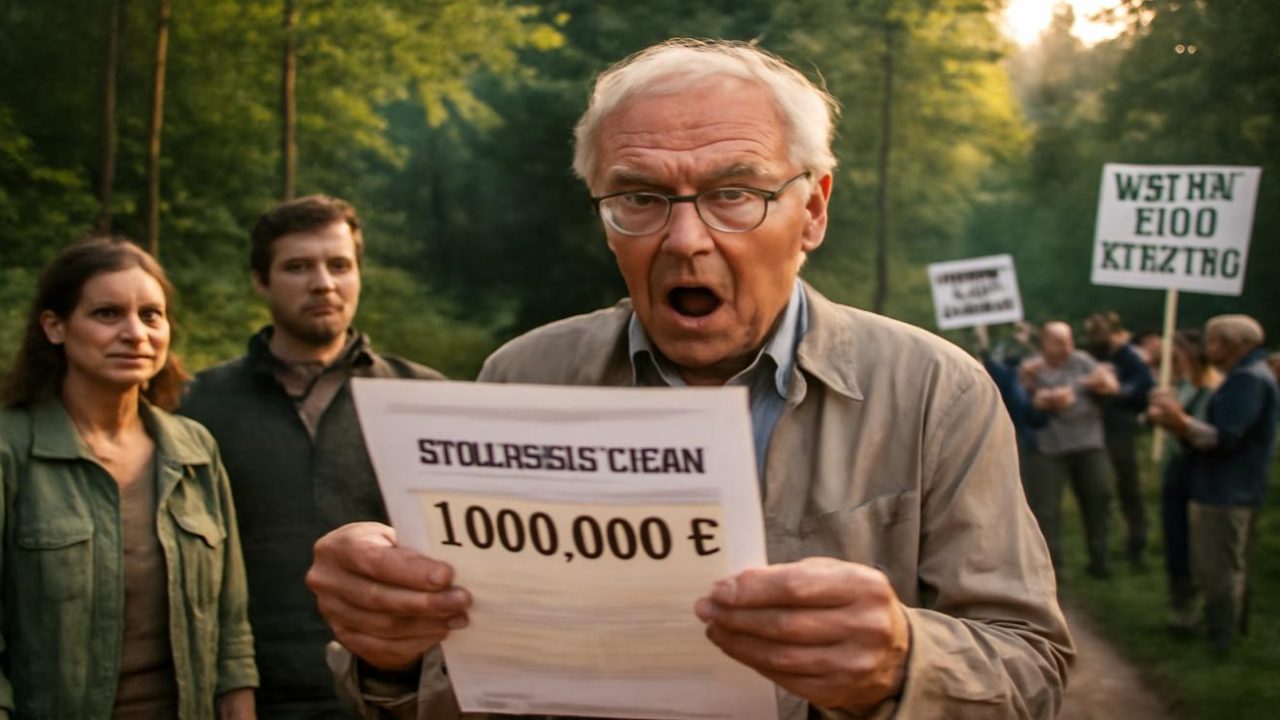
A retired teacher’s generous gift of 90 hectares of Slovenian forest to a wildlife charity has triggered a million-euro tax bill that nobody saw coming. The case has ignited a fierce national debate about whether good intentions should be punished by tax law, and who should bear the financial burden of protecting Europe’s remaining wild spaces.
When Marija, a literature and history teacher who spent four decades educating teenagers, decided to donate her carefully assembled forest to conservation, she thought she was securing its future. Instead, she accidentally created a legal and financial nightmare that exposes fundamental flaws in how European tax systems handle environmental philanthropy.
The forest itself sits in central Slovenia, a 90-hectare patchwork of mixed woodland that Marija built through decades of patient acquisition. Unlike romantic tales of inherited estates, this was a working teacher’s methodical project—parcels bought with savings, inherited pieces, all stitched together with the same careful attention she brought to correcting student essays.

When Conservation Meets Tax Reality
Marija’s father had wanted to clear-cut the land and replant it with profitable spruce trees that would “grow straight and fast.” She argued for patience instead, preferring what local foresters dismissively called the “messy” natural mix of crooked hornbeams, leaning pines, and the rich leaf-litter that perfumed October mornings with the scent of mushrooms.
With no children to inherit the forest and only a modest pension in retirement, Marija began worrying about the land’s future. Stories of forests becoming shopping centers and wetlands drained for industrial development haunted her planning. She didn’t trust the political cycles of government ministries, so she chose what seemed like the perfect solution: gifting the forest to a respected wildlife charity.
The charity promised everything she hoped for. They would leave the trees standing, allow them to grow old naturally, and restore a boggy corner for amphibians. They showed her maps of planned wildlife corridors and photos of lynx returning to nearby mountains—a vision of a more connected, wilder landscape that aligned perfectly with her conservation dreams.

Four months after signing the papers in a cramped notary office, reality arrived in the form of an official letter. The tax authority had calculated that transferring the forest created a taxable gain worth more than a million euros. The charity, not Marija, was liable for the entire bill.
How European Tax Law Punishes Environmental Gifts
Slovenia’s tax code treats land as a capital asset subject to gains tax whenever it changes hands, even as a charitable gift. When a charity receives donated land, the state calculates tax as if the organization suddenly became richer by the property’s full market value. That theoretical “gain” becomes a very real tax liability unless specific exemptions apply.
The case highlights a broader European problem where tax systems designed for commercial transactions create punitive consequences for environmental philanthropy. While businesses can often deduct charitable donations, the recipients of conservation gifts frequently face crushing tax bills that make acceptance financially impossible.

| Aspect | Commercial Sale | Charitable Gift |
|---|---|---|
| Tax Liability | Seller pays capital gains | Charity pays full market value tax |
| Cash Available | Sale proceeds cover taxes | No cash generated to pay taxes |
| Conservation Outcome | Often leads to development | Intended for permanent protection |
The twisted logic means that selling forest land to developers for shopping malls creates manageable tax consequences, while donating the same land for permanent conservation can bankrupt the intended recipient.
A Teacher’s Legacy Becomes National Symbol
When Marija’s story reached national media, headlines screamed about the “retired teacher hit with million-euro tax,” though the technical reality proved even more surreal. The teacher herself faces no direct financial penalty, but the charity she chose to protect her life’s work cannot afford to accept her gift.
The case has crystallized growing frustration with tax policies that actively discourage private conservation efforts. Environmental advocates point out the fundamental contradiction: governments claim to prioritize biodiversity protection while maintaining tax structures that make private land conservation financially devastating.

Marija still visits her forest, walking paths soft with decades of accumulated leaf-litter. The mixed woodland continues its patient cycles—beech trees creaking in autumn winds, black woodpeckers drumming against bark, roe deer stepping carefully through undergrowth that municipal foresters once dismissed as too “messy” for efficient forestry.
The Broader Crisis in Conservation Funding
The Slovenian case exposes uncomfortable questions about who should pay for protecting Europe’s remaining wild spaces. Private landowners like Marija often lack resources for long-term conservation management. Government agencies face budget constraints and political pressures. Environmental charities want to accept conservation gifts but cannot survive million-euro tax penalties.
This funding gap becomes critical as climate change and development pressure threaten remaining natural habitats. Private land conservation offers one of the few scalable solutions, but current tax policies effectively prohibit it by making charitable land transfers financially impossible.

Conservation experts argue that tax systems should incentivize rather than penalize environmental protection. They point to successful models in other countries where conservation easements and charitable land donations receive favorable tax treatment, making private conservation economically viable.
What Happens Next in Slovenia
The case has prompted calls for emergency legislative action to prevent similar situations. Environmental organizations are demanding tax exemptions for verified conservation donations, while government officials face pressure to resolve Marija’s specific situation without setting expensive precedents.
Meanwhile, the forest continues growing, caught in legal and financial limbo. The charity cannot formally accept ownership without triggering the tax liability. Marija retains technical ownership of land she intended to donate. The trees themselves remain unaware of human bureaucratic complications, following seasonal rhythms unchanged by tax codes or conservation debates.

The broader implications extend far beyond one teacher’s forest. Across Europe, potential conservation donors are watching Slovenia’s response. The outcome could either encourage private land conservation through sensible tax policy or confirm that good environmental intentions will be punished by bureaucratic systems designed for commercial rather than conservation transactions.
Frequently Asked Questions
Why does the charity have to pay taxes on donated land?
Slovenian law treats land transfers as taxable gains based on market value, even for charitable gifts, unless specific exemptions apply.
How much forest land did the teacher try to donate?
Marija attempted to donate 90 hectares of mixed woodland that she assembled over decades through purchases and inheritance.

Could the teacher have avoided this problem by selling the land instead?
Yes, selling to developers would create manageable tax consequences with cash to pay them, but would likely result in the forest being cleared for development.
What kind of forest was involved in this case?
The forest contains a natural mix of species including hornbeams, pines, and beeches, which local foresters considered “messy” compared to efficient spruce plantations.
Has Slovenia changed its tax laws because of this case?
The case has prompted calls for legislative action, but specific policy changes have not yet been confirmed.

What did the wildlife charity promise to do with the forest?
They planned to preserve the existing trees, allow natural aging, restore wetland areas for amphibians, and connect the forest to broader wildlife corridors.











Leave a Comment