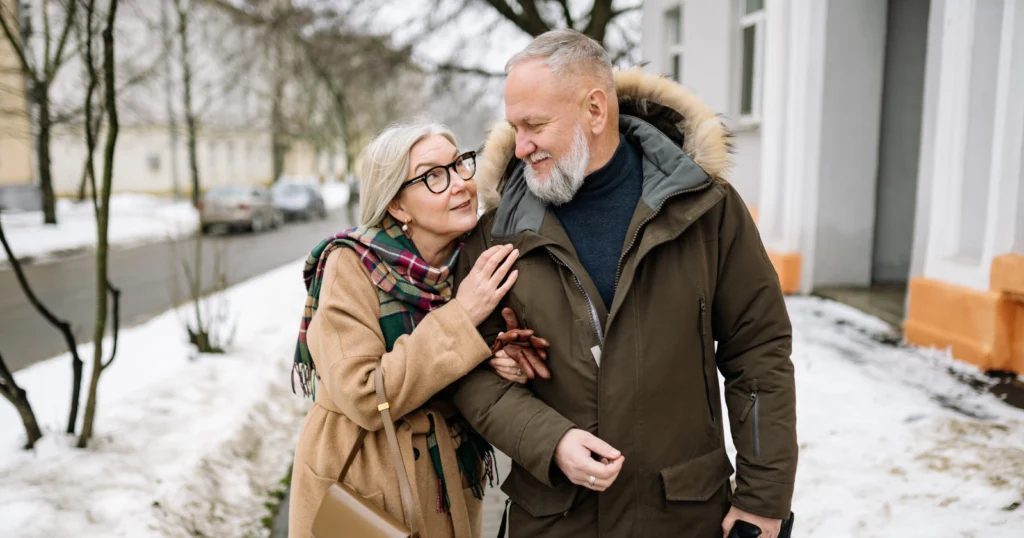
Love that begins after fifty operates differently in the brain than young romance — not weaker, but more deliberate, according to behavioral scientists who found that older minds bond through conscious choice rather than pure chemistry.
This finding challenges a persistent cultural assumption: that love discovered later in life represents some kind of consolation prize, a settling for what’s available when the “real” opportunities have passed.
The research reveals the opposite. When people form romantic attachments after age fifty, they’re drawing on neurological systems that have become more sophisticated, not diminished, with age.

How the Brain’s Bonding System Changes With Age
Young love floods the brain with dopamine, creating reward circuits that fire intensely and urgently. The neurological experience resembles the early phases of addiction — consuming and largely resistant to clear-eyed evaluation.
This is why infatuation feels like certainty, even when it isn’t. The chemistry creates a costume of fate that can override rational assessment.
The older brain doesn’t abandon these systems entirely, but it relates to them differently. Research published in Neuroscience and Biobehavioral Reviews examined how pair bonding neurobiology intersects with aging, finding that the brain’s bonding mechanisms shift to emphasize stability and mutual care over novelty and intensity.

More significantly, the review discovered that sustained pair bonds become increasingly important to health and resilience as people age. Those who form and maintain close relationships later in life show measurably better stress regulation and psychological wellbeing than those who remain alone.
The bond itself becomes biological infrastructure — something the nervous system depends on and organizes around.
The Sophisticated Architecture of Mature Love
This means love formed after fifty isn’t working with a reduced version of younger brain capacity. Instead, it operates with a brain that has developed more sophisticated emotional regulation, greater tolerance for complexity, and clearer understanding of actual needs versus imagined desires influenced by neurochemistry.

The difference lies in the foundation. A person falling in love at twenty-five is often carried by neurochemical currents strong enough that decisions feel more like surrenders than choices.
Someone falling in love at fifty-three faces a different landscape entirely. Their mind has already processed loss, revised expectations — sometimes painfully and repeatedly — and learned from experience rather than theory what love actually costs and requires over time.
| Young Love Characteristics | Mature Love Characteristics |
|---|---|
| Driven by dopamine and reward circuits | Guided by emotional regulation systems |
| Feels inevitable and urgent | Involves conscious evaluation and choice |
| Chemistry creates sense of fate | Experience informs deliberate selection |
| Decisions feel like surrenders | Decisions involve full knowledge of costs |
Why Choice Creates Stronger Foundations Than Chemistry
When that experienced person chooses someone, they bring the full weight of accumulated knowledge to the decision. They’re not betting on a feeling or hoping chemistry will sustain them through inevitable challenges.
They’re betting on a specific person, evaluated by a mind that possesses everything their life has taught them about relationships, compatibility, and what actually matters when initial excitement fades.
This represents a more demanding form of love precisely because it requires active, ongoing choice rather than passive submission to neurochemical impulses.
The skepticism that often surrounds later-in-life romance assumes that without the intensity of youthful passion, something essential is missing. But intensity and strength aren’t the same thing.

A foundation built on deliberate choice, mutual understanding, and realistic expectations about what relationships require has structural advantages that pure chemistry cannot provide.
The Biological Reality of Mature Bonding
The research on pair bonding and aging reveals that romantic connections become more, not less, crucial to biological functioning as people age. The nervous system of an older adult in a stable relationship shows better stress response patterns and improved overall regulation.
This suggests that the brain doesn’t just tolerate later-in-life love as a nice-to-have addition. It actively benefits from and depends on these connections in measurable ways.

The bonds formed through choice rather than chemistry create neurological infrastructure that supports better health outcomes, emotional stability, and psychological resilience.
For people who have survived heartbreak, disappointment, and the reality of what relationships actually involve day-to-day, choosing to love again represents a different kind of courage than the abandon of youth.
What This Means for Understanding Love After Fifty
The cultural narrative around later-in-life romance often focuses on what’s supposedly missing — the passion, the intensity, the overwhelming certainty that characterizes young love.

But the research suggests this narrative misses the point entirely. What develops instead isn’t a diminished version of young love. It’s a structurally different kind of attachment that operates through different mechanisms and offers different advantages.
A mind that has already survived heartbreak and learned what love costs brings those lessons to new relationships. The resulting bond may be less chemically intense, but it’s more deliberately constructed.
It’s built to last not because the feelings are overwhelming, but because the choice is informed.

This doesn’t mean later-in-life relationships lack passion or excitement. It means those elements exist within a framework of realistic understanding about what sustains connection over time.
The brain that bonds after fifty has learned to distinguish between what feels good temporarily and what actually works long-term. That distinction creates space for a different kind of love — one that might not announce itself with fireworks, but builds something more durable in their absence.
Frequently Asked Questions
Do people who fall in love after fifty experience less passion than younger couples?
The research suggests they experience passion within a different framework — one informed by experience and emotional sophistication rather than pure neurochemical intensity.
Are later-in-life relationships more stable than young love?
The study indicates they’re built on more deliberate foundations since they involve conscious choice by minds that understand what relationships actually require over time.
Does the brain’s bonding capacity diminish with age?
No, the bonding mechanisms shift to emphasize stability and mutual care, and these bonds become increasingly important to health and psychological wellbeing as people age.
Why do people often view later-in-life romance skeptically?
Cultural assumptions suggest that love without the intensity of youth is somehow diminished, but research shows it’s structurally different rather than weaker.
What makes mature love more “demanding” than young love?
It requires active, ongoing choice based on realistic assessment rather than passive submission to neurochemical impulses and feelings of inevitability.
Do later-in-life relationships provide measurable health benefits?
Yes, research shows people who form and maintain close bonds after fifty demonstrate better stress regulation and psychological wellbeing than those who remain alone.









Leave a Comment