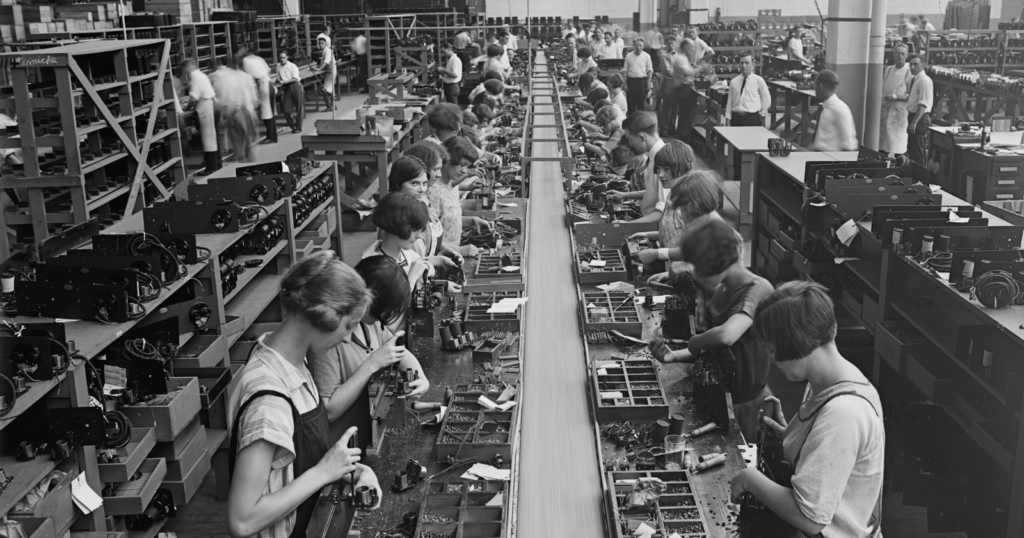
A generation of skilled workers who entered the trades in the 1960s and 1970s developed a form of physical intelligence that modern workplaces have almost entirely eliminated. These workers could read materials by touch, diagnose machinery by sound, and estimate measurements by sight with remarkable accuracy.
This wasn’t mystical intuition or natural talent. It was embodied expertise built through years of high-stakes manual work, where mistakes meant injury, waste, or public humiliation from supervisors who had learned the same way decades earlier.
Research suggests this type of knowledge—absorbed through repetition rather than formal instruction—represents a profound loss in how we understand and interact with the physical world.

What Scientists Call “Tacit Knowledge”
Researchers have spent decades studying this phenomenon, which they term “tacit knowledge”—expertise that cannot be fully written down, explained, or transferred through conventional instruction. Unlike textbook learning, this knowledge lives in the body and nervous system rather than in conscious thought.
A study published in the Journal of Neural Engineering by MIT researchers found that skilled individuals develop unconscious patterns of attention and perception that guide expert performance below the level of deliberate thought. The people who possess this knowledge often cannot explain what they know or how they know it.
When asked to describe their process, these workers typically shrug and say they “just got a feel for it.” They’re not being modest—they genuinely cannot articulate the process because it doesn’t happen in the part of the brain that produces words.

The MIT researchers were particularly interested in how this knowledge could be transferred, because transferring it turns out to be extraordinarily difficult. It cannot be put in a manual or delivered in a training session.
How Physical Intelligence Was Actually Learned
This expertise passed from one person to another only through sustained proximity and shared experience. Trade workers of that generation absorbed it through watching, through doing it wrong in front of someone who had done it right ten thousand times, and through the slow accumulation of feedback that the physical world delivers whether you want it or not.
The shop floor was the classroom. Workers started at eighteen and spent decades in environments that didn’t forgive errors or soften them. If you misjudged the tension in a piece of metal, if you misread the sound of a bearing going bad, if you miscalculated a measurement, the consequences were immediate and concrete.

This created a feedback loop that formal education rarely replicates. The physical world was an unforgiving teacher, but an effective one. Over years of repetition, workers developed an entirely different kind of knowledge from what they had started with, and none of it had been taught in any formal sense.
| Traditional Learning | Physical Intelligence |
|---|---|
| Classroom instruction | Learning through repetition |
| Written manuals and procedures | Absorbed through proximity and experience |
| Theoretical knowledge | Embodied expertise in hands, ears, eyes |
| Can be easily explained | Cannot be fully articulated |
| Transferred through teaching | Passed through sustained shared work |
What Modern Workplaces Have Lost
The workers who developed this physical intelligence possessed abilities that seem almost supernatural to contemporary standards. They could determine the quality of metal by running their fingers across its surface, identify specific mechanical problems by listening to engine sounds, and estimate precise measurements just by looking.
These weren’t party tricks—they were essential job skills that made the difference between efficient production and costly mistakes. A worker who could diagnose a problem by sound could prevent equipment failures that would shut down entire production lines. Someone who could judge material quality by touch could catch defects before they became expensive problems.

Modern workplaces have systematized and digitized most of these processes. Sensors monitor equipment performance, computer systems track quality control, and precise measuring tools eliminate the need for visual estimation. While these advances have improved consistency and safety, they have also eliminated the conditions that created physical intelligence.
Today’s workers interact with the physical world through interfaces and displays rather than direct contact. They follow procedures rather than developing intuitive understanding. The feedback loops that created embodied expertise have been largely removed.
The Cost of This Transformation
The shift away from physical intelligence has had consequences that extend beyond individual skill sets. When workers possessed deep embodied knowledge of their tools and materials, they could adapt to unexpected situations, innovate solutions on the spot, and maintain equipment in ways that prevented problems before they occurred.

This knowledge also created a different relationship between worker and workplace. People who had spent years developing physical intelligence felt ownership and mastery over their work environment. They understood their tools and materials at a level that created both competence and confidence.
The elimination of these learning environments means that this type of knowledge cannot be recreated. Unlike academic subjects that can be taught to new generations, physical intelligence required specific conditions—high-stakes manual work, sustained mentorship relationships, and immediate consequences for errors—that no longer exist in most modern workplaces.
Research suggests that once this knowledge is lost, it may be impossible to recover. The workers who possessed it are retiring or have already left the workforce, and the environments that created it have been fundamentally transformed.

What This Means for the Future
The disappearance of physical intelligence represents more than just a change in job skills—it reflects a fundamental shift in how humans relate to the material world. For most of human history, survival and success required deep physical understanding of tools, materials, and environments.
Modern technology has made this understanding less necessary for most jobs, but researchers are beginning to question what cognitive and cultural capabilities we may have lost in the process. The ability to read the physical world through touch, sound, and sight represented a form of intelligence that complemented rather than competed with academic learning.
Some researchers argue that understanding this loss could inform how we design future work environments and training programs. While we cannot recreate the conditions of 1960s factory floors, we might find ways to preserve some elements of hands-on learning and direct physical feedback in modern contexts.

The workers who developed this physical intelligence possessed knowledge that cannot be recovered once lost. Their expertise represents a form of human capability that modern workplaces have traded away, often without recognizing what was being given up in the exchange.
Frequently Asked Questions
What exactly is “physical intelligence”?
Physical intelligence refers to embodied expertise developed through years of hands-on work—the ability to read materials by touch, diagnose problems by sound, and estimate measurements by sight.
Why can’t this knowledge be taught in schools?
According to research, this expertise can only be transferred through sustained proximity and shared experience, not through formal instruction or written materials.

Which workers developed this type of intelligence?
Primarily those who entered manual and trade work in the 1960s and 1970s, when high-stakes physical work with immediate consequences was common.
Can modern workers still develop physical intelligence?
The conditions that created this knowledge—repetitive manual work with immediate consequences for errors—have been largely eliminated from modern workplaces.
What did researchers from MIT discover about this phenomenon?
They found that skilled individuals develop unconscious patterns of attention and perception that guide expert performance below the level of deliberate thought.
Is this knowledge completely lost?
Research suggests that once this embodied expertise disappears, it may be impossible to recover, as the specific workplace conditions that created it no longer exist.











Leave a Comment