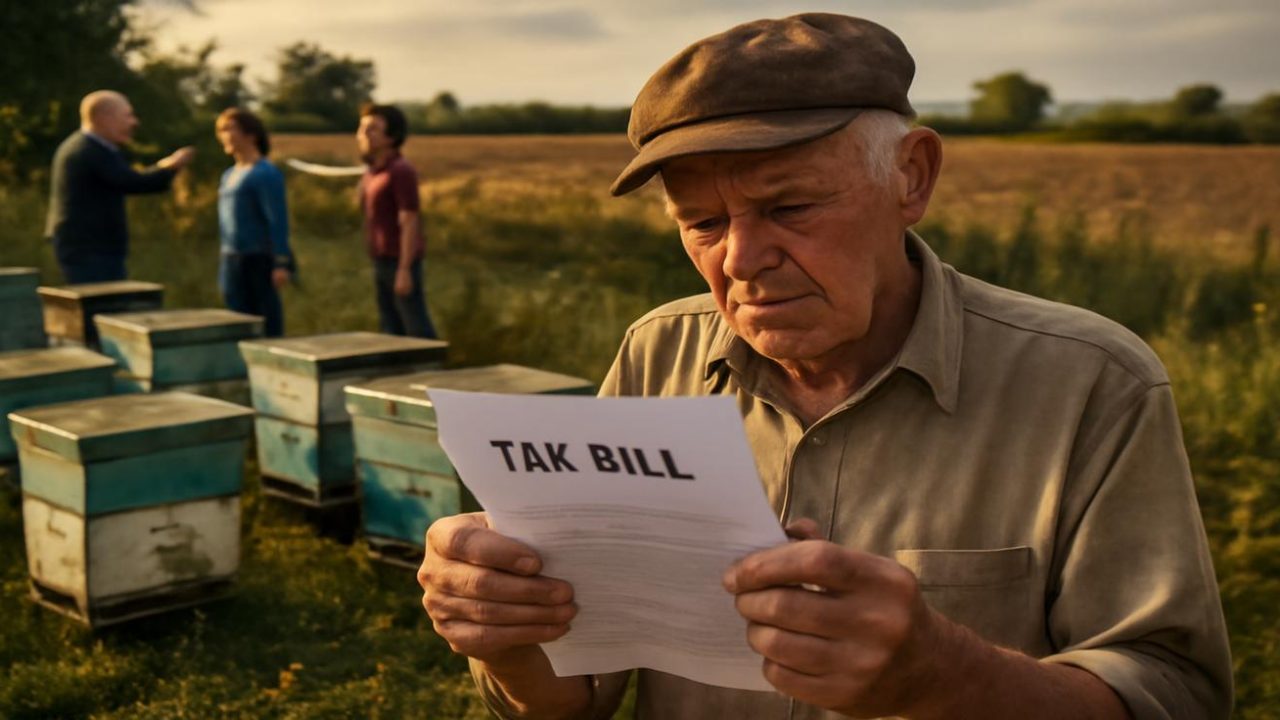
A 69-year-old retiree who generously allowed a local beekeeper to place hives on his unused land for free has been hit with an unexpected agricultural tax bill. The man, who receives no income from the beekeeping operation, now faces significant tax obligations simply because his property is being used for what authorities classify as agricultural activities.
The situation highlights a complex issue affecting property owners across rural areas who make their land available for beekeeping operations. While the gesture seems environmentally beneficial and community-minded, it can trigger tax classifications that many landowners never anticipated.
The retiree’s small plot of land had sat mostly idle for years, with just some grass, fruit trees, and blackberries. When a local beekeeper approached him two springs ago asking to place hives on the property, it seemed like a simple arrangement that would benefit both the environment and his fruit trees through improved pollination.

How a Good Deed Became a Tax Problem
The arrangement began as many informal agreements do in rural communities. The beekeeper had lost access to one of his usual sites due to new housing development and needed a quiet, pesticide-free location rich in flowering plants for his operation.
The landowner refused any rental payment, viewing it as a way to make his underused property productive again. The beekeeper installed 20 hives on the back portion of the property, near the edge of the woods, and the arrangement seemed to work perfectly for both parties.
The property owner took pride in watching the bees work among his fruit trees, carrying pollen and contributing to the local ecosystem. For nearly two years, the informal arrangement continued without issues.

Then came the official letter from the municipal tax office. Among the usual mail was a stiff envelope containing a property reassessment notice and a new tax bill specifically for “agricultural tax due to the use of land for beekeeping activities.”
The Agricultural Classification Challenge
The core issue lies in how tax authorities classify land use. When beehives are placed on property, even temporarily and even without the landowner receiving income, the land can be reclassified as agricultural for tax purposes.
This classification change can result in different tax rates and obligations than standard property taxes. The assessment is based on the agricultural use of the land rather than the landowner’s involvement in or profit from that use.

Key factors that can trigger agricultural tax classification include:
- Presence of beehives or other agricultural equipment
- Regular agricultural activity on the property
- Commercial use of the land for farming purposes
- Duration of agricultural activities
The situation becomes particularly complex when the landowner is not the operator of the agricultural business but simply allows someone else to use their property.
Who Bears the Financial Burden
The case raises important questions about liability and financial responsibility in informal land-use arrangements. The property owner faces tax obligations despite receiving no income from the beekeeping operation.

| Aspect | Property Owner | Beekeeper |
|---|---|---|
| Income from operation | None | All honey sales |
| Tax liability | Agricultural property tax | Business taxes on income |
| Operational control | Limited | Full management |
| Initial investment | None | Hives and equipment |
This disparity between who benefits financially and who bears the tax burden creates tension in what was intended to be a mutually beneficial arrangement. The retiree’s fixed income makes the unexpected tax bill particularly challenging.
Many property owners entering similar arrangements may not realize the potential tax implications. The informal nature of these agreements often means important details about financial responsibilities are not discussed upfront.
The Broader Impact on Rural Communities
This situation could have wider implications for beekeeping and agricultural partnerships in rural areas. If property owners become aware that allowing beehives on their land triggers additional tax obligations, they may be less willing to participate in such arrangements.

The reluctance could affect beekeepers who rely on multiple sites for their operations, particularly as development pressure reduces available locations. It might also impact environmental initiatives that depend on private landowners making space available for pollinator support.
Some communities have seen similar issues arise with other agricultural activities, from community gardens to small livestock operations on private property. The tax classification system often doesn’t account for the informal, community-benefit nature of these arrangements.
Rural advocates suggest that clearer guidelines and possibly different tax treatment for non-commercial agricultural uses could help preserve these beneficial partnerships while ensuring fair tax treatment for all parties involved.

What This Means for Similar Arrangements
Property owners considering similar arrangements should be aware of potential tax implications before agreeing to host agricultural activities. Consulting with local tax authorities or legal advisors can help clarify obligations upfront.
Some potential solutions being discussed include:
- Formal agreements specifying tax responsibility
- Revenue-sharing arrangements to offset tax costs
- Different tax treatment for non-commercial agricultural use
- Clearer municipal guidelines on classification triggers
The situation also highlights the need for better communication between tax authorities and rural communities about how land use changes can affect property classifications and tax obligations.

For now, the retiree continues to host the beehives while dealing with the unexpected financial burden. The case serves as a cautionary tale for others in similar situations and underscores the complexity of modern agricultural tax policy.
Frequently Asked Questions
Can allowing beehives on your property trigger agricultural taxes?
Yes, municipal authorities may reclassify land as agricultural based on beekeeping activities, even if the landowner receives no income from the operation.
Who is responsible for agricultural taxes when someone else operates on your land?
Typically the property owner remains liable for property taxes, including agricultural classifications, regardless of who operates the business on their land.

Should landowners get written agreements before allowing beekeeping?
Yes, formal agreements can clarify tax responsibilities and financial arrangements between property owners and beekeepers before issues arise.
Can property owners appeal agricultural tax classifications?
Most municipalities have appeal processes for property tax classifications, though specific procedures vary by location and jurisdiction.
Are there different tax rates for agricultural versus residential property?
Tax rates and structures vary significantly by location, but agricultural classifications often involve different calculation methods than standard residential property taxes.
What should someone do if they receive an unexpected agricultural tax bill?
Contact the local tax office immediately to understand the classification change and explore available options, including potential appeals or payment arrangements.










Leave a Comment