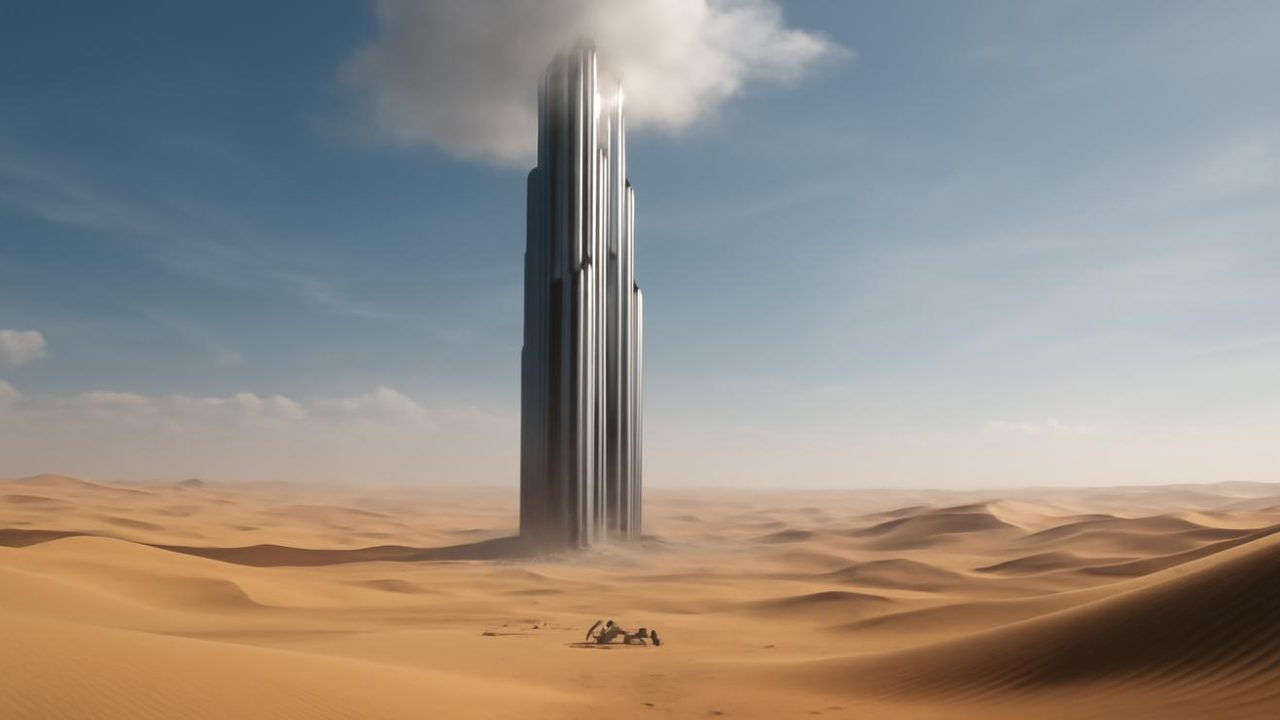
A kilometer-high tower rising from empty desert represents one of architecture’s most audacious proposals, but critics argue it exemplifies engineering ambition divorced from environmental reality. The concept of a 1,000-meter skyscraper planted in harsh desert conditions raises fundamental questions about what constitutes genuine progress versus spectacular display.
When confronted with renderings of such a structure, the visual impact is undeniable—a needle of glass and steel piercing an endless beige horizon like a glitch in reality. Yet beneath the glossy animations and drone footage lies a more sobering calculation of energy, materials, and environmental compromise.
The tower concept forces a reckoning with how we define architectural progress in an era of climate consciousness and resource scarcity.

Why Desert Supertalls Challenge Engineering Logic
Desert environments present unique challenges that amplify every difficulty inherent in supertall construction. The relentless heat doesn’t simply create discomfort—it becomes a constant adversary that mechanical systems must battle around the clock.
In desert climates, cooling costs dwarf heating expenses. Every wall of glass facing the desert sun creates a thermal battleground where heat seeks entry while expensive conditioned air bleeds outward. Advanced façades, specialized glazing, and sophisticated shading systems can mitigate these effects, but they cannot eliminate the fundamental thermodynamic reality.
The structural demands escalate dramatically with height. A 1,000-meter tower doesn’t simply grow upward—it grows exponentially heavier and more complex with each additional floor. More steel, more concrete, more carbon embedded in the structure before a single occupant moves in.

Vertical transportation becomes an engineering puzzle of staggering complexity. Banks of elevators must operate continuously, each requiring cables, motors, emergency systems, and backup systems for the backups. The energy consumption for vertical movement alone represents a significant operational burden.
The Environmental Arithmetic of Extreme Height
Behind every architectural rendering lies an environmental ledger that tells a different story than the marketing materials. Supertall buildings in extreme climates represent some of the most resource-intensive structures humans create.
The operational energy requirements break down into several categories:

- Cooling systems: Massive HVAC infrastructure running continuously against desert heat
- Vertical transportation: Multiple elevator banks consuming power throughout operating hours
- Lighting and electrical: Standard building systems amplified across 1,000 meters of height
- Water pumping: Moving water and waste vertically across extreme distances
- Emergency systems: Life safety equipment scaled to supertall requirements
The construction phase alone requires enormous material inputs. Steel and concrete production generate significant carbon emissions before construction even begins. Transportation of materials to remote desert locations adds another layer of environmental cost.
| Building System | Desert Climate Impact | Energy Multiplication Factor |
|---|---|---|
| HVAC Systems | Extreme cooling loads | 3-5x typical buildings |
| Elevator Systems | Thermal expansion issues | 2-3x standard towers |
| Water Systems | Pressure and temperature challenges | 4-6x conventional structures |
When Spectacle Masquerades as Strategy
The fundamental question surrounding kilometer-high desert towers concerns the definition of architectural progress. Traditional notions of progress suggest advancement toward more sustainable, replicable, and broadly beneficial solutions.
Supertall desert towers represent the opposite philosophy—unique monuments that consume extraordinary resources to create spaces fundamentally at odds with their environment. The structures function more as proof-of-concept demonstrations than practical urban solutions.

Desert ecosystems evolved over millennia around principles of scarcity and efficiency. Life in these environments succeeds by moving carefully and asking little of the landscape. Vertical cities impose the opposite logic—maximum resource consumption in minimum footprint.
The engineering required to make such structures habitable is impressive from a technical standpoint. However, the question remains whether technical feasibility justifies environmental cost when more sustainable alternatives exist.
The Hidden Costs of Vertical Ambition
Beyond the obvious environmental concerns, kilometer-high towers in remote locations create cascading infrastructure demands. These structures cannot exist in isolation—they require supporting systems that extend far beyond the building footprint.

Power generation and distribution must be scaled to meet enormous demand in locations typically far from existing electrical infrastructure. Water supply and waste treatment systems require engineering solutions that can handle the unique demands of extreme vertical density.
Transportation infrastructure must connect remote tower locations to urban centers and airports. The carbon footprint extends beyond the building itself to encompass all the supporting systems required for operation.
Maintenance and emergency services present ongoing challenges. Fire suppression, medical emergency response, and routine building maintenance all become exponentially more complex at extreme heights in harsh climates.

Rethinking Progress in Architecture
The kilometer-high desert tower phenomenon reflects broader tensions in contemporary architecture between spectacle and sustainability. While such projects generate significant media attention and demonstrate engineering capabilities, they raise questions about resource allocation and environmental responsibility.
Alternative approaches to architectural progress emphasize efficiency, integration with natural systems, and replicable solutions that can benefit broader populations. These approaches may generate less dramatic headlines but offer more sustainable paths forward.
The choice between spectacular individual projects and distributed sustainable development represents a fundamental decision about architectural priorities. Resources invested in single monumental structures could alternatively support numerous smaller projects with greater collective benefit.

As climate concerns intensify and resource constraints become more apparent, the architectural profession faces pressure to demonstrate leadership in sustainable development rather than engineering bravado.
Frequently Asked Questions
What makes desert construction particularly challenging for supertall buildings?
Desert environments create extreme thermal loads that dramatically increase cooling costs and structural stress, while remote locations complicate material transport and infrastructure development.
How much energy does a kilometer-high tower typically consume?
Specific energy consumption figures vary by design, but desert supertalls typically require 3-6 times the energy of conventional buildings due to extreme cooling demands and vertical transportation needs.

Are there any completed kilometer-high buildings in desert environments?
Currently no completed buildings reach the full kilometer height in true desert environments, though several proposals and shorter supertalls exist in arid regions.
What alternatives exist to supertall construction in dense urban areas?
Mid-rise construction with higher efficiency ratios, distributed development patterns, and buildings designed for natural ventilation and passive cooling offer more sustainable approaches to urban density.
Do supertall desert towers make economic sense?
The economic viability depends heavily on local real estate markets and energy costs, but the high operational expenses typically limit economic returns compared to more conventional development approaches.
What role do these projects play in advancing building technology?
While they serve as testing grounds for advanced building systems and materials, critics argue the extreme conditions make lessons less applicable to more practical construction projects.









Leave a Comment