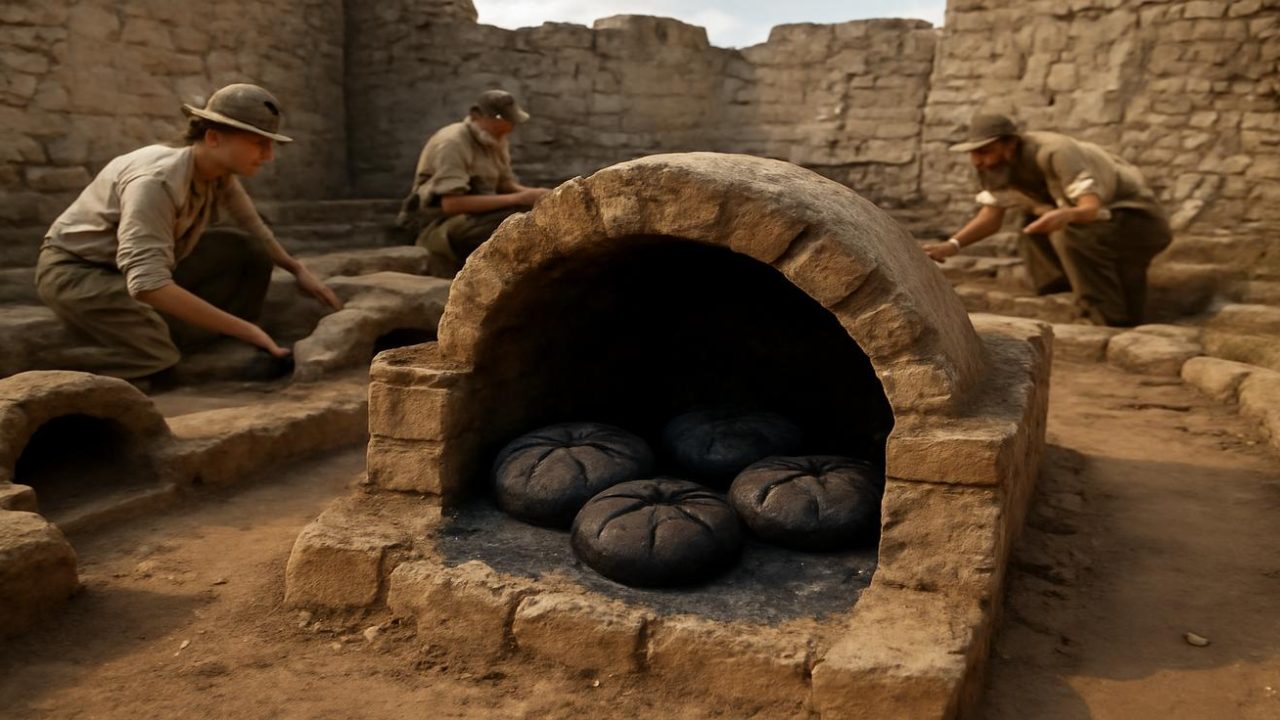
Archaeologists working in Egypt’s Sinai Desert have uncovered a 3,500-year-old military fortress containing remarkably preserved ancient ovens and fossilized dough, offering an unprecedented glimpse into how Egyptian soldiers were fed on the empire’s eastern frontier.
The discovery reveals not just the military might of ancient Egypt’s New Kingdom, but the sophisticated logistics required to sustain armies in one of the world’s harshest environments. Inside the fortress walls, researchers found dozens of professionally constructed ovens alongside fossilized bread dough that has survived millennia in the desert climate.
This find transforms our understanding of ancient military operations, showing that successful conquest depended as much on reliable food production as it did on weapons and strategy.

Ancient Fortress Emerges from Windswept Sands
The fortress sits along what historians call the “Horus Road,” a crucial military and trade route that connected Egypt’s Nile Valley to Canaan and beyond. Pharaohs of the 18th Dynasty used this network to project their power deep into the borderlands, establishing fortified positions to control movement and commerce.
Modern excavation began after satellite imagery revealed geometric shadows beneath the surface. Earlier 20th-century archaeological reports had mentioned pottery fragments, defensive walls, and unusual burn marks in the sand, but nothing prepared the current team for what lay buried just meters below.
The fortress foundation emerged as a stern rectangle, its walls still clearly defined after 35 centuries. Within this military compound, archaeologists uncovered barracks, storage rooms, defensive ditches, and the complete layout of what was essentially a war machine built to control Egypt’s eastern gateway.

But the desert preserved more than just military architecture. In one section of the fortress, the team discovered something extraordinary: a fully intact bakery complex that had fed the garrison’s soldiers.
Professional Bakery Operation Fed Ancient Soldiers
The bakery contains dozens of carefully constructed ovens, built with the precision of professionals whose sole job was feeding men and maintaining fires. These weren’t simple campfire pits, but sophisticated conical and beehive-shaped ovens designed for efficient bread production.
Some ovens were sunk into the ground while others rose above surface level, their mouths still perfectly shaped to receive dough. Ash clings to the inner surfaces, creating an almost tangible connection to the bakers who worked here thousands of years ago.

The most remarkable discovery came when archaeologists found hard, chalky lumps inside several ovens and work areas. Microscopic analysis revealed these to be preserved dough, fossilized mid-fermentation and frozen in time by the desert’s unique climate conditions.
Grinding stones scattered throughout the area show smooth surfaces worn by years of crushing grain into flour. Charred wheat and barley kernels provide evidence of the grains used to sustain the garrison.
| Discovery Element | Condition | Historical Significance |
|---|---|---|
| Fortress walls | Foundation clearly defined | Shows military control of trade routes |
| Bread ovens | Dozens intact with ash residue | Reveals professional food production |
| Fossilized dough | Preserved mid-fermentation | Unprecedented preservation of organic material |
| Grinding stones | Worn smooth from use | Evidence of daily grain processing |
| Grain kernels | Charred but identifiable | Shows wheat and barley cultivation |
Daily Life Behind Ancient Military Success
This discovery fundamentally changes how we understand ancient warfare. Military history typically focuses on battles, generals, and conquests, but this fortress reveals the intimate reality that armies succeed or fail based on their ability to feed soldiers consistently.

The garrison stationed here required daily bread production in an environment where the desert offers no forgiveness for supply failures. The sophisticated bakery operation suggests a level of military logistics that rivals modern armies in its attention to nutritional needs.
Evidence suggests bakers began work before sunrise, preparing dough while soldiers still slept. The scale of the operation indicates this wasn’t occasional cooking, but industrial-level food production designed to sustain hundreds of men indefinitely.
The preservation is so complete that archaeologists can almost reconstruct the daily routine: the rhythmic grinding of grain, the careful tending of fires, the timing required to produce fresh bread for multiple meal periods throughout each day.

What This Means for Understanding Ancient Egypt
The Sinai fortress discovery provides concrete evidence of how Egypt’s New Kingdom maintained control over vast territories. Success required not just military presence, but the infrastructure to sustain that presence indefinitely in hostile environments.
The fossilized dough represents one of the most remarkable examples of organic preservation from ancient Egypt. While pyramids and monuments showcase pharaonic power, this humble bread dough connects us directly to the daily experience of ordinary soldiers and workers.
The find also demonstrates the sophistication of ancient Egyptian logistics. Maintaining a fortress in the Sinai required supply chains, specialized personnel, and backup systems that could function reliably despite the desert’s challenges.

For archaeologists, the discovery opens new possibilities for understanding how ancient armies operated. The preservation conditions suggest other organic materials might survive in similar desert locations, potentially revealing additional details about daily life in ancient military outposts.
Ongoing Excavation and Future Research
The excavation continues as researchers work to fully map the fortress complex and analyze the organic materials discovered within the bakery. Each oven and work area provides additional data about ancient food production techniques and military logistics.
Scientists are conducting detailed analysis of the fossilized dough to understand ancient grain varieties, preparation methods, and preservation processes. This research could reveal information about nutrition, agricultural practices, and food technology from 3,500 years ago.

The site’s exceptional preservation suggests additional discoveries await. Archaeologists are expanding their search area, looking for other facilities that would have supported the garrison, including water storage, weapon maintenance areas, and living quarters.
Climate analysis of the preservation conditions could help identify other locations where similar organic materials might survive, potentially leading to additional discoveries that illuminate daily life in ancient Egypt’s military outposts.
Frequently Asked Questions
How old is the Egyptian fortress discovered in the Sinai Desert?
The fortress dates back 3,500 years to Egypt’s New Kingdom period, specifically the 18th Dynasty.

What made this discovery so unusual?
The fortress contained dozens of intact ancient ovens and fossilized dough preserved mid-fermentation, providing unprecedented insight into ancient military food production.
Where exactly was the fortress located?
The fortress sits along the ancient “Horus Road,” a military and trade route connecting Egypt’s Nile Valley to Canaan through the Sinai Peninsula.
How were the ovens constructed?
The ovens were professionally built in conical and beehive shapes, with some sunk into the ground and others rising above surface level, designed for efficient bread production.
What grains did ancient Egyptian soldiers eat?
Archaeological evidence shows the garrison used wheat and barley, with charred kernels of both grains found throughout the bakery complex.
Are there plans for further excavation?
Yes, researchers are continuing to excavate the site and analyze the organic materials, while expanding their search for additional facilities that supported the garrison.











Leave a Comment