The age-old question hits every homeowner when the first cold snap arrives: should you turn your heating on and off throughout the day, or just leave it running on low continuously? The answer challenges one of the most persistent myths about home heating.
Most people grew up hearing the same advice from parents or landlords: “Never let the house get cold—it takes more energy to heat it back up than to keep it warm.” This sounds logical, but physics tells a different story.
Your home isn’t like a mug of tea you’re trying to keep warm. It’s constantly trading heat with the outside environment, and the faster that heat escapes, the more energy you waste.

How Heat Actually Escapes Your Home
Heat moves through your house in three main ways: conduction through walls, floors, and windows; convection as warm air rises and cool air sinks; and radiation from heat sources like radiators. All of this movement follows one simple rule: heat flows from warmer areas to cooler ones until everything balances out.
The key factor is temperature difference. The greater the gap between your indoor temperature and the outside air, the faster heat escapes through your walls, roof, windows, and all those tiny gaps around doors and vents you’ve never noticed.
When you maintain a steady 21°C inside while it’s 5°C outside, your house constantly loses warmth at a high rate. But if you let the temperature drop to 16-17°C during certain hours, that temperature gap shrinks significantly, meaning less total heat loss over time.

In most reasonably insulated homes, turning heating on and off or using a programmable thermostat typically uses less energy than maintaining a constant low temperature.
When Turning Heating On and Off Makes Sense
The “on and off” strategy works best in specific situations that match how most people actually live. Here’s when this approach typically saves the most energy:
- Extended absences: If nobody’s home for 8-10 hours, there’s no benefit to keeping spaces fully warm
- Well-insulated homes: Houses with decent insulation and double glazing won’t drop to freezing temperatures quickly
- Predictable schedules: Regular work and sleep patterns make programmable thermostats highly effective
- Zoned heating systems: You can heat only the rooms you’re actually using
The strategy becomes less effective in poorly insulated homes that lose heat rapidly, or in extremely cold climates where the temperature differential becomes too large to manage efficiently.

The Real-World Impact on Your Energy Bills
Understanding heat loss helps explain why the traditional advice often leads to higher bills. When you maintain a constant temperature, you’re essentially paying to replace all the heat that continuously escapes through your home’s envelope.
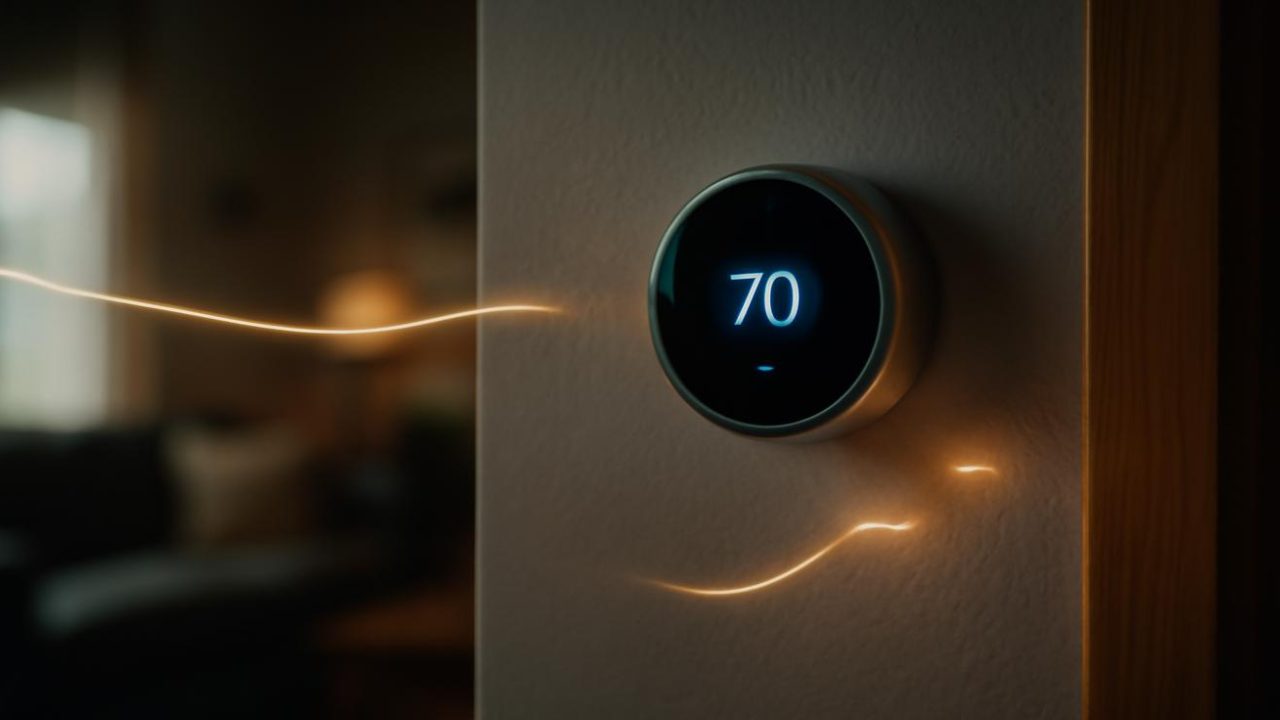
A programmable thermostat can automatically lower temperatures when you’re asleep or away, then warm the house before you need it. This reduces the average temperature difference between inside and outside, cutting total heat loss.
| Heating Strategy | Temperature Maintained | Heat Loss Pattern |
|---|---|---|
| Constant Low Heat | 18-19°C continuously | Steady, ongoing loss |
| On/Off Schedule | 21°C when home, 16°C when away | Reduced loss during low periods |
| Smart Thermostat | Varies by room and schedule | Optimized based on occupancy |
The reheating process does require a brief period of higher energy use, but this is typically outweighed by the savings from reduced heat loss during the cooler periods.

Factors That Change the Equation
Several variables can shift the balance toward keeping heating on low continuously. Homes with poor insulation lose heat so quickly that frequent reheating becomes inefficient. Very old heating systems that take excessive time to warm up might also benefit from steady operation.
Your local climate matters too. In areas with extreme cold, the temperature differential between a “cool” house and the outside air might still be large enough that you don’t see significant savings from the on/off approach.
Heat pump systems operate differently than traditional boilers or furnaces. These systems work most efficiently when maintaining steady temperatures rather than heating from cold, which could favor the constant low heat approach in some situations.

The type of heating system, your home’s thermal mass, and even the outdoor temperature swings in your area all influence which strategy works best for your specific situation.
Making the Right Choice for Your Home
The most effective approach often involves experimenting with your actual heating bills over a few winter months. Try maintaining constant low heat for several weeks, then switch to a programmable schedule and compare your energy usage.
Modern smart thermostats can learn your schedule and adjust automatically, potentially offering the best of both approaches. They can maintain comfort when you’re home while maximizing savings during away periods.

Consider your daily routine, home insulation quality, heating system type, and local climate when deciding. The goal is finding the balance between comfort and efficiency that works for your specific circumstances.
Most energy experts recommend starting with a programmable approach—lowering temperatures by 7-10 degrees when away or sleeping—and adjusting based on your comfort and energy bills.
Frequently Asked Questions
Does turning heating on and off damage the system?
Modern heating systems are designed to cycle on and off regularly without damage, and most include safety features to prevent issues from frequent operation.

How long does it take to reheat a house from cool temperatures?
In a well-insulated home, warming from 16°C to 21°C typically takes 30-60 minutes, depending on your heating system’s capacity and the house size.
What’s the ideal temperature difference for energy savings?
Lowering your thermostat by 7-10 degrees during away periods or overnight typically provides noticeable energy savings without excessive reheating costs.
Do smart thermostats really save money?
Smart thermostats can optimize heating schedules automatically and provide detailed energy usage data, potentially improving savings compared to manual temperature adjustments.

Should I use different strategies for different rooms?
If you have zoned heating, heating only occupied rooms and letting unused spaces stay cooler can significantly reduce energy consumption.
When should I consider keeping heat on constantly?
Homes with very poor insulation, extremely cold climates, or older heating systems that struggle with frequent cycling might benefit more from steady low heat.











Leave a Comment