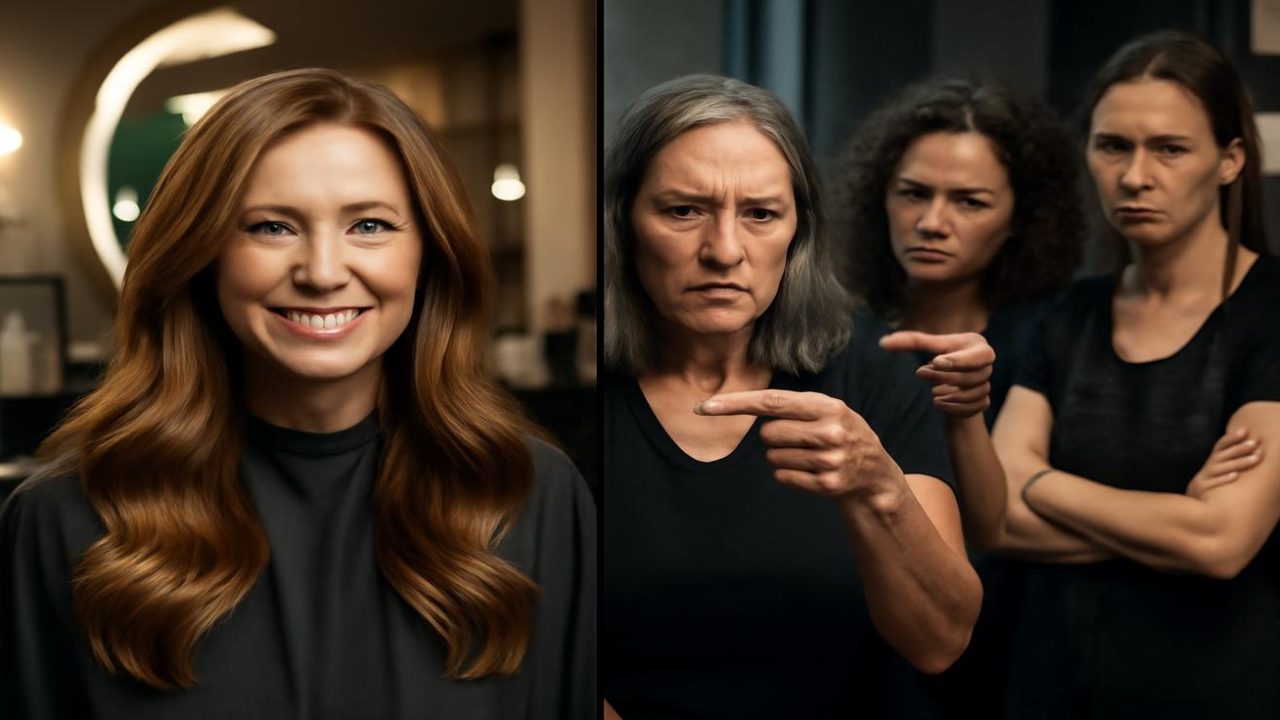
A new wave of hair products promises to cover gray hair without traditional dye, but beauty experts are calling the marketing claims “pure deception” as consumers discover these alternatives still fundamentally work by adding color that wasn’t there before.
The controversy centers around products marketed with phrases like “no chemical dyes” and “restore your natural color” that appear in glossy ads showing dramatic before-and-after transformations. Yet when examined closely, many of these formulas rely on the same basic principle as conventional hair dye: depositing pigment to change your hair’s appearance.
This semantic sleight-of-hand has created a billion-dollar market built on carefully crafted language that promises the impossible—covering gray hair without actually coloring it.

How the “No-Dye” Marketing Actually Works
The key to understanding this phenomenon lies in the language these products use. Instead of calling themselves “hair dye,” they adopt skincare terminology and wellness positioning.
Common marketing phrases include “pigment-depositing,” “toning,” “color-correcting,” and “reawakening natural pigment.” The products are often called serums, masks, boosters, or elixirs rather than dyes or colorants.
These formulations may use plant-based pigments, metallic salts, or semi-permanent tints instead of traditional ammonia-based dyes. Some deposit color gradually over multiple applications, marketed as enhancing “your shade, but brighter.”

The reality remains unchanged: whether the color molecules come from a laboratory, plant extract, or mineral source, gray hair that was previously gray is no longer gray after treatment.
What These Products Actually Contain
Despite the “natural” and “chemical-free” marketing, most gray-covering alternatives still rely on synthetic or processed ingredients to achieve their results.
| Product Type | Active Ingredients | How It Works |
|---|---|---|
| Gradual Color Depositors | Metallic salts, lead acetate | Builds color over time through repeated use |
| Plant-Based Tints | Henna, indigo, processed botanicals | Coats hair shaft with natural pigments |
| Semi-Permanent Formulas | Direct dyes, conditioning agents | Deposits color without lifting natural pigment |
| Color-Correcting Treatments | Purple/blue pigments, toning agents | Neutralizes unwanted tones, adds subtle color |
The distinction between these products and traditional hair dye often comes down to gentleness and permanence rather than the fundamental process of color change.

Why People Feel Deceived
The controversy isn’t necessarily about the products’ effectiveness—many users report satisfaction with the results. The issue lies in the marketing promises that suggest something fundamentally different from conventional hair coloring.
Consumers who purchase these products expecting to “restore” their natural color often discover they’re still engaged in the same cycle of root touch-ups and color maintenance they hoped to escape.
The “deception” many users describe stems from advertising that implies the products work by reactivating dormant hair pigments or reversing the graying process, when they actually work by masking gray with added color.

Some users also report unexpected results, as gradual color-building products can create uneven tones or metallic buildup that interferes with future coloring attempts.
The Real Differences from Traditional Hair Dye
While the fundamental principle remains the same, these alternative products do offer some genuine distinctions from conventional hair dye.
Many formulations are less harsh on hair and scalp, avoiding ammonia and high-volume peroxide that can cause damage and irritation. The gradual application process can feel less dramatic and more natural-looking than salon color services.

Some products focus on conditioning and hair health alongside color coverage, incorporating ingredients like keratin, oils, and vitamins that traditional dyes often lack.
The convenience factor is also real—many can be applied at home without the time commitment and expense of regular salon visits.
However, the core promise of covering gray hair without adding artificial color remains fundamentally misleading, regardless of the gentleness or naturalness of the specific formulation.

What This Means for Consumers
The gray hair coverage market has expanded rapidly as baby boomers age and seek alternatives to traditional salon treatments. This demographic shift has created opportunities for innovative marketing that capitalizes on desires for “natural” and “chemical-free” solutions.
Consumers considering these products should understand that effective gray coverage requires adding pigment to hair that has lost its natural color. No current technology can truly restore natural pigment production in hair follicles.
Reading ingredient lists and understanding the actual mechanism of action can help buyers make informed decisions rather than being swayed by marketing language alone.

The choice between traditional dye and these alternatives often comes down to personal preferences regarding application method, ingredient gentleness, and maintenance schedule rather than a fundamental difference in approach to gray coverage.
Frequently Asked Questions
Do “no-dye” gray coverage products actually work without using dye?
No, effective gray coverage requires adding color pigments to hair that has lost its natural pigment, regardless of the marketing terminology used.
Are these alternative products safer than traditional hair dye?
Many use gentler ingredients and avoid harsh chemicals like ammonia, but they still involve adding synthetic or processed colorants to achieve gray coverage.

Why do companies market these products as “natural” or “dye-free”?
The marketing language appeals to consumers seeking alternatives to traditional salon treatments while technically describing the same basic process of adding color to gray hair.
Can any product actually restore natural hair color permanently?
No current technology can reactivate natural pigment production in hair follicles that have stopped producing melanin due to aging.
What’s the main difference between these products and regular hair dye?
The primary differences are often in ingredient gentleness, application method, and permanence rather than the fundamental approach to gray coverage.
Are gradual color-building products better than one-time applications?
This depends on personal preference, as gradual products may feel more natural but can create uneven results or metallic buildup over time.











Leave a Comment