Each Canadian cow can emit the equivalent of a small car’s annual emissions just by burping and digesting grass. Now, a federally funded experiment quietly unfolding on the Saskatchewan prairies promises to slash those methane emissions almost to zero through what researchers are calling “carbon cows.”
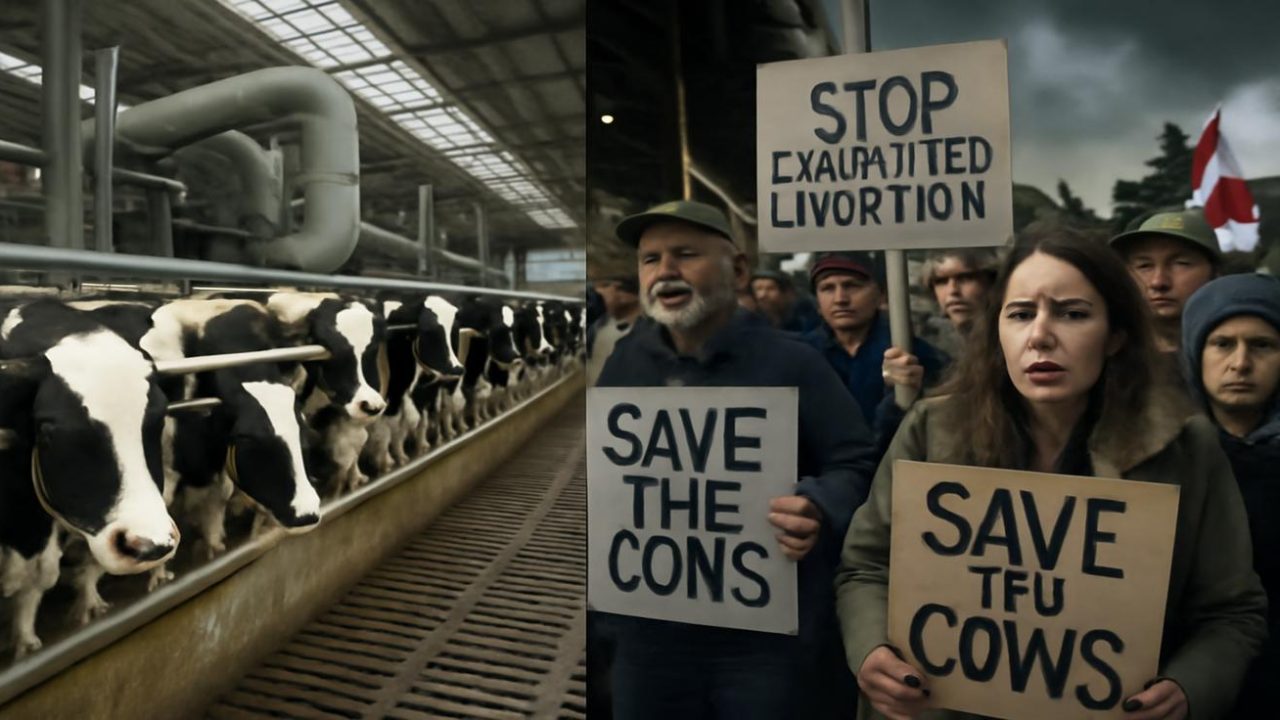
The controversial project combines selective breeding, genetic monitoring, and novel feed additives to create methane-neutral cattle that could transform Canada’s climate footprint. But the hush-hush initiative has sparked fierce debate among farmers, animal rights activists, and climate scientists about whether we should engineer livestock to save the planet or abandon cattle farming entirely.
Hidden behind plastic collars, ear tags, and blinking antennas that monitor every belch, this superherd represents one of agriculture’s most ambitious climate experiments—and one of its most divisive.

The Science Behind Methane-Neutral Cattle
The technology is everywhere at the Saskatchewan research facility, though it’s designed to blend into the background. White boxes hang above feed bunks like oversized breathalyzers, measuring methane in every cow’s exhale as they eat algorithmically formulated rations delivered by automatic wagons.
Methane is livestock farming’s climate villain. Cows are ruminants with four-chambered stomachs where microbes break down grass and grains, producing methane as a byproduct—a greenhouse gas roughly 28 times more potent than carbon dioxide over a century.
The breakthrough lies in natural variation. Some cattle, thanks to specific gut microbes, genetics, and feed efficiency, emit dramatically less methane than others even under identical conditions. Cow 4872, an unremarkable brown-and-white Holstein, shows methane readings well below her herd’s average simply due to her biological makeup.

Researchers are hunting for these naturally low-methane animals whose traits can be traced, quantified, and multiplied through selective breeding. The goal is to slowly transform Canada’s national herd into a methane-minimized version of itself over decades.
The project layers multiple climate technologies: seaweed-based feed additives that inhibit methane-producing microbes, precision nutrition that speeds digestion, and vaccines and probiotics aimed at reshaping the microbiome. The audacious plan is to stack these solutions until a cow’s climate impact nearly cancels out with carbon stored in carefully managed pastures and soil.
Federal Funding Flows to Carbon Cow Research
The federal government isn’t publicly promoting the “carbon cow” project, but budget lines and research announcements reveal a clear pattern. Grant programs targeting “low-emission livestock,” pilot projects with feed companies, and genomics initiatives searching for climate-friendly traits all feed into the same largely unspoken goal.

Ottawa’s funding flows through a complex network of universities, agribusinesses, tech startups, and federal agencies. The investment represents a bet that Canada can maintain its massive cattle industry while meeting climate commitments—a politically attractive alternative to reducing herd sizes.
The financial stakes are enormous. Canada’s beef and dairy sectors generate billions in economic activity and employ hundreds of thousands of people across rural communities. Methane-neutral cattle could preserve these industries while addressing climate concerns.
| Technology Component | Function | Climate Impact |
|---|---|---|
| Selective Breeding | Identify low-methane genetics | Reduces baseline emissions |
| Seaweed Feed Additives | Inhibit methane-producing microbes | Up to 80% methane reduction |
| Precision Nutrition | Optimize digestion efficiency | Faster, cleaner processing |
| Microbiome Management | Reshape gut bacteria | Long-term emission control |
Why the Carbon Cow Controversy Divides Stakeholders
To supporters, methane-neutral cattle represent pragmatic climate science the world desperately needs. The technology offers a path to maintain food production while reducing agricultural emissions, potentially buying time for broader climate solutions.

Critics view the project as “Franken-farming with a green halo”—a technological fix that avoids addressing fundamental questions about industrial agriculture’s environmental impact. Animal rights activists worry about increased monitoring and intervention in livestock lives, while some climate scientists argue resources would be better spent transitioning away from cattle farming entirely.
Small farmers express particular concern about being left behind by expensive technologies accessible mainly to large operations. The genetic monitoring, specialized feeds, and precision equipment required for carbon cow production could accelerate consolidation in an already struggling sector.
Environmental groups remain split. Some see methane reduction as essential given agriculture’s 10% share of Canada’s greenhouse gas emissions. Others argue the focus should be shifting toward plant-based proteins rather than engineering animals to fit industrial systems.

Real-World Impact on Canadian Agriculture
The carbon cow experiment could reshape Canadian farming if scaled nationally. Success would likely trigger government incentives for methane-reduction technologies, potentially making adoption mandatory for large operations seeking climate credits or export certifications.
Rural communities face uncertain futures under either scenario. Maintaining cattle farming through technological intervention preserves existing jobs and economic structures. But the costs and complexity of methane-neutral production could force smaller operations out of business, concentrating ownership among technology-equipped agribusinesses.
Consumer markets increasingly demand climate-friendly products, creating economic pressure for methane reduction regardless of government policy. Major retailers and food processors are setting emission reduction targets that could make carbon-neutral beef a market requirement rather than an environmental luxury.

International trade implications loom large. If Canada successfully develops methane-neutral cattle while competitors don’t, Canadian beef and dairy could gain significant export advantages in climate-conscious markets.
What Happens Next for Canada’s Climate Cattle
The Saskatchewan superherd represents just the beginning of what could become a decades-long transformation. Selective breeding programs require multiple generations to show results, meaning significant methane reductions won’t appear for years even if the technology proves successful.
Scaling from experimental herds to national implementation presents enormous challenges. The monitoring equipment, specialized feeds, and genetic testing required for carbon cows must become economically viable across thousands of operations spanning diverse climates and farming systems.

Regulatory frameworks remain undefined. Government agencies haven’t established standards for measuring or verifying methane reductions, creating uncertainty about how carbon cow benefits would be recognized in climate policies or carbon markets.
The project’s success or failure could influence global agriculture. Other major cattle-producing nations are watching Canada’s experiment closely, ready to adopt successful technologies or learn from failures in the race to reconcile livestock farming with climate commitments.
Frequently Asked Questions
How much methane do normal cows actually produce?
Each Canadian cow can emit the equivalent of a small car’s annual emissions through normal digestion and burping.

What makes some cows naturally produce less methane?
Specific combinations of gut microbes, genetics, and feed efficiency allow some cattle to emit dramatically less methane even under identical conditions.
How long would it take to transform Canada’s entire cattle herd?
Selective breeding programs require multiple generations to show significant results, meaning the process would take decades to complete.
Are carbon cows currently available to regular farmers?
The technology remains experimental and limited to research facilities, with no timeline announced for commercial availability.
What do animal rights groups think about monitoring cow burps?
Animal rights activists are concerned about increased monitoring and technological intervention in livestock lives as part of the carbon cow program.
Could this technology replace the need to reduce cattle farming?
Critics argue the focus should be transitioning toward plant-based proteins rather than engineering animals to fit industrial systems, while supporters see it as pragmatic climate science.











Leave a Comment