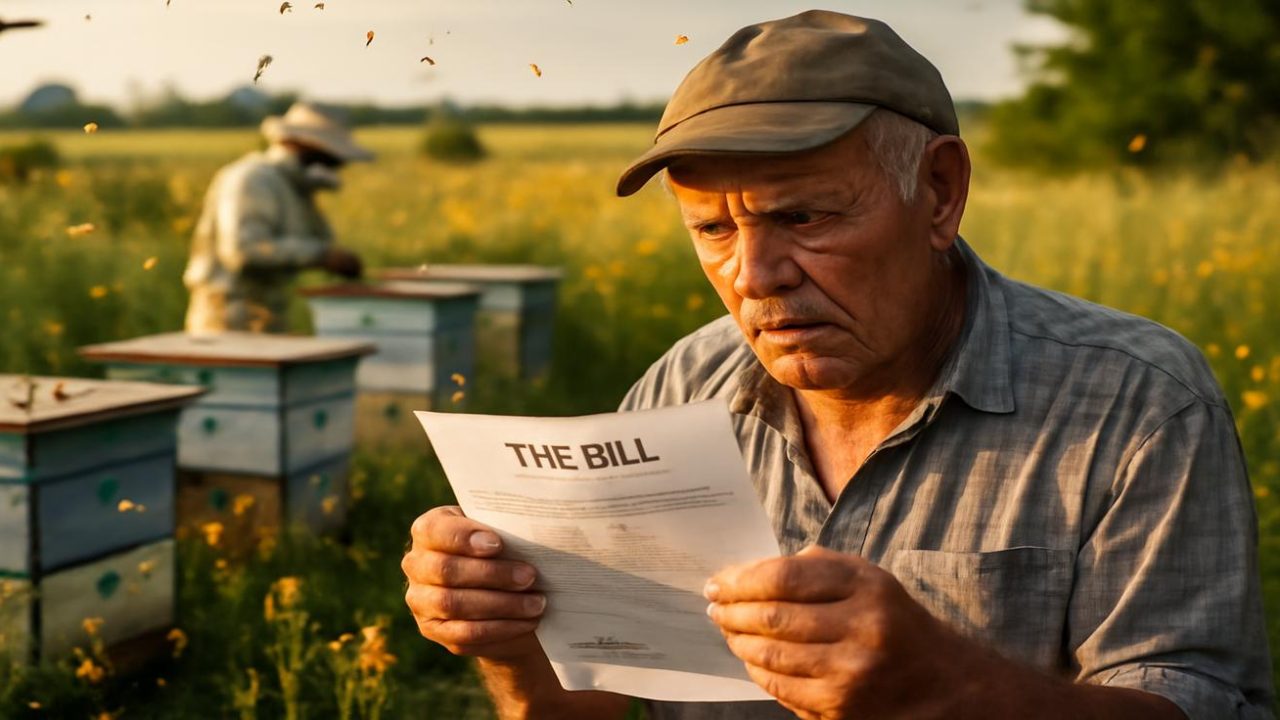
A simple act of kindness—lending unused land to a struggling beekeeper—has trapped a 71-year-old retiree in thousands of dollars of unexpected agricultural levies, exposing a regulatory blind spot that could affect any property owner who helps small producers.
Tom Harrigan thought he was doing something unambiguously good when he allowed a young beekeeper named Eli to place hives on his half-acre of unused land. No rent, no contracts—just a neighborly handshake over instant coffee and a shared belief that helping local honey production “helps everyone.”
Months later, a government letter arrived with devastating news: his property had been “re-assessed due to agricultural use,” triggering thousands of dollars in back charges and new annual obligations that exceed his grocery budget.

How a Handshake Became a Tax Trap
The arrangement seemed beautifully straightforward. Eli, a young beekeeper living in cramped rental housing, needed land for his hives to build a small local honey business. Tom had unused space behind his house—a former vegetable patch where weeds had taken over after his children outgrew their swing set.
When Eli asked to place a dozen hives against the fence, Tom barely hesitated. He refused rent payments, telling the beekeeper to keep his honey profits. The decision felt right for months as Tom watched his long-dormant apple tree suddenly burst with blossoms, aided by the constant pollination from thousands of busy wings.
Tom began telling friends about “his” bees, taking gentle pride in the evening ritual of walking out with tea to listen to their layered hum. The sound calmed him in ways he couldn’t articulate, and friends teased him about becoming a late-life farmer.

But what Tom never understood—what no one explained—was that allowing his land to support commercial honey production had legally transformed part of his backyard into a farm, regardless of his intentions or financial involvement.
The Invisible Line Between Helping and Operating
The regulatory shift happened without warning calls or friendly inspectors. No government official stopped by to explain that hosting commercial beehives might change his tax status. The policy updates were buried in dense government websites written in language that felt “allergic to” plain English, as Tom later described it.
The council’s calculations were impersonal and cold. Land previously categorized as residential or rural lifestyle property was now tagged for agricultural levies—a reclassification that carried significant financial consequences Tom never anticipated when he shook hands with a hopeful young entrepreneur.

The brown envelope’s bureaucratic precision folded his new reality into dense print and numbers that made his chest tighten. He read the letter three times, hoping he’d misread the decimal point. The sum demanded was more than his annual grocery budget—a crushing blow for someone living on a modest pension after working forty years to pay off his bungalow.
When Good Intentions Meet Regulatory Reality
Tom’s situation highlights a troubling gap between regulatory frameworks designed for commercial agriculture and the informal arrangements that often support small-scale food production. Property tax systems typically don’t distinguish between landowners who profit from agricultural activities and those who simply provide space out of community spirit.
The case raises uncomfortable questions about whether helping small producers should potentially cost citizens their financial security. For retirees and other property owners on fixed incomes, unexpected tax obligations can create genuine hardship, potentially discouraging the kind of community support that small agricultural businesses often need to survive.
Current agricultural zoning and taxation policies appear to assume that any commercial food production on private property involves the landowner as a business partner or beneficiary. This assumption breaks down when dealing with informal arrangements based on goodwill rather than profit-sharing agreements.
The Broader Impact on Small Agriculture
Tom’s experience could have chilling effects on the informal networks that often sustain beginning farmers and small agricultural producers. Many small-scale operations rely on borrowed or donated land use, especially in the startup phase when purchasing property isn’t financially viable.
If property owners face unexpected tax consequences for hosting agricultural activities, they may become reluctant to offer such arrangements. This could make it even harder for small producers like Eli to find affordable space to build their businesses, potentially concentrating agricultural production further into large commercial operations.

The situation also reveals how regulatory systems designed for traditional farming operations may not account for modern variations like urban beekeeping, community gardens, or other small-scale agricultural activities that blur the lines between hobby, community support, and commercial enterprise.
| Type of Agricultural Activity | Potential Tax Implications | Property Owner Risk Level |
|---|---|---|
| Commercial Beehives | Agricultural levy reassessment | High – demonstrated in Tom’s case |
| Community Gardens | Varies by jurisdiction | Moderate – depends on commercial activity |
| Livestock Grazing | Likely agricultural classification | High – traditional farming activity |
| Crop Production | Agricultural zoning likely | High – clearly commercial agriculture |
What Property Owners Need to Know
Tom’s story serves as a cautionary tale for property owners considering similar arrangements. Before allowing any commercial agricultural activity on private land—even as a favor—property owners should contact local tax assessors to understand potential implications.
The key trigger appears to be commercial use rather than profit-sharing. Even if the landowner receives no financial benefit, hosting a business operation that generates income may be sufficient to trigger agricultural tax classifications in many jurisdictions.

Property owners should also investigate whether their areas have specific exemptions or protections for community-supported agriculture, hobby farming, or other small-scale activities. Some jurisdictions have created buffer zones or minimum thresholds to prevent situations like Tom’s, but these protections vary widely.
Documentation of arrangements may also be crucial. While Tom’s handshake agreement felt appropriately informal, written agreements that clearly specify the landowner’s non-commercial role might provide some protection, though this varies by local regulation.
Frequently Asked Questions
Can property owners face tax increases for hosting beehives even if they don’t profit?
Yes, as Tom’s case demonstrates, commercial agricultural activity on property can trigger tax reassessments regardless of whether the landowner receives financial benefits.

How can property owners protect themselves before agreeing to host agricultural activities?
Contact local tax assessors before making arrangements to understand potential implications and investigate whether your area has exemptions for community-supported agriculture.
Are there legal protections for landowners who help small agricultural producers?
Protections vary widely by jurisdiction, with some areas offering exemptions for hobby farming or community agriculture, while others do not distinguish between commercial and charitable arrangements.
What should Tom have done differently to avoid this situation?
Based on the source material, Tom could have contacted local authorities before the arrangement to understand tax implications, though the lack of clear public information made this difficult.

Could this situation discourage people from helping small farmers?
Yes, unexpected tax consequences could make property owners reluctant to offer land to beginning agricultural producers, potentially making it harder for small-scale operations to find affordable space.
What happens to Tom’s financial obligations now?
The source material indicates he faces thousands in back charges and ongoing annual obligations, but the final resolution of his situation has not yet been determined.









Leave a Comment