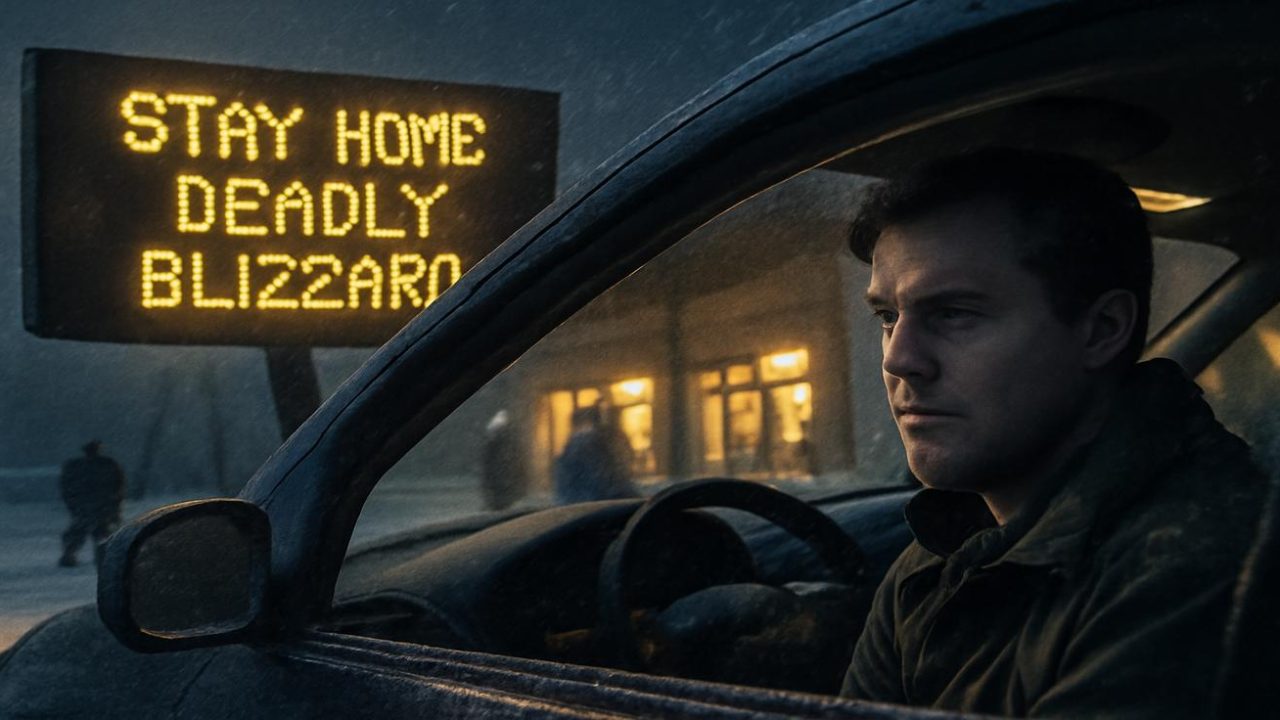
When blizzards bring life-threatening conditions to American roads, authorities issue urgent warnings for drivers to stay home. Yet at the same time, countless businesses quietly expect their employees to risk those same deadly conditions to show up for work. This contradiction reveals a troubling gap between public safety messaging and private employment practices that puts workers in an impossible position.
The scenario plays out across the country every winter: emergency officials plead with the public to avoid non-essential travel, while store managers, restaurant owners, and warehouse supervisors send messages expecting staff to report for their shifts regardless of weather conditions. The result is a two-tiered system where some people’s safety matters more than others, and where economic necessity often trumps personal well-being.
This disconnect raises fundamental questions about how America balances worker rights, business interests, and public safety during extreme weather events.

The Mixed Messages Workers Face During Blizzards
The contradiction becomes stark when viewed from a worker’s perspective. On one hand, local sheriffs, emergency managers, and meteorologists broadcast urgent warnings about staying off dangerous roads. These officials often sound exhausted from repeating the same message, having witnessed too many weather-related accidents and tragedies.
On the other hand, employees receive very different communications from their employers. Regional management emails emphasize staying open “for customers” and note that staff are “expected to report unless specifically notified.” The language carefully avoids directly ordering workers to drive in dangerous conditions, but the message is clear.
This creates a psychological burden where workers must choose between heeding official safety warnings and keeping their jobs. For many, especially those in lower-wage positions without paid time off or job security, the choice feels predetermined regardless of the actual risk involved.

The problem is compounded by vague terminology around “essential” work. While everyone agrees that hospital staff and emergency responders must brave dangerous conditions, the definition quickly becomes murky when applied to retail workers, food service employees, and warehouse staff.
Who Decides What Counts as Essential Work
The language of emergency management reveals significant blind spots when it comes to defining necessary work during severe weather. Officials routinely advise avoiding “non-essential travel,” but rarely specify which jobs qualify as essential beyond obvious categories like healthcare and emergency services.
This ambiguity allows businesses to frame almost any service as critical. Coffee shops argue that people need hot drinks during storms. Big-box retailers claim customers require emergency supplies. Warehouses maintain that shipping operations cannot be interrupted, even when they’re processing orders for non-urgent items.

The result is a system where individual businesses essentially self-designate as essential services without oversight or consistency. A barista driving to work during a blizzard warning faces the same road conditions as a nurse heading to the ICU, but only one of those trips receives broad social recognition as necessary.
| Worker Category | Public Recognition | Employer Expectations |
|---|---|---|
| Healthcare workers | Widely considered essential | Expected to report during emergencies |
| Emergency responders | Universally recognized as necessary | Required to work regardless of conditions |
| Retail employees | Mixed or no recognition | Often expected to report for regular shifts |
| Food service workers | Limited recognition | Frequently required during severe weather |
| Warehouse staff | Minimal recognition | Expected to maintain shipping schedules |
This disparity reflects deeper issues about which work society values and which workers receive protection during crises. The same storm affects everyone equally, but the expectation to brave dangerous conditions falls disproportionately on workers with less economic power and fewer employment protections.
The Real-World Consequences for Workers
The pressure to work during dangerous weather creates genuine safety risks that extend far beyond individual choice. Workers driving to jobs during blizzard conditions face the same hazards that prompt emergency officials to issue travel warnings in the first place: reduced visibility, icy roads, and the potential for accidents or becoming stranded.
For many employees, the financial consequences of missing work outweigh these safety concerns. Workers without paid sick leave or those living paycheck to paycheck cannot afford to lose a day’s wages, even when authorities explicitly warn against traveling. This economic pressure effectively coerces workers into making dangerous trips they would otherwise avoid.
The situation becomes particularly problematic for workers in jobs that genuinely could close temporarily without significant harm. Unlike hospitals or power plants, most retail stores and restaurants could safely shut down for a day or two during severe weather without compromising public welfare.
Yet the expectation persists that these businesses remain open and staffed regardless of conditions. This reflects a broader cultural assumption that customer convenience takes precedence over worker safety, even during declared emergencies.
The psychological toll on workers cannot be overlooked either. Being forced to choose between personal safety and employment security creates stress and resentment that extends beyond individual weather events. Workers begin to understand that their well-being ranks below business operations in their employer’s priorities.
What This Reveals About American Work Culture
The blizzard scenario illuminates broader tensions in American employment relationships around autonomy, responsibility, and risk. While public rhetoric emphasizes both individual freedom and personal responsibility, workers often find themselves with little actual choice when weather emergencies arise.
The contradiction exposes how economic necessity can override personal agency. Workers may technically have the “freedom” to stay home during dangerous weather, but they also bear full responsibility for any employment consequences of that choice. This arrangement socializes the risks while privatizing the decision-making power.

Employers benefit from maintaining plausible deniability—they rarely explicitly order workers to drive in dangerous conditions, but structure incentives and consequences to achieve the same result. This allows businesses to maintain operations during severe weather while avoiding direct liability for worker safety.
The pattern reflects a broader shift of risk from institutions to individuals that characterizes much of contemporary American work culture. Workers absorb increasing responsibility for managing job-related risks, from retirement planning to healthcare costs to weather-related safety decisions.
Some advocates argue for clearer policies that would either designate specific businesses as truly essential during weather emergencies or provide stronger protections for workers who choose not to travel during dangerous conditions. However, such changes would require acknowledging that the current system prioritizes business operations over worker welfare in ways that many find uncomfortable to address directly.

Frequently Asked Questions
Can employers legally require workers to drive in dangerous weather conditions?
Employment laws vary by state, but most employers cannot directly force workers to drive in hazardous conditions, though they may face disciplinary action for missing work.
What constitutes “essential” work during severe weather emergencies?
No universal standard exists beyond obvious categories like healthcare and emergency services, leaving individual businesses to largely self-designate as essential.
Do workers have any protections if they refuse to work during blizzard warnings?
Protections are limited and vary by location, with most workers having little recourse if employers retaliate for weather-related absences.

Why don’t more businesses simply close during severe weather?
Many businesses prioritize maintaining operations and customer service over worker safety concerns, viewing temporary closures as lost revenue.
How do other countries handle this issue?
Some European countries have stronger worker protections during severe weather, but practices vary widely globally and this remains an ongoing policy challenge.
Are there any movements to change these policies?
Worker advocacy groups have raised these concerns, but no major federal policy changes have emerged to address the disconnect between public safety warnings and private employment expectations.








Leave a Comment