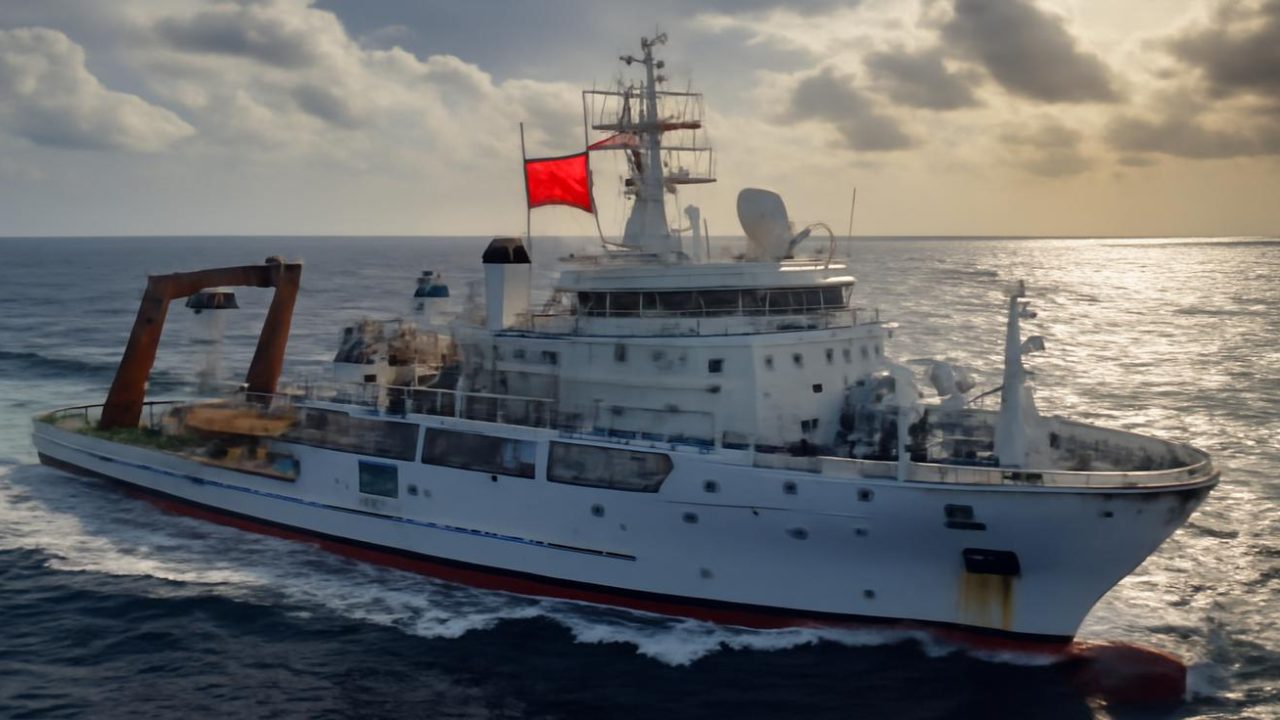
China has launched a sophisticated research vessel that could fundamentally shift the global balance of ocean exploration, transforming how nations compete for dominance in Earth’s last great frontier. The ship represents more than just maritime hardware—it’s a floating laboratory designed to deploy and coordinate autonomous underwater robots in ways that could give China unprecedented access to deep-sea resources and strategic positioning.
While other nations have focused on traditional research vessels, China’s approach centers on creating what amounts to a mother ship for underwater robotics. The vessel operates from Sanya Bay, equipped with advanced systems that blur the line between maritime transport and cutting-edge research facility.
The implications extend far beyond scientific discovery. Control of deep-sea exploration increasingly translates to advantages in economics, climate prediction, and geopolitics—making this ship a potential game-changer in international competition.

A Laboratory That Happens to Float
Step aboard this vessel and any resemblance to conventional ships disappears immediately. The air hums with electricity from refrigeration compressors and server racks, while sealed water circulation systems keep fragile scientific instruments operational around the clock.
The ship’s interior reveals its true purpose through glass-fronted laboratories flooded with clinical lighting. Wet labs house seawater samples in transparent cylinders, waiting for analysis of microbes and trace elements. Adjacent dry labs smell of solder and plastic, dominated by screens, 3D printers, sensor racks, and robot components.
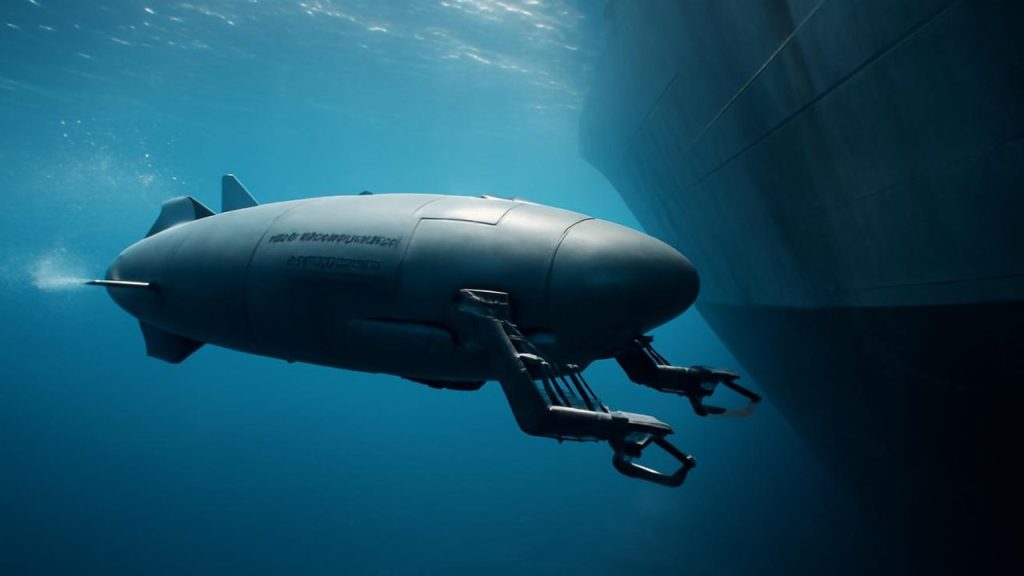
Corridors lead to storage areas containing what look like metallic beetles with propellers—autonomous underwater vehicles (AUVs) connected to arrays of laptops for programming and diagnostics. The entire vessel has been designed from its keel up as a floating research campus rather than a traditional ship carrying scientists to research sites.

This design philosophy reflects China’s strategic understanding that whoever learns to read the oceans first—and in the most detail—will hold decisive advantages across multiple domains of national power.
Why the Deep Ocean Matters More Than Ever
The world has spent decades mapping Mars and scanning distant stars, yet vast areas of our own seabed remain poorly understood. The deep ocean exists in perpetual darkness under crushing pressure, but it’s increasingly recognized as a realm of intense strategic importance.
China’s deep-sea ambitions center on several key areas that directly impact surface-world power dynamics:
- Polymetallic nodules rich in cobalt and nickel essential for modern electronics
- Hydrothermal vents containing unique biological resources
- Fiber-optic cable routes that carry global internet traffic
- Submarine navigation channels critical for military positioning
- Climate monitoring systems that inform weather prediction models
Traditional naval presence isn’t sufficient for these challenges. Modern deep-sea competition requires persistent, precise, and autonomous presence throughout the entire water column—from surface to seafloor.
That’s where China’s new research vessel becomes pivotal. Rather than acting as the primary research platform, it functions like a mother tree in an underwater forest, feeding and coordinating an entire ecosystem of submersible robots.
The Robot Revolution Below the Waves
The ship’s real advantage lies in its ability to deploy and manage multiple types of underwater robots with unprecedented efficiency. On-deck bays and below-deck storage areas house launching frames, maintenance workshops, and storage cradles designed for a small armada of submersibles.

Two main categories of robots give the vessel its exploratory power:
| Robot Type | Design | Primary Function | Operational Mode |
|---|---|---|---|
| Autonomous Underwater Vehicles (AUVs) | Compact, torpedo-shaped | Independent mapping and chemical detection | Pre-programmed routes, no cable connection |
| Remotely Operated Vehicles (ROVs) | Heavier, boxier construction | Real-time manipulation and detailed analysis | Umbilical cable connection for direct control |
AUVs can be programmed with specific routes and left to roam thousands of meters below the surface, mapping terrain with multibeam sonar or detecting chemical anomalies around hydrothermal vents. They operate independently for extended periods, gathering data without requiring constant human oversight.
ROVs provide more direct control for complex tasks, their umbilical cables coiled like sleeping snakes until deployment into the deep. These heavier vehicles can manipulate objects, collect samples, and perform detailed inspections under direct human guidance.

The ship’s custom rails, cranes, and automated clamps transform robot deployment from a cumbersome, all-hands operation into a streamlined process that doesn’t disrupt the day’s research schedule.
Strategic Implications of Automated Ocean Exploration
China’s approach represents a fundamental shift in how nations might compete for ocean dominance. Traditional research vessels require expensive human crews, limited operational windows, and significant logistical support for extended missions.
This new model enables persistent presence through robot proxies. While human researchers sleep or handle surface operations, underwater vehicles continue mapping, sampling, and monitoring around the clock. The economic efficiency could allow China to maintain exploration activities at scales previously impossible.

The strategic implications extend beyond resource extraction. Nations that understand deep-ocean environments gain advantages in submarine warfare, climate modeling, and disaster prediction. They can also position themselves favorably in emerging industries like deep-sea mining and underwater telecommunications infrastructure.
Perhaps most significantly, this approach could accelerate the pace of ocean discovery itself. Instead of sending one research team to investigate a promising area, China could deploy multiple robot swarms to survey vast regions simultaneously, processing data in real-time through the ship’s onboard systems.
What This Means for Global Ocean Competition
Other maritime powers now face a choice: develop similar capabilities or risk falling behind in deep-sea exploration and resource access. The traditional model of occasional research expeditions may prove insufficient against continuous robotic monitoring and mapping.

The vessel’s impact will likely be measured not in dramatic discoveries, but in the steady accumulation of detailed knowledge about previously unexplored ocean regions. This information advantage could compound over time, giving China better understanding of resource locations, environmental patterns, and strategic positioning opportunities.
For the global scientific community, the ship represents both opportunity and concern. Enhanced ocean exploration benefits everyone through improved climate understanding and biological discoveries. However, the strategic advantages gained through superior ocean knowledge could reshape international power balances in ways that extend far beyond marine science.
The race to explore Earth’s final frontier may ultimately be won not by the biggest ships or the bravest crews, but by the nation that most effectively combines human intelligence with robotic persistence in the perpetual darkness of the deep ocean.

Frequently Asked Questions
What makes this Chinese research vessel different from other ocean exploration ships?
The vessel functions as a floating laboratory and robot deployment platform rather than a traditional research ship, designed specifically to launch and coordinate multiple autonomous underwater vehicles simultaneously.
What types of robots does the ship deploy for ocean exploration?
The ship carries both autonomous underwater vehicles (AUVs) that operate independently on pre-programmed missions, and remotely operated vehicles (ROVs) that remain connected by cables for direct human control.
Why is deep-ocean exploration becoming strategically important?
The deep ocean contains valuable mineral resources like polymetallic nodules, hosts critical infrastructure like fiber-optic cables, and provides strategic advantages in submarine navigation and climate monitoring.
How does this ship give China an advantage in ocean exploration?
The vessel enables persistent, automated exploration through robot swarms while human crews handle surface operations, allowing for continuous data collection at scales previously impossible with traditional methods.
What are the broader implications of China’s new ocean exploration capabilities?
Enhanced deep-sea knowledge could provide advantages in resource extraction, climate prediction, submarine warfare, and positioning for emerging industries like deep-sea mining and underwater telecommunications.
Where is this Chinese research vessel currently operating?
According to the source material, the ship operates from Sanya Bay, though specific details about its current missions and deployment areas have not been disclosed.









Leave a Comment