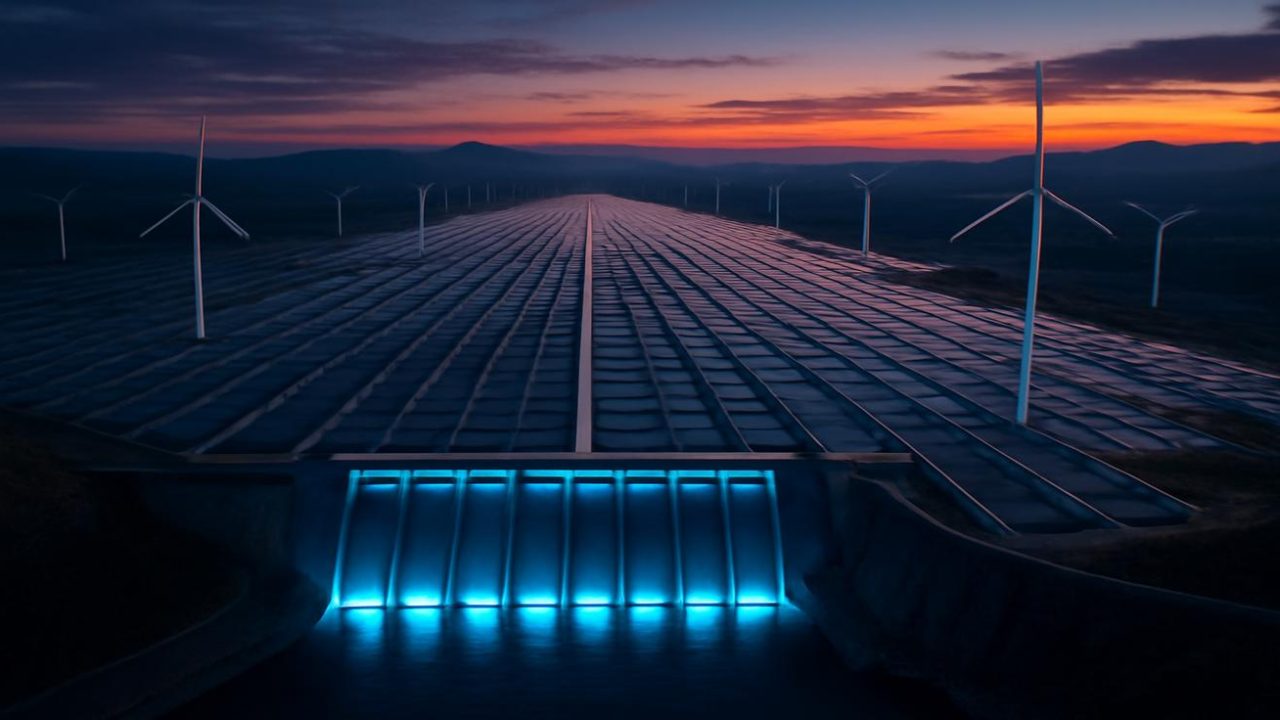
China’s Three Gorges Dam holds back more than 39 billion cubic meters of water — so much mass that it actually slows Earth’s rotation by a fraction of a millisecond each day. The physics behind this planetary nudge involves redistributing mass away from the equator, affecting our planet’s moment of inertia in ways that sound like science fiction but represent measurable reality.
Yet this engineering marvel that literally tugs on the spinning of Earth itself may soon be overshadowed by China’s next ambitious project: capturing solar energy in space and beaming it back to our planet.
The concept moves beyond earthbound infrastructure into orbit, where solar panels would float above atmospheric interference and weather patterns, collecting unfiltered sunlight around the clock.

How a Dam Changed Earth’s Spin
The Three Gorges Dam’s impact on planetary rotation isn’t poetic exaggeration — it’s measurable physics. When engineers pooled billions of cubic meters of water behind the massive concrete structure along the Yangtze River, they redistributed mass on Earth’s surface in ways that affect how our planet spins.
The change is almost mockingly small: a barely detectable addition to each day’s length. But the principle carries profound implications about human capability to influence planetary systems through infrastructure projects.
Standing on the dam’s rim reveals the scale involved. Ships that would dwarf city buildings appear toy-like in the ship lift. The controlled spill of storm-colored water crashes below while a broad, silver lake stretches beyond misty, terraced hills — two versions of the Yangtze River locked in an uneasy handshake between wild and tamed.

Whole valleys now lie drowned beneath the surface. Ancient sites were relocated stone by stone. Villages found new life on higher ground. The engineering achievement generates electricity for millions of homes and controls devastating floods, though environmental concerns persist about lost habitats, changed sediment flows, and increased landslide risks on hillsides.
The Physics Behind Planetary Engineering
The dam’s effect on Earth’s rotation demonstrates how massive infrastructure projects can influence planetary mechanics. Moving water mass away from the equator changes the planet’s moment of inertia — the same principle that causes figure skaters to spin faster when they pull their arms inward.
This redistribution of mass creates measurable changes in rotational speed, though the effect remains infinitesimally small in practical terms. The concept illustrates humanity’s growing ability to implement projects with planetary-scale consequences.

| Three Gorges Dam Impact | Measurement |
|---|---|
| Water Volume | 39+ billion cubic meters |
| Rotational Effect | Fraction of millisecond per day |
| Physical Principle | Mass redistribution affecting moment of inertia |
The low vibration of turbines running deep within the concrete structure provides a physical reminder of the enormous forces at work. This infrastructure project represents a monument to human will etched across a river that once seemed permanent and untouchable.
China’s Space-Based Solar Vision
While the Three Gorges Dam taught engineers that humanity can shift water balance and nudge Earth’s spin, China’s emerging space-based solar project asks a different question: what if we could reshape our relationship with the Sun itself?
The concept involves launching solar panel arrays into orbit, where they would capture sunlight without atmospheric interference or weather interruptions. High above the haze of cities and capricious cloud cover, these metallic wings would spread in constant exposure to solar radiation.

Up in orbit, day and night blur into something different — uninterrupted access to solar energy that would then be transmitted back to Earth. The premise sounds deceptively simple but proves audacious in practice.
For years, space-based solar power lived comfortably in theoretical notebooks and science fiction scenarios. The technical challenges of launching massive solar arrays, maintaining them in orbit, and efficiently transmitting power across the vacuum of space seemed insurmountable.
Beyond Earthbound Infrastructure Limits
Space-based solar collection offers potential advantages over terrestrial renewable energy systems. Orbital panels would avoid weather-related interruptions, seasonal variations, and atmospheric filtering that reduces ground-based solar efficiency.

The constant availability of unfiltered sunlight in space could theoretically provide more consistent power generation than Earth-based installations dependent on weather patterns and day-night cycles.
However, the engineering challenges remain formidable. Launching sufficient solar panel mass into orbit requires significant rocket capacity. Maintaining and repairing space-based infrastructure presents ongoing logistical complications. The power transmission system must efficiently beam energy across the vacuum of space to ground-based receivers.
These technical hurdles explain why space-based solar power has remained largely theoretical despite decades of research interest. The costs and complexity have historically outweighed potential benefits.

From River Control to Solar Ambition
The progression from the Three Gorges Dam to orbital solar collection represents an evolution in engineering ambition. Where the dam demonstrated humanity’s ability to control massive water flows and influence planetary mechanics, space-based solar would extend that reach beyond Earth’s atmosphere.
Both projects share characteristics of scale and audacity that push boundaries of what seems technically feasible. The dam’s measurable effect on Earth’s rotation established precedent for infrastructure with planetary implications.
Space-based solar power would represent another leap in that trajectory — moving from reshaping rivers and affecting planetary spin to capturing solar energy in the vacuum of space for terrestrial use.

The technical complexity increases dramatically when moving from earthbound to orbital infrastructure, but the underlying philosophy remains consistent: engineering solutions that operate at scales previously considered impossible.
Frequently Asked Questions
How exactly does the Three Gorges Dam slow Earth’s rotation?
The dam holds back more than 39 billion cubic meters of water, redistributing mass on Earth’s surface and affecting the planet’s moment of inertia, which changes rotational speed by a fraction of a millisecond per day.
Is the effect on Earth’s rotation permanent?
The rotational effect persists as long as the water remains pooled behind the dam, though the change is so small it’s barely measurable and has no practical impact on daily life.

What makes space-based solar power different from regular solar panels?
Orbital solar panels would operate above atmospheric interference and weather patterns, providing constant exposure to unfiltered sunlight without day-night cycle interruptions.
Has China actually launched the space-based solar project yet?
The source material describes this as an emerging project and vision, but specific launch dates or implementation details have not yet been confirmed.
Why haven’t other countries built space-based solar systems?
The technical challenges of launching massive solar arrays, maintaining orbital infrastructure, and efficiently transmitting power back to Earth have historically made such projects impractical despite decades of theoretical research.
What environmental concerns exist with the Three Gorges Dam?
Environmental impacts include lost habitats, changes in sediment flows, and increased landslide risks on hillsides, along with the displacement of communities and flooding of ancient sites.









Leave a Comment