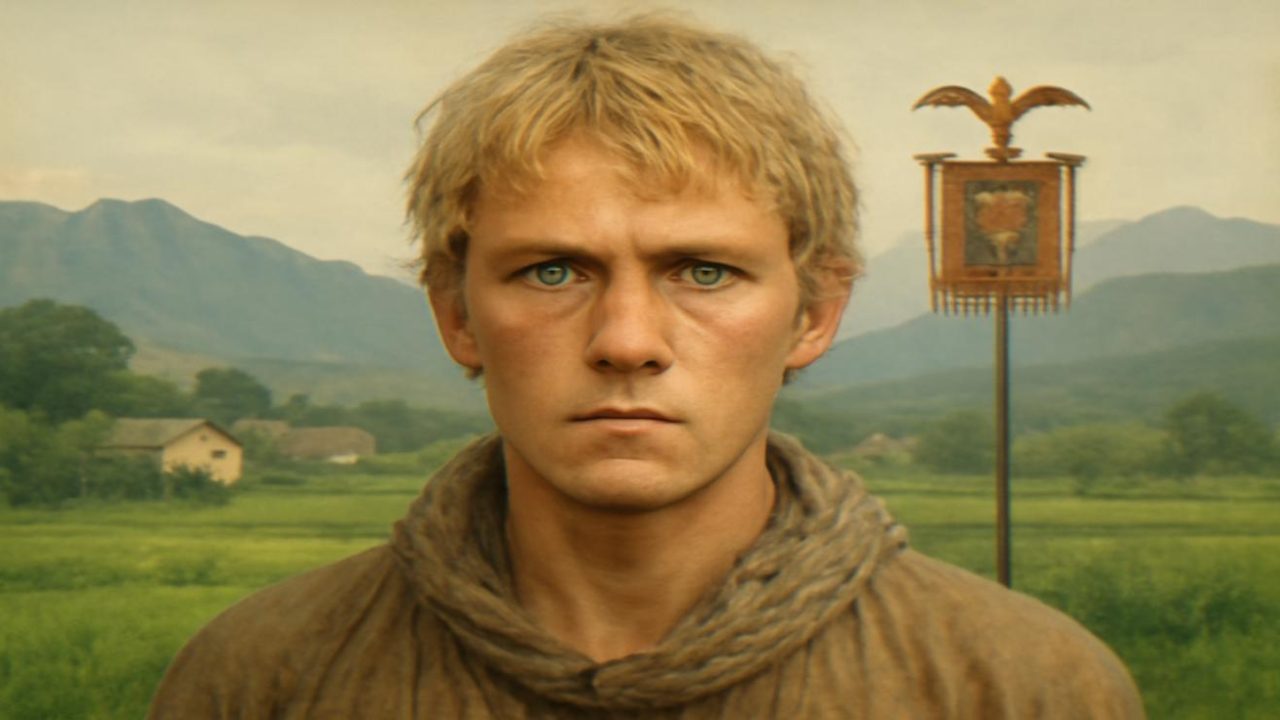
Deep in China’s remote Gansu province, the village of Liqian holds one of history’s most intriguing mysteries. For two thousand years, residents with green eyes, fair hair, and distinctly European features have sparked questions about their ancestry that reach back to ancient Rome.
The theory sounds almost too extraordinary to believe: these villagers may be descendants of Roman legionnaires who disappeared from history after a catastrophic battle in 53 BCE. Yet DNA evidence has revealed traces of European ancestry among the population, keeping this remarkable East-meets-West puzzle very much alive.
What makes this story even more compelling is how it bridges two vastly different worlds—the disciplined military might of ancient Rome and the quiet agricultural life of rural China—in ways that continue to baffle historians and geneticists alike.

The Village Where Ancient Mysteries Live On
Liqian sits in the Hexi Corridor, a landscape of weathered hills and dry yellow grasses where the modern world feels distant. Children play beside mud-brick walls while the air carries the scent of dust and steaming noodles from nearby kitchens.
At first glance, nothing seems unusual about this small settlement. But look closer, and certain faces stand out dramatically. A young girl peers from behind a doorframe with light hazel eyes and a straight nose. A farmer leans against his tractor, his hair surprisingly light despite skin browned by the highland sun, bearing what many would recognize as European features.
These physical characteristics have made Liqian’s residents the subject of intense curiosity for decades. For them, the possibility of being linked to Roman soldiers represents both a source of pride and a story that can feel oddly removed from their daily lives of farming and surviving harsh winters.

The village’s very name adds another layer to the mystery. “Liqian” appears in Han dynasty texts as a term for a distant Western land, creating a linguistic connection that has fueled speculation about the settlement’s true origins.
The Lost Roman Legion That Vanished Into History
The story begins thousands of kilometers away on an ancient battlefield that changed the course of Roman history. In 53 BCE, General Crassus led his legions into the Battle of Carrhae against Parthian forces in what is now modern-day Turkey.
The battle ended in devastating defeat for Rome. Ancient sources indicate that thousands of Roman soldiers were captured by the Parthians, but what happened to these prisoners remains one of history’s enduring questions.

One theory suggests these Roman captives were relocated eastward by their Parthian captors to serve as military colonists. They may have fought as mercenaries, moving progressively further from the empire that once commanded them.
Chinese historical records from the Han dynasty provide a tantalizing clue. They describe encountering soldiers who fought in a distinctive “fish-scale” formation—possibly an echo of the Roman testudo or tortoise formation, where interlocked shields created an impenetrable barrier.
These mysterious soldiers appear in Chinese chronicles as part of a strange group encountered beyond the western frontiers. After that mention, the historical record falls silent for centuries, leaving only questions about what became of these displaced warriors.

Physical Evidence and Scientific Investigation
The Liqian theory gained serious attention when researchers began documenting the unusual physical characteristics found among village residents. The presence of green eyes, fair hair, and prominent noses in this remote corner of northwestern China demanded explanation.
DNA analysis has provided the most concrete evidence supporting the Roman connection theory. Genetic testing has revealed traces of European ancestry within the local population, suggesting that at some point in history, people of Western origin did indeed settle in this region.
However, the scientific community remains divided on interpreting these results. While the European genetic markers are undeniable, determining exactly when and how they arrived requires careful analysis that goes beyond simple DNA testing.

| Evidence Type | Supporting Factors | Limitations |
|---|---|---|
| Physical Features | Green eyes, fair hair, European facial structure | Could result from various historical migrations |
| DNA Analysis | Confirmed European ancestry traces | Cannot pinpoint specific time period of arrival |
| Historical Records | Han dynasty accounts of Western soldiers | Descriptions are brief and potentially ambiguous |
| Village Name | “Liqian” appears in ancient texts referencing the West | Linguistic connections can be coincidental |
Why This Ancient Mystery Still Matters Today
The Liqian story represents more than just an archaeological curiosity. It challenges our understanding of ancient trade routes, cultural exchange, and the far-reaching consequences of military conflicts that occurred over two millennia ago.
For the villagers themselves, international attention has brought both opportunities and complications. Tourism has increased as visitors arrive hoping to see the “Roman Chinese” descendants, providing economic benefits but also turning daily life into a kind of living museum.
The broader implications extend to how we view ancient connectivity. If Roman soldiers did indeed reach this remote corner of China, it demonstrates that the ancient world was far more interconnected than many people realize.

This case also highlights the power of combining traditional historical research with modern scientific methods. DNA analysis, linguistic studies, and archaeological investigation work together to piece together puzzles that written records alone cannot solve.
The Ongoing Search for Definitive Answers
Despite decades of research and speculation, the Liqian mystery remains unsolved. While the European ancestry among villagers is scientifically confirmed, establishing a direct link to Crassus’s lost legionnaires requires evidence that may no longer exist.
Researchers continue investigating the site, hoping to uncover archaeological evidence that could provide more definitive answers. Ancient artifacts, burial sites, or other physical remains could potentially confirm or refute the Roman connection theory.

The challenge lies in the passage of time. Two thousand years of weather, farming, and development have likely obscured or destroyed much of the physical evidence that might have existed. What remains are the faces of modern villagers and the genetic markers in their DNA.
Meanwhile, Liqian continues its quiet existence in the Gansu countryside, its residents carrying on with daily life while the world debates their extraordinary possible heritage. Whether or not they truly descend from Roman legionnaires, their story illustrates how history’s greatest mysteries often survive in the most unexpected places.
Frequently Asked Questions
Are the villagers of Liqian actually descended from Roman soldiers?
DNA testing confirms European ancestry among residents, but establishing a direct connection to specific Roman legionnaires from 53 BCE remains unproven.

What happened to the Roman soldiers captured at the Battle of Carrhae?
Historical records suggest thousands were taken prisoner by Parthian forces, but their ultimate fate is unknown and remains a subject of scholarly debate.
How did researchers first discover the possible Roman connection?
The theory developed from observations of European physical features among villagers, combined with the village name’s appearance in ancient Chinese texts referencing Western lands.
What physical characteristics suggest European ancestry?
Residents display green eyes, fair hair, prominent noses, and deep-set eyes that are uncommon in northwestern China.
Could the European ancestry come from other historical sources?
Yes, various migrations and trade contacts over two millennia could account for European genetic markers without requiring a Roman military connection.
Is there archaeological evidence supporting the Roman theory?
No definitive archaeological evidence has been found to confirm the presence of Roman soldiers in the area, though research continues.









Leave a Comment